Medicines and Health Conditions That Can Affect Erections: Questions to Ask
A practical, safety-first guide to reviewing medication timing, health conditions, interactions, and the questions to bring to a prescriber or pharmacist—withou...
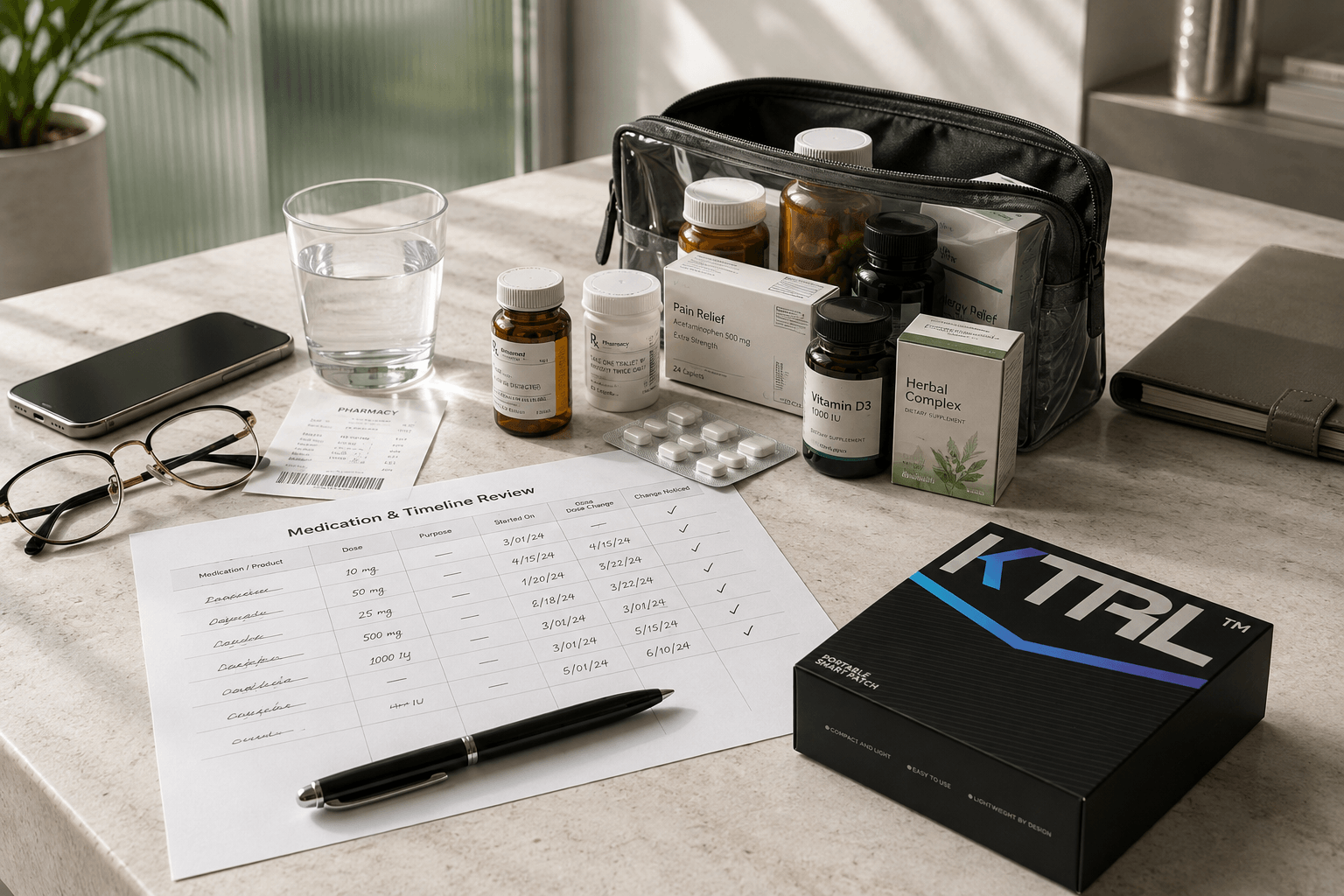
Some medicines and health conditions can contribute to erection difficulties, but the safest next step is a structured review—not a self-directed medication change. Record the timing, bring a complete product list, and ask the prescriber or pharmacist what alternatives or adjustments may be appropriate for you.
The first safety rule: keep the prescriber in the conversation
If an erection change began after starting a medicine or changing a dose, the timing deserves attention. It does not prove that the medicine is the cause. The condition being treated, another medicine, alcohol or recreational substances, stress, sleep, and general health may overlap.
MedlinePlus states that many medicines and recreational drugs can affect sexual arousal and performance, while also noting that an individual may not experience a problem from a medicine on its list. Its central safety instruction is clear: never stop a medicine without first talking with your healthcare provider (MedlinePlus).
That matters especially for medicines used for blood pressure, mood, pain, seizures, cancer, hormones, or other ongoing conditions. A sudden change can carry risks unrelated to sexual function.
Which medicine categories may enter an ED review?
NIDDK lists several medicine categories that may lead to ED, including antidepressants, antihistamines, blood-pressure medicines and diuretics, chemotherapy and hormone medicines, some pain relievers, sedatives, and some ulcer medicines (NIDDK). MedlinePlus provides a longer reference list (MedlinePlus).
These lists are conversation starters. They are not predictions.
Category to review | Why it belongs on the list | Safe question to ask |
Antidepressants or other mental-health medicines | sexual effects can differ by product, dose, and person | “Could this medicine or dose be related to the timing of my change?” |
Blood-pressure medicines or diuretics | the medicine and the underlying cardiovascular condition may both matter | “Can we review both blood-pressure control and possible sexual effects?” |
Sedatives, sleep medicines, or some pain medicines | alertness, sensation, hormones, or other pathways may be relevant | “Are there interactions or timing issues worth reviewing?” |
Hormone or cancer medicines | treatment goals and sexual effects require individualized care | “What sexual changes are expected, and what support is available?” |
Antihistamines, ulcer medicines, and over-the-counter products | nonprescription products are often missed in a medication history | “Should any of these be included in the review?” |
Do not use the table to identify a culprit. Use it to make sure the entire list reaches the clinician.
Health conditions can affect the same body systems
Erections depend on coordinated blood-vessel, nerve, hormone, and psychological processes. NIDDK identifies diabetes; heart and blood-vessel disease; high blood pressure; atherosclerosis; chronic kidney disease; overweight and obesity; chronic obstructive pulmonary disease; multiple sclerosis; spinal-cord injury; low testosterone; thyroid imbalance; prostate or penile conditions; and several treatment or injury contexts among possible contributors (NIDDK).
That does not mean every person with one of these conditions will develop ED. It means an erection change may be relevant health information rather than a private failure.
Health context | What a clinician may want to understand |
Diabetes or metabolic health | glucose history, nerve or blood-vessel symptoms, medicines |
Blood pressure or cardiovascular health | onset, exercise tolerance, smoking, medicines, other symptoms |
Neurologic or pelvic history | injury, surgery, sensation changes, urinary or bowel symptoms |
Hormone or thyroid context | desire changes, energy, physical changes, lab history when indicated |
Mood, anxiety, or chronic stress | timing, treatment, confidence, avoidance, relationship impact |
The table organizes a history; it does not assign a diagnosis.
Build a medication-and-timeline worksheet
Before the appointment, create one accurate list. Include:
· every prescription medicine, exact dose, and usual timing;
· over-the-counter medicines, vitamins, supplements, and herbal products;
· alcohol, nicotine, cannabis, or other substances you use;
· the condition each medicine is intended to manage;
· the date each product began and the date of any dose change;
· when erection changes first appeared;
· whether desire, orgasm, ejaculation, sensation, or morning erections also changed;
· whether the concern happens in every setting or only some settings;
· pain, curvature, urinary symptoms, new fatigue, or other health changes.
Bring the containers, pharmacy list, or clear photos of the labels if that improves accuracy. Avoid vague entries such as “a blood-pressure pill.” The exact product and dose can change the discussion.
Use timing as evidence, not proof
A timeline can reveal several patterns:
1. The erection change began soon after a medicine or dose change.
2. The change appeared as the underlying illness worsened.
3. Several products or substances changed at the same time.
4. The concern varies by situation even though the medicine stays constant.
5. The timing has no obvious connection to the current medication list.
Each pattern supports different questions. None should trigger an unsupervised experiment. A prescriber may decide the medicine is unrelated, adjust timing or dose, consider another option, review interactions, or investigate other causes. Those decisions depend on the person's full health picture.
Questions to ask the prescriber or pharmacist
You can begin with:
“I noticed a new change in getting or keeping an erection. It started around [date], and this is my full medicine and supplement list. Could the condition, a medicine, the dose, or an interaction be contributing? I want to review safe options without interrupting treatment.”
Then ask:
· Is this a recognized possible effect of any product I take?
· Does the timeline make a medicine connection more or less likely?
· Could the health condition itself be involved?
· Are any combinations, supplements, or substances relevant?
· Would a different timing, dose, or medicine ever be considered in my case?
· What changes or symptoms should prompt follow-up?
· Do I need a primary-care, urology, mental-health, or other referral?
A pharmacist can help identify potential effects and interactions. The prescriber manages decisions about the treatment plan.
A partner can support the review without policing it
Medicine-related uncertainty can reach home quickly. The man may feel defective or angry at a treatment he needs. A partner may wonder whether attraction has changed or repeatedly ask whether the body is “working now.” That pattern can turn intimacy into monitoring.
Try:
“I have noticed a body change, and I am reviewing the health and medication timeline with a professional. This is information we can handle together; it is not a verdict on attraction or our relationship.”
A partner can help recall dates or attend an appointment if invited. The person taking the medicine remains at the center of consent and decision-making.
What an ED evaluation may include
NIDDK explains that healthcare professionals can use a medical, sexual, and mental-health history, a physical exam, and selected laboratory, imaging, or other tests to diagnose ED (NIDDK). Questions may cover prescription and nonprescription medicines, supplements, desire, erection, ejaculation, orgasm, emotions, and relationship context.
That breadth is normal. It helps separate a medication question from other possible contributors. For a ready-to-use appointment checklist, continue to How to Talk to a Doctor About Erection Difficulties.
Where a private routine fits while you gather information
A predictable adult wellness routine can help keep preparation simple while you document the pattern and communicate with your partner. The discreet male wellness routine guide explains how to create a private transition around timing, instructions, comfort, and chosen attention. KTRL can be considered within that lifestyle routine according to its printed directions and your personal preferences.
Join the email list for future discussion guides, no-shame education, and verified product information.
KTRL Portable Smart Patch is a consumer lifestyle product for adult external use; it is not intended to diagnose or treat a medical condition, individual experiences vary, and users should follow the printed instructions and seek qualified professional advice for persistent or distressing concerns.
Frequently asked questions
Which medicines can affect erections?
Possible categories include some antidepressants, antihistamines, blood-pressure medicines and diuretics, hormone or cancer medicines, pain relievers, sedatives, and ulcer medicines. Individual effects vary, so review the exact product and dose with a clinician or pharmacist.
Should I stop a medicine if erection problems begin?
Do not stop a medicine on your own. Contact the prescriber or pharmacist, explain the timeline, and ask about safe individualized options.
Can the health condition matter more than the medicine?
Yes. Diabetes, cardiovascular conditions, neurologic conditions, hormone issues, mental-health factors, and other health contexts may also contribute. Sometimes several factors overlap.
What should I bring to an appointment?
Bring a complete product list with doses and dates, the symptom timeline, relevant health changes, and notes about desire, morning erections, ejaculation, orgasm, pain, and situational pattern.
Comments (0)
Please login to comment.
No comments yet.