Erectile Dysfunction and Age: Common Does Not Mean Inevitable
A practical guide to separating age from resignation, reviewing recurring erection changes across health, medicines, context, and impact, and knowing when a qua...

Erection difficulties become more common as people get older, but ED is not an inevitable or routine part of aging. At any age, a new or recurring pattern deserves attention to health, medicines, emotions, context, and personal distress rather than resignation or shame.
Age changes likelihood, not your worth
The National Institute of Diabetes and Digestive and Kidney Diseases says people are more likely to have ED as they get older, while explicitly stating that ED is not a routine part of aging (NIDDK). The National Institute on Aging similarly notes that ED becomes more common with age and advises talking with a doctor when it occurs often (NIA).
These points belong together. “More common” describes a population pattern. “Not inevitable” protects the individual from being dismissed.
Age also says nothing about masculinity, desirability, relationship value, or whether intimacy still matters. An erection is a body response influenced by many systems. It is not a certificate of youth.
Why erection concerns may become more common over time
Age can travel with other changes: diabetes, heart or blood-vessel disease, high blood pressure, kidney disease, weight changes, neurologic conditions, hormone changes, pelvic treatment, mood concerns, and a longer medication list. NIDDK identifies these health, medicine-related, emotional, and lifestyle factors as possible contributors to ED (NIDDK).
This means “because I am older” may be too broad to guide the next step. A more useful question is:
“What has changed in my health, medicines, stress, sleep, relationship context, or erection pattern—and what deserves review?”
An older adult may have a treatable contributor. A younger adult may have a health, medicine, psychological, or situational contributor. Neither age group benefits from a single-story explanation.
Normal variation and recurring difficulty are different questions
NIDDK describes ED symptoms as getting an erection sometimes but not every time, getting one that does not last long enough for sex, or being unable to get one (NIDDK). One difficult occasion does not automatically establish a persistent condition.
Use these distinctions:
Pattern | What it may tell you | Proportionate next step |
One unusual occasion | bodies vary; context may have been different | note sleep, stress, alcohol, illness, and pressure |
Repeats only in one setting | situational cues may be relevant | compare settings without declaring the cause “mental” |
Repeats across settings | broader health, medicine, and emotional review becomes more useful | arrange a qualified evaluation |
New change after medicine or illness | timing matters | contact the prescriber; keep treatment decisions supervised |
Pain, curvature, sensation, or urinary change | another health issue may need assessment | seek timely medical guidance |
For a single event, read Was It Just One Difficult Night?. For a repeating pattern, use Situational vs. Persistent Erection Difficulties.
Older adults do not have to lower every expectation
Aging can bring changes in energy, recovery time, comfort, mobility, privacy, caregiving responsibilities, or the time arousal takes. Intimacy may become more deliberate. That does not make it less real or less valuable.
The NIA describes aging as a period in which adults can redefine sexuality and intimacy while also recognizing physical and health changes that may interfere (NIA). A flexible view of sex can reduce the pressure to make one type of erection or one sequence the only measure of closeness.
Flexibility and medical attention are compatible. You can broaden intimacy while still asking why a recurring body change occurred.
Younger adults should not assume they are “too young” for help
A younger man with recurring erection difficulty may feel especially isolated because he believes ED belongs only to older people. That belief can lead to concealment, internet self-diagnosis, or escalating performance anxiety.
Age alone cannot identify the cause. A younger adult can still have medicine effects, diabetes, blood-pressure concerns, hormone or neurologic issues, anxiety, depression, high stress, substance-related context, pelvic injury, or another contributor. Qualified care is appropriate based on the pattern and impact—not on whether the person feels old enough to ask.
Use an age-versus-action matrix
Instead of asking “Am I too young?” or “Am I just old?”, use four decision points:
1. Onset
When did the change begin? Was it sudden or gradual? Did it follow illness, surgery, injury, a new medicine, a dose change, or a major stress period?
2. Context
Does it occur during partnered sex, solo activity, on waking, or across all settings? Is desire present? Does the erection begin and then change?
3. Impact
Is it causing avoidance, low mood, shame, conflict, loss of intimacy, or significant worry? NIDDK lists loss of intimacy, depression, anxiety, and low self-esteem among possible complications of ED (NIDDK).
4. Associated change
Are there pain, curvature, urinary symptoms, reduced sensation, reduced desire, ejaculation changes, marked fatigue, chest symptoms, or other new health concerns?
These four points create an actionable history at any age.
Do not let age become a source of household distance
When erection changes are blamed on age, couples may stop talking. One partner assumes desire has disappeared; the other believes there is no point seeking help. Affection can become cautious because either person worries that closeness will expose another difficulty.
Try this reset:
“Age may be part of the context, but it does not tell us the whole story. I want us to keep affection and conversation open while I review the pattern and my health.”
This makes room for both people. It does not assign fault, require a partner to become a caregiver, or promise a particular outcome.
What to discuss with a healthcare professional
NIDDK says an ED evaluation may include medical, sexual, and mental-health history, a physical exam, and selected laboratory, imaging, or other tests (NIDDK). Prepare to discuss:
· when the change began and how often it happens;
· whether you can get, keep, or regain an erection;
· morning or nighttime erections;
· desire, ejaculation, orgasm, and satisfaction;
· health conditions, surgeries, injuries, and current symptoms;
· prescriptions, over-the-counter products, and supplements;
· alcohol, nicotine, cannabis, and other substance use;
· mood, stress, relationship context, and personal impact.
Use How to Talk to a Doctor About Erection Difficulties for an exact opening script and appointment checklist.
Where a deliberate wellness routine can fit
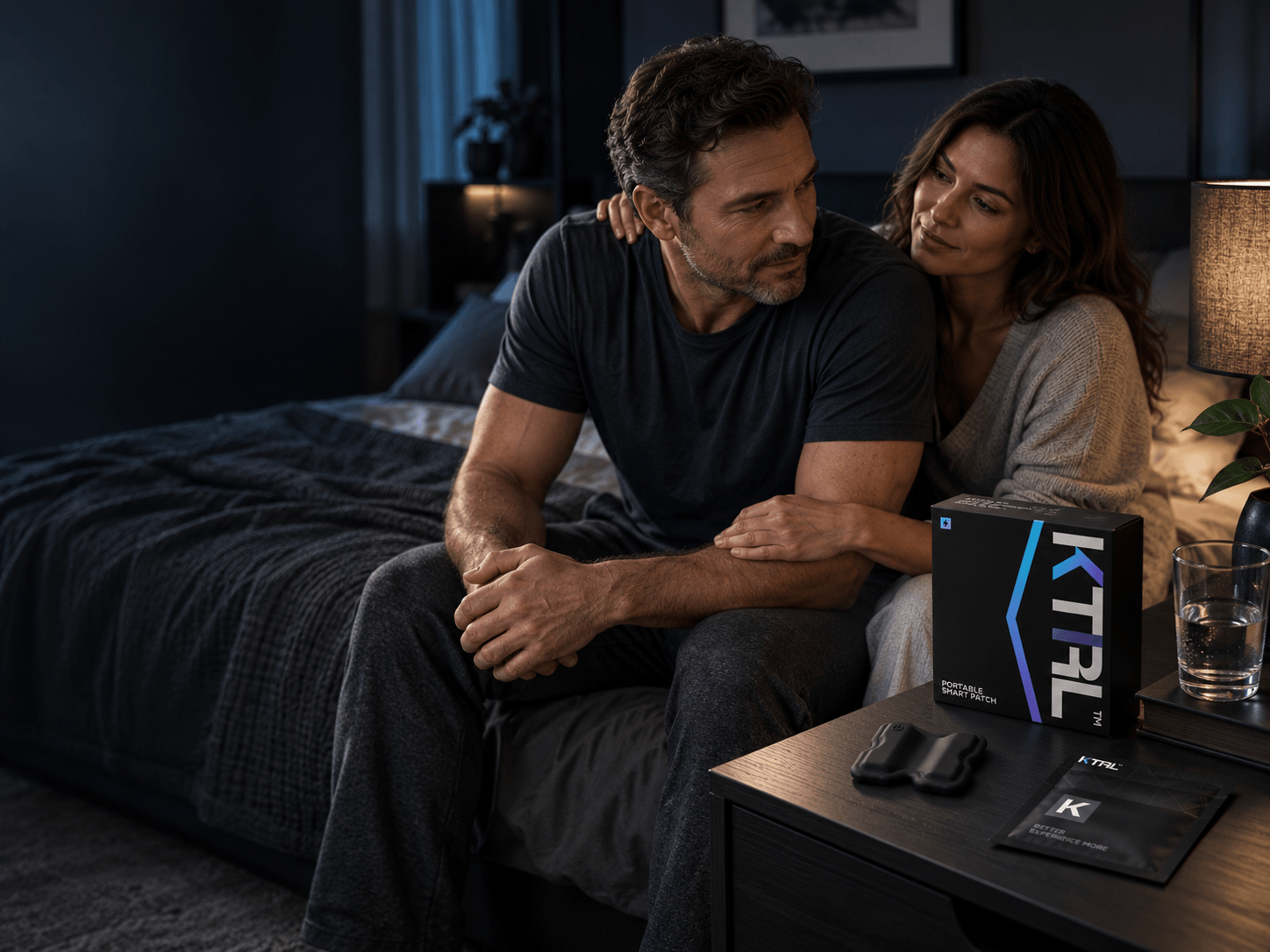
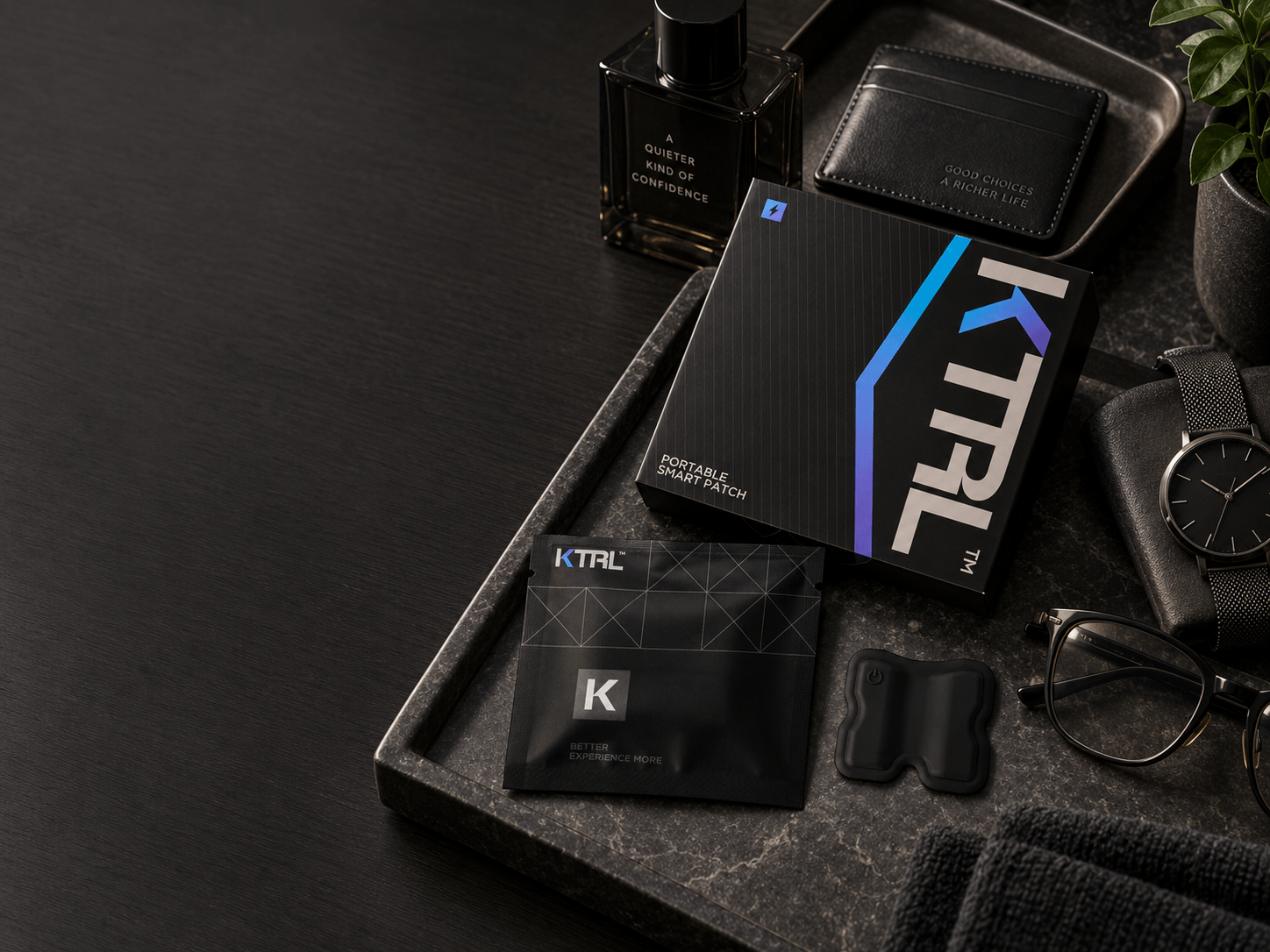
Adults at any life stage may prefer a private routine that creates time for preparation, instructions, comfort, chosen attention, and partner communication. The discreet male wellness routine guide offers a practical starting point. KTRL's rhythmic physical sensation and one-session format can be considered as part of that adult lifestyle routine according to personal preference.
Join the email list for no-shame education, future appointment tools, and verified product information.
KTRL Portable Smart Patch is a consumer lifestyle product for adult external use; it is not intended to diagnose or treat a medical condition, individual experiences vary, and users should follow the printed instructions and seek qualified professional advice for persistent or distressing concerns.
Frequently asked questions
Is erectile dysfunction a normal part of aging?
ED becomes more common with age, but NIDDK says it is not a routine part of aging. Recurring or distressing changes deserve a health and medication review.
Can younger men have erectile dysfunction?
Yes. Age alone does not determine whether ED can occur or what causes it. Pattern, health, medicines, emotional factors, and context all matter.
Should an older man accept recurring erection problems?
No one has to treat a recurring concern as unworthy of care. A clinician can assess possible contributors and discuss individualized options.
Does age prove an erection change is physical?
No. Physical, medicine-related, emotional, lifestyle, and relationship factors may overlap at every age.
Comments (0)
Please login to comment.
No comments yet.