When to Seek Professional Help for Ejaculation Timing
How to decide when a recurring timing concern deserves qualified review by looking at repetition, control, distress, onset, related symptoms, medicines, and rel...

Consider professional help when ejaculation timing is persistent, causes distress or relationship difficulty, changes suddenly, or appears alongside erection problems, pain, urinary or pelvic symptoms, medicine changes, or fertility concerns. One earlier-than-hoped event usually calls for context and observation rather than an instant label.
Use more than the clock
Premature ejaculation (PE) is assessed through a pattern, not one duration. The European Association of Urology recommends reviewing estimated timing, perceived control, distress, and interpersonal difficulty, along with whether the pattern is lifelong or acquired and situational or consistent (EAU).
ISSM-reviewed education likewise describes PE as a recurring pattern involving limited ability to delay ejaculation and personal distress; it distinguishes lifelong from acquired PE (ISSM).
That means the decision to seek help should use several signals together.
The timing-control-distress matrix
Signal | Lower immediate concern | Stronger reason to arrange a review |
Repetition | one or occasional variable event | happens regularly over time |
Control | timing changed but choice still feels flexible | repeated sense of little or no control |
Distress | little personal concern | shame, anxiety, avoidance, or ongoing worry |
Partner impact | one calm conversation resolves uncertainty | recurring conflict, pressure, or loss of intimacy |
Onset | familiar lifelong pattern already understood | new change after a period of different function |
Context | limited to one unusual setting | appears across settings or is expanding |
Other changes | no pain or health change | erection difficulty, pain, urinary or pelvic symptoms, medicine or health change |
This matrix guides a conversation; it does not produce a diagnosis.
One event and a recurring pattern need different responses
If ejaculation happened earlier than hoped once, note the context: novelty, a long gap between encounters, pace, stimulation, privacy, stress, alcohol, erection worry, or relationship tension. Read Finishing Early Once Does Not Define You.
If the concern repeats, use Why Do I Finish Sooner Than I Want? to record frequency, control, impact, and context. Avoid turning each encounter into a stopwatch trial. The EAU guideline states that latency alone is insufficient to characterize PE (EAU).
A sudden change deserves a clearer timeline
An acquired pattern begins after a period of different ejaculation function. The EAU guideline advises distinguishing acquired from lifelong PE and reviewing medical, sexual, relationship, and substance context (EAU).
Write down:
· when the change began;
· whether it was sudden or gradual;
· new medicines, dose changes, supplements, or recreational substances;
· erection, desire, orgasm, pain, urinary, or pelvic changes;
· new illness, injury, stress, sleep disruption, or relationship conflict;
· whether the pattern occurs during partnered, solo, or other sexual activity.
Do not stop or alter prescribed medicine on your own. Bring the exact product and dose to the prescriber.
Erection difficulty can change the timing story
PE and erectile dysfunction are distinct, but they can occur together. A man may rush because he fears losing an erection, or become so focused on timing that erection anxiety grows. The EAU guideline specifically says assessment should distinguish PE from ED and identify associated sexual dysfunction (EAU).
Track erection and ejaculation separately:
· Did the erection become firm enough for the chosen activity?
· Did it remain or change?
· Did ejaculation happen before or after erection concern began?
· Which issue feels primary to you?
Use Premature Ejaculation and Erectile Dysfunction Together for a two-signal timeline.
Pain and other physical changes should be named directly
Pain during or after ejaculation is a separate symptom with multiple possible causes, and the EAU guideline describes evaluation and treatment as dependent on the underlying cause when one is identified (EAU).
Tell a clinician about pain, burning, blood in semen, urinary changes, pelvic discomfort, fever, penile or testicular changes, or fertility concerns. The appropriate urgency depends on the symptom and health context; a healthcare service can triage it.
Distress and household tension count
You do not need to wait for a crisis before asking for help. Repeated embarrassment, avoidance of affection, arguments, or pressure at home are relevant parts of the history. The EAU guideline recognizes self-confidence, emotional distress, and partner relationship impact as clinically relevant (EAU).
Tell your partner:
“This pattern is bothering me enough that I want qualified guidance. I am not asking you to grade my timing. I want us to keep blame out of the conversation while I gather accurate information.”
The partner can describe impact without becoming responsible for diagnosis or treatment.
Prepare a one-page appointment brief
Bring six lines:
1. Main concern: what “too soon” means in your own words.
2. Pattern: frequency, duration of the pattern, and relevant activities.
3. Control: what you notice about ability to delay or choose pace.
4. Impact: personal distress, avoidance, and partner effects.
5. Onset: lifelong, acquired, sudden, gradual, situational, or consistent.
6. Related context: erection, desire, pain, urinary symptoms, medicines, health, substances, and fertility goals.
Ask what the clinician thinks the pattern represents, what additional assessment is appropriate, which options fit your health history, and when follow-up should occur. The AUA/SMSNA guideline uses an evidence-based, patient-centered approach and shared decision-making (PubMed).
Where a private routine can fit
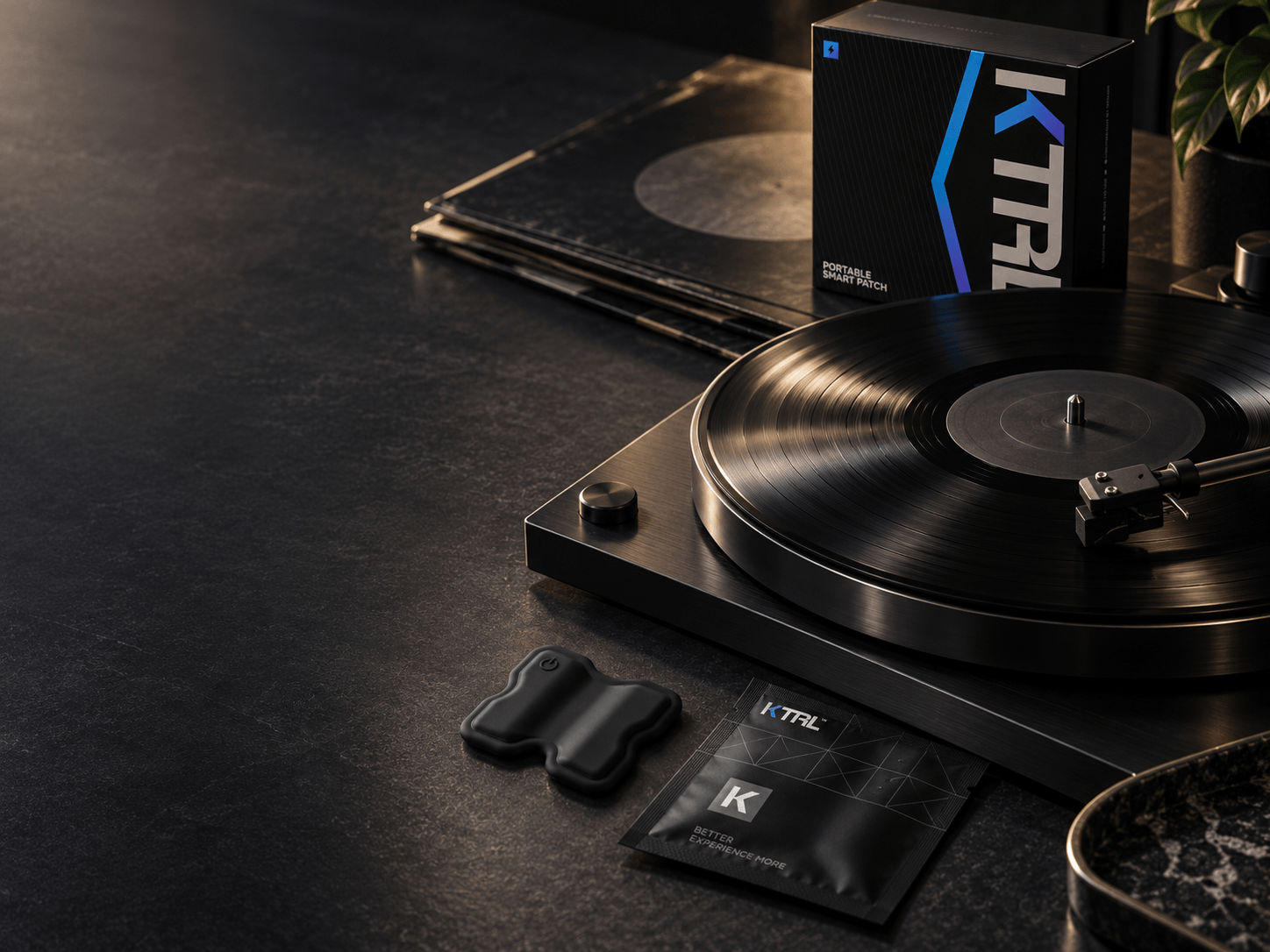
A deliberate adult routine can make timing, comfort, instructions, and communication easier to organize while a person follows the appropriate health plan. Start with the discreet male wellness routine guide. KTRL's rhythmic physical sensation and one-session format can be considered as an optional part of that private routine.
Join the email list for future no-shame education, appointment tools, and verified product information.
KTRL Portable Smart Patch is a consumer lifestyle product for adult external use; it is not intended to diagnose or treat a medical condition, individual experiences vary, and users should follow the printed instructions and seek qualified professional advice for persistent or distressing concerns.
Frequently asked questions
Do I need a doctor after one early ejaculation?
One event usually provides context rather than a diagnosis. Seek guidance sooner if there is pain, another health change, or significant distress.
How persistent should the problem be before I ask for help?
There is no need to wait for a fixed number of encounters. Recurrence, limited control, distress, relationship impact, sudden change, and related symptoms guide the decision.
Can I talk to a primary-care clinician first?
Yes. Primary care can review health and medicines and decide whether urology, sexual-medicine, mental-health, or relationship support is appropriate.
Should my partner come to the appointment?
Only if you want that support. A partner may add context, while the patient remains the central voice in care decisions.
Comments (0)
Please login to comment.
No comments yet.