When Erection Difficulties Create Distance at Home: Shame, Silence, and Avoidance
How shame and silence after erection difficulties can create distance—and how couples can separate the health question from the relationship story, protect affe...
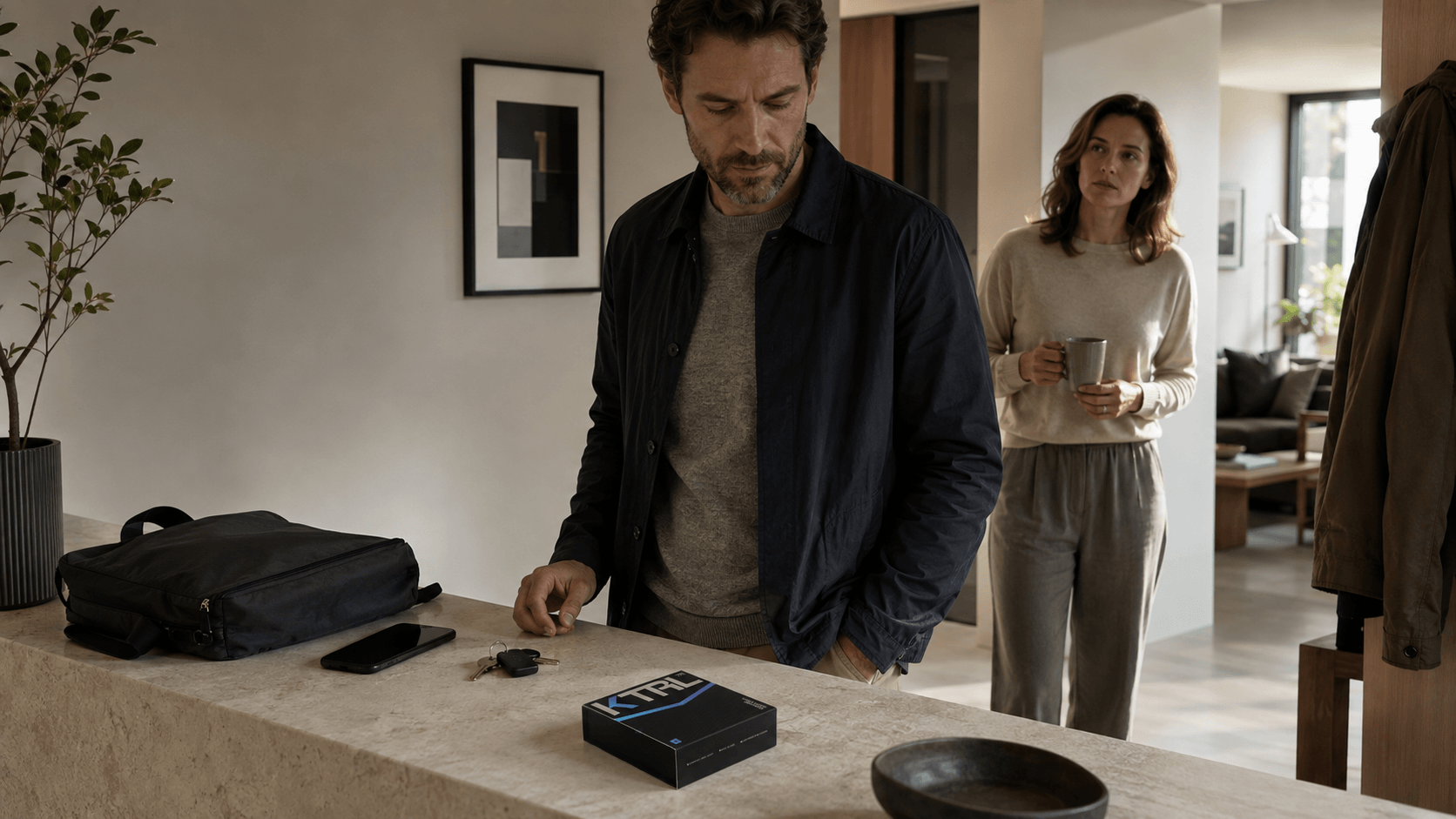
Erection difficulties can affect more than a sexual moment. Shame may lead one partner to go quiet, avoid touch, or act irritable. The other may interpret that distance as rejection or loss of attraction. If nobody explains what is happening, the misunderstanding can spread into bedtime, affection, chores, and ordinary family life.
One event is not a relationship verdict
An erection can change for many reasons, and a single experience does not establish erectile dysfunction. NIDDK defines erectile dysfunction as difficulty getting or keeping an erection firm enough for sex and advises using medical, sexual, and mental-health history to understand the pattern (NIDDK).
If the change happened once, begin with One Erection Problem Does Not Define You. If it repeats, note whether it is situational or persistent with Situational vs. Persistent Erection Difficulties.
The relationship question is separate: what did each person believe the event meant?
The protect-avoid-misunderstand loop
Step | What may happen | What the other partner may hear |
Protect | “I do not want to be embarrassed again.” | “You do not want me.” |
Avoid | less initiation, touch, eye contact, or bedtime closeness | “Something is wrong between us.” |
Misunderstand | both fill silence with private explanations | “I am unattractive” or “I am failing.” |
Tension | irritability, arguments, scorekeeping, or emotional distance | “We cannot talk safely anymore.” |
The loop can run in either direction. It is a shared pattern, not proof that one person caused the problem.
An ESSM position statement describes erectile dysfunction through biological, psychological, and relationship factors. It notes barriers such as embarrassment, low confidence, blame, and communication difficulty, and it recognizes that partners may experience guilt, unattractiveness, or rejection (ESSM).
Shame often disguises itself as withdrawal
A man who fears being judged may stop initiating, turn away in bed, work later, joke defensively, or avoid all affection so that affection cannot “lead somewhere.” Those actions may be protective rather than uncaring, but a partner cannot reliably know that without words.
Recent qualitative evidence describes themes of masculinity pressure, stigma, self-silencing, relationship impact, and healthcare communication in men's experiences of erectile dysfunction. The review also notes limitations in the underlying evidence, so these themes should guide questions rather than predict every man's reaction (PubMed).
Replace the hidden story with one specific sentence:
“I have been pulling away because I feel exposed after what happened, not because I have stopped caring about you.”
That sentence does not solve the health question. It prevents silence from answering the relationship question by itself.
A partner's hurt is real without becoming blame
A partner may feel confused, unwanted, lonely, or worried. Those feelings deserve room. They do not establish that the man's erection was a choice or a measure of attraction.
Try this two-truth response:
“I believe that the distance hurt you. I also need us to treat the erection change as something to understand, not as evidence that either of us failed.”
Avoid interrogation during intimacy, public jokes, comparisons with past partners, threats, or demands for immediate proof of desire. The man should also avoid dismissing the partner's feelings with “It has nothing to do with you, so get over it.” Both experiences can be acknowledged without turning the bedroom into a courtroom.
Protect affection from becoming a performance test
Couples sometimes lose all touch because every hug feels like the beginning of an exam. Make a temporary, explicit agreement about forms of affection that do not need to escalate.
For example:
· a goodnight kiss without testing erection response;
· holding hands during a walk;
· cuddling with a clear stop point;
· saying whether each person wants closeness, space, or a conversation;
· asking before moving from affection toward sexual activity.
Consent remains active throughout. The goal is not to produce an erection; it is to make affection truthful and safe again.
Keep the health and relationship tracks distinct
NIDDK notes that possible complications of erectile dysfunction include loss of intimacy, anxiety, depression, and low self-esteem (NIDDK). That makes both tracks worth attention:
1. Health track: Is the difficulty recurring, sudden, painful, associated with medicine or health changes, or otherwise concerning?
2. Relationship track: Are silence, pressure, blame, or avoidance causing additional harm?
A clinician can review the health pattern. A qualified therapist or sexual-health professional may help when conversations are stuck, conflict is escalating, or shame is dominating home life. If there is coercion, fear, or violence, prioritize safety-focused support.
Use a five-minute loop breaker
Keep the first conversation narrow:
1. Name the event: “My erection changed during our last encounter.”
2. Correct one interpretation: “It did not mean I was rejecting you.”
3. Name one feeling: “I felt embarrassed and became quiet.”
4. Ask one question: “What did you think it meant?”
5. Choose one next step: agree on low-pressure affection, track the pattern, or arrange qualified guidance.
Do not use the conversation to demand sex, extract reassurance, or settle every past argument. How to Talk About Erectile Dysfunction With a Partner provides a fuller conversation plan.
Know when to seek health guidance
Arrange qualified advice when erection difficulties persist, begin suddenly, cause distress, overlap with desire, ejaculation, orgasm, pain, or urinary changes, or follow a medicine or health change. NIDDK explains that evaluation may include medical, sexual, and mental-health history and targeted examination or tests when appropriate (NIDDK diagnosis).
Do not stop prescribed medicine on your own. Seek urgent local care for acute severe symptoms.
Rebuild a deliberate private routine
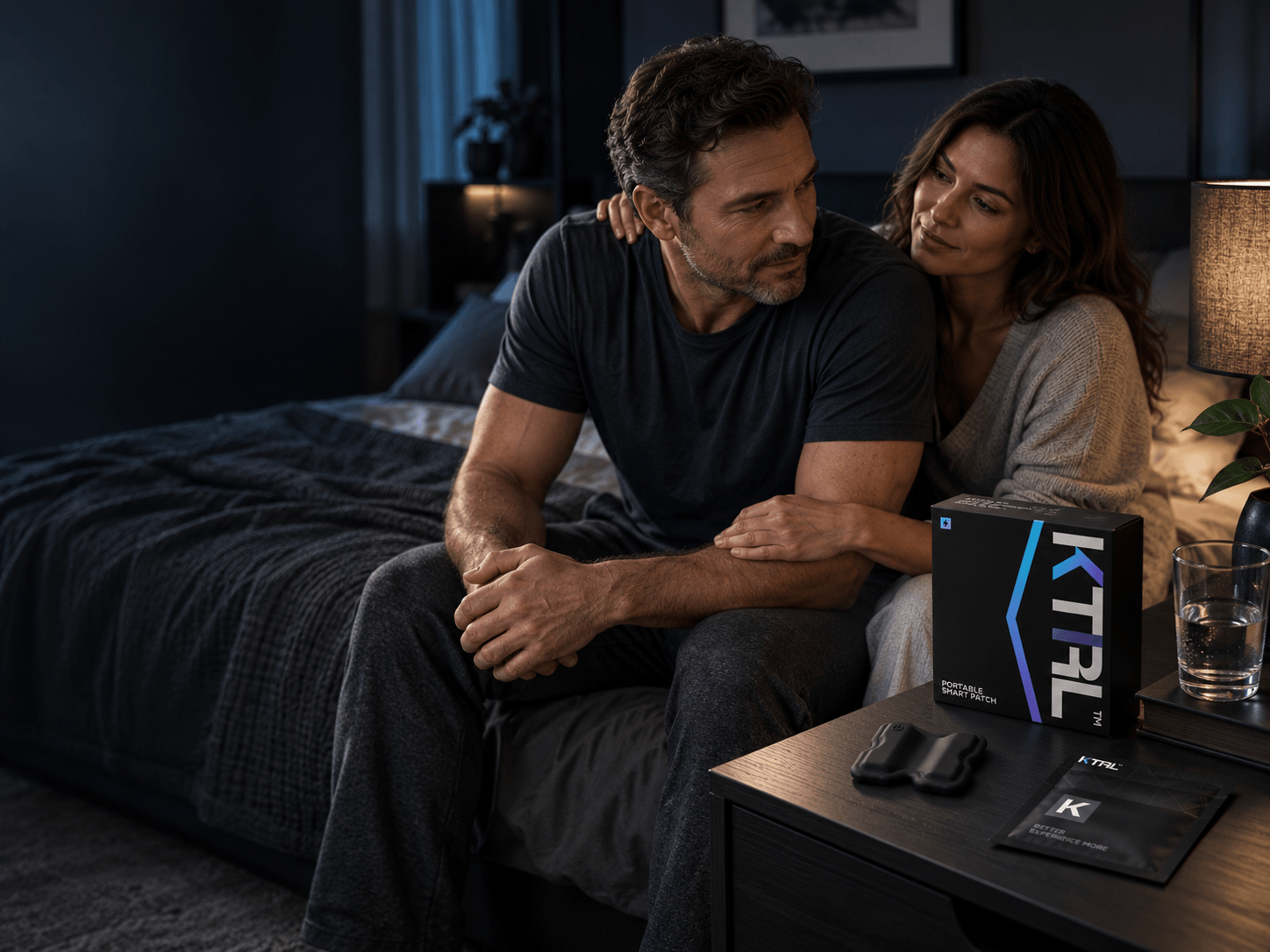
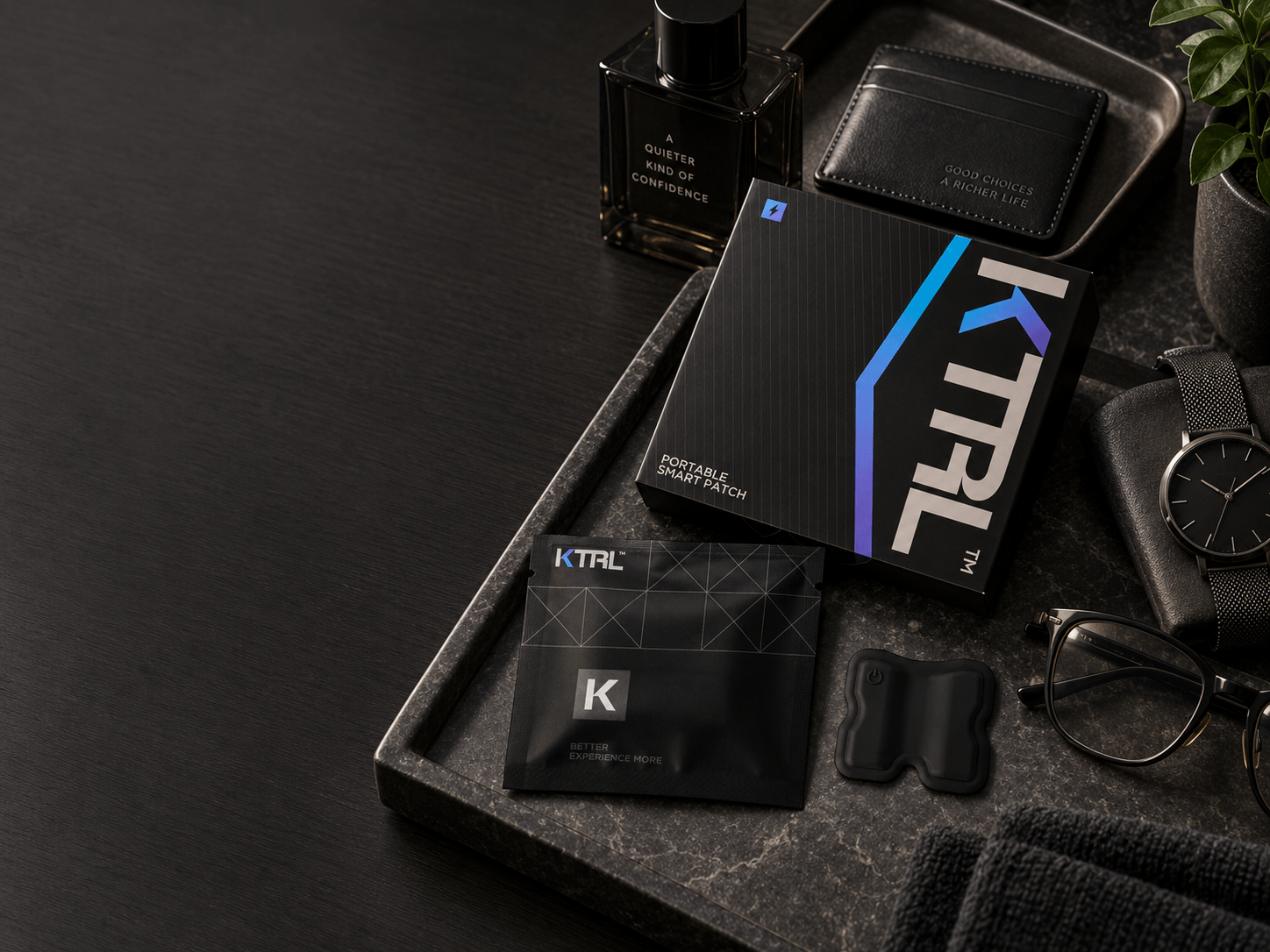
When privacy and predictability would help, use the discreet male wellness routine guide to organize instructions, timing, and personal choice. KTRL's rhythmic physical sensation and one-session format can be considered as an optional part of an adult private routine, alongside honest communication and any appropriate professional plan.
Join the email list for no-shame conversation tools and verified KTRL information.
KTRL Portable Smart Patch is a consumer lifestyle product for adult external use; it is not intended to diagnose or treat a medical condition, individual experiences vary, and users should follow the printed instructions and seek qualified professional advice for persistent or distressing concerns.
Frequently asked questions
Why am I avoiding my partner after an erection problem?
Avoidance can be a way to prevent embarrassment or another uncertain moment. Naming that fear is often clearer than making a partner interpret the distance.
Does erection difficulty mean attraction is gone?
An erection and attraction are not identical signals. Health, stress, context, medicine, worry, and relationship factors may all matter.
Should a partner attend a medical appointment?
Only if the patient wants that. Partner context may help, while the patient's privacy and voice remain central.
What if the tension has spread beyond sex?
Name the loop, restore clear boundaries around affection, and consider qualified relationship support if conversations remain hostile or avoidant.
Comments (0)
Please login to comment.
No comments yet.