Why a Partner May Feel Rejected When Erection Difficulties Happen—and How to Respond Without Blame
How to separate body response from attraction, acknowledge hurt without blame, protect consent, and keep one uncertain moment from becoming a relationship verdi...

A partner may feel rejected when an erection changes because people often use visible sexual response as a shortcut for desire: “If you wanted me, your body would respond.” That interpretation is understandable, but it is incomplete. An erection, subjective desire, consent, attraction, and relationship commitment are related in some moments and separate in others.
Start with two experiences, not one accusation
The man may feel exposed, anxious, frustrated, or ashamed. His partner may feel unattractive, unwanted, confused, or lonely. The ESSM position statement notes that partners of men with erectile dysfunction may experience guilt, unattractiveness, or rejection, while communication barriers and blame can complicate care (ESSM).
Both experiences can be true without either interpretation becoming a verdict.
Say:
“I can understand why that moment felt rejecting. My erection changed, and I also felt embarrassed. Let us not use either reaction as proof that attraction or love disappeared.”
This acknowledges impact without pretending the erection was voluntary.
Erection and desire are not interchangeable
NIDDK's diagnostic guidance asks clinicians separately about erection, sexual desire, ejaculation, and climax. That separation matters because these are distinct parts of sexual function (NIDDK).
A man may want intimacy and still have difficulty getting or keeping an erection. He may also have an erection without strongly wanting sexual activity. Consent must be communicated; it cannot be inferred from genital response.
For a clearer map, read Erection vs. Arousal vs. Desire.
Before intimacy: remove the hidden test
If the concern has happened before, waiting until a high-pressure moment can make both partners hyperaware of every change. A short conversation beforehand can set better expectations.
The man might say:
“I want closeness with you. My body may be variable, so I do not want us to make one response the score for tonight. Can we agree that either person can pause or change direction without treating it as rejection?”
The partner might say:
“I want to feel chosen and informed. If your erection changes, please tell me what you want instead of disappearing into silence.”
Agree on what “pause,” “stop,” “affection only,” and “continue differently” mean. Consent remains active for every option.
During intimacy: describe, do not grade
When an erection changes, avoid rapid-fire questions such as “What is wrong?” “Are you attracted to me?” or “Is it happening again?” Even caring questions can feel like an examination.
Use neutral observations and choices:
· “No pressure. What would feel comfortable now?”
· “Would you like closeness, a pause, or to stop?”
· “You do not need to prove anything to me.”
· “I am still here; tell me what you want.”
The man can respond:
· “I am interested, but I am getting in my head. I want to slow down.”
· “I would like affection without trying to change my erection.”
· “I want to stop for tonight and talk tomorrow.”
These lines replace mind-reading with information.
Afterward: repair meaning before solving function
Do not conduct a full postmortem while either person feels raw. Later, use four questions:
1. What did each person notice?
2. What did each person assume it meant?
3. Which part hurt: the erection change, the silence, the reaction, or the loss of closeness?
4. What one adjustment would reduce pressure next time?
A partner can say, “I felt rejected when you turned away,” which names behavior and impact. “You failed because you do not want me” turns an interpretation into an accusation.
The man can say, “I shut down because I felt ashamed,” without demanding that the partner suppress hurt.
Support does not mean becoming the evaluator
A supportive partner may listen, protect privacy, join an appointment if invited, and help keep affection separate from performance. Support does not require monitoring firmness, researching secretly, choosing treatment, accepting unwanted activity, or providing endless reassurance.
The ESSM statement supports considering partners and shared decision-making while also recognizing patient preferences and the complexity of biopsychosocial factors (ESSM). The man remains the central voice in his health care; the partner remains entitled to personal boundaries.
When rejection spreads into household conflict
If the issue is never named, a partner may stop initiating to avoid hurt. The man may avoid all touch to prevent another uncertain encounter. Everyday irritability may then appear around bedtime, phones, chores, or time together.
Name the shared loop:
“Your hurt makes sense, and my withdrawal has made it worse. I think we are both protecting ourselves in ways that create more distance. Can we protect affection while we decide what health guidance is appropriate?”
Read When Erection Difficulties Create Distance at Home for the protect-avoid-misunderstand loop.
Know when qualified help fits
One uncertain event is not enough to diagnose erectile dysfunction. Consider health guidance when difficulties recur, begin suddenly, cause distress, follow a medicine or health change, or occur with pain, urinary symptoms, desire, ejaculation, or orgasm changes.
NIDDK explains that erectile-dysfunction evaluation begins with medical, sexual, and mental-health history and may use targeted examination or tests (NIDDK). Use How to Talk to a Doctor About Erectile Dysfunction to prepare.
Qualified relationship or sexual-health support may help if blame, avoidance, or repeated conflict continues. If there is coercion, fear, or violence, prioritize safety-focused local support.
Make room for low-pressure choice
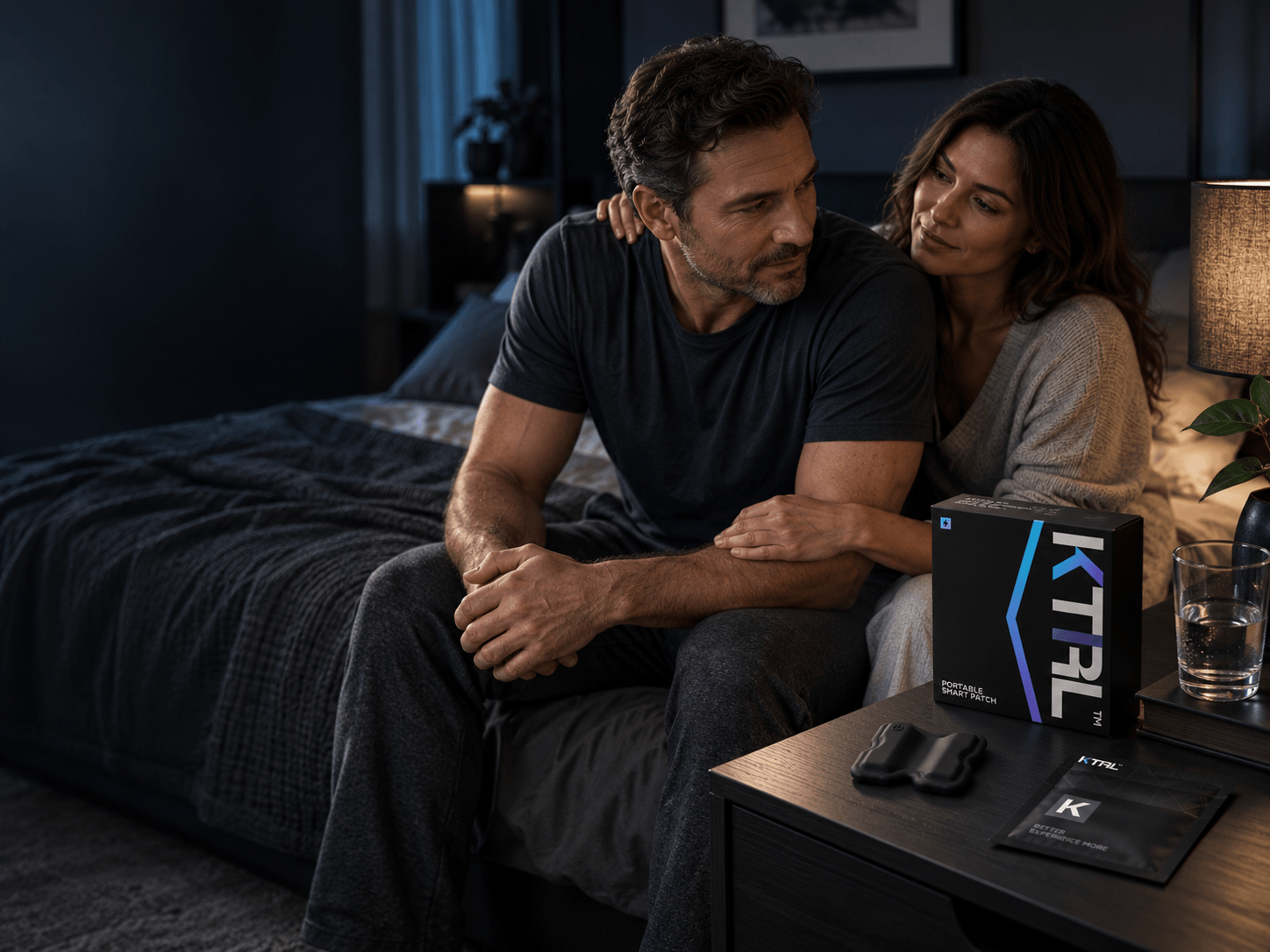
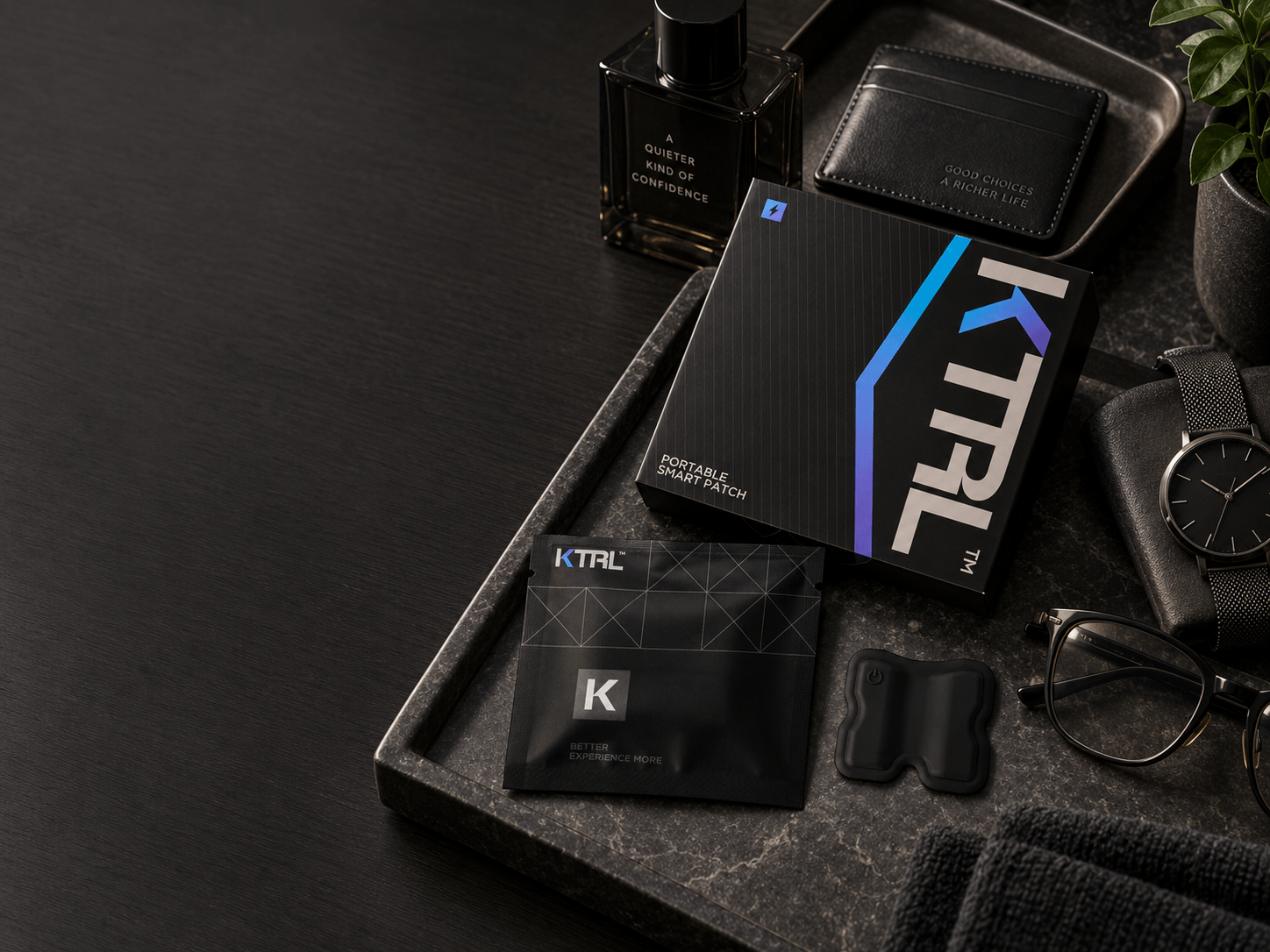
Low-Pressure Intimacy When the Outcome Feels Uncertain offers a communication-first way to broaden acceptable outcomes. For personal routine planning, the discreet male wellness routine guide covers privacy, timing, and instructions. KTRL's rhythmic physical sensation and one-session format can be considered as an optional part of an adult's private routine.
Join the email list for no-shame relationship tools and verified product information.
KTRL Portable Smart Patch is a consumer lifestyle product for adult external use; it is not intended to diagnose or treat a medical condition, individual experiences vary, and users should follow the printed instructions and seek qualified professional advice for persistent or distressing concerns.
Frequently asked questions
Does erection difficulty mean my partner is not attracted to me?
Not by itself. Erection response and attraction are not interchangeable, and health, stress, context, medicine, and worry may matter.
What should I say in the moment?
Use a neutral choice such as, “No pressure—would you like closeness, a pause, or to stop?” Avoid testing or demanding reassurance.
How can the man acknowledge his partner's hurt?
Name the impact and explain his own reaction: “I understand that my silence felt rejecting. I became quiet because I felt exposed.”
Should couples keep trying immediately?
Only if both actively want to. Pausing, changing direction, choosing affection, or stopping are all valid outcomes.
Comments (0)
Please login to comment.
No comments yet.