From Bedroom Silence to Relationship Tension: How to Start the Conversation
A five-minute, low-pressure way to replace silence with accurate meaning, reduce blame, set boundaries, and choose one practical next step.

The best first conversation about erection difficulty is usually short, specific, and held outside the sexual moment. Its purpose is not to diagnose the body or settle the entire relationship. It is to replace silence with accurate meaning, protect both partners from blame, and choose one next step.
Pick the right moment
Avoid beginning while either person is initiating sex, immediately after a difficult moment, during an argument, or when privacy is limited. Ask for a small amount of time:
“I want to talk for five minutes about what happened so neither of us has to guess. Is now okay, or should we choose a time later today?”
Giving a choice reduces the feeling of being cornered. The conversation should not be used as a route to immediate sexual activity.
The five-minute agenda
Step | Prompt | Purpose |
What happened | “My erection changed during our last encounter.” | use observation, not insult |
What it did not mean | “It did not mean I stopped caring or that you failed.” | correct one harmful interpretation |
Feelings | “I felt exposed and went quiet. What did you feel?” | allow two experiences |
Boundary | “Let us avoid testing, jokes, and pressure.” | protect the next interaction |
Next step | “Let us choose one: observe, adjust expectations, or seek guidance.” | create manageable action |
Stop after the five parts if either person is flooded or defensive. A second calm conversation is more useful than forcing completion.
Describe the event without diagnosing yourself
“My erection changed” is different from “I am impotent” or “I failed.” NIDDK defines erectile dysfunction as difficulty getting or keeping an erection firm enough for sex; clinical evaluation uses a medical, sexual, and mental-health history to understand the pattern (NIDDK).
One event does not settle that question. Read One Erection Problem Does Not Define You if the experience was isolated, or What Is Erectile Dysfunction? if the pattern is recurring.
Correct one interpretation, not every fear
A partner may think, “You no longer want me.” The man may think, “You will never respect me again.” Correct the meaning you can honestly address:
· “I was interested, and my erection was variable.”
· “I turned away because I felt embarrassed, not because I wanted to punish you.”
· “I do not know the cause yet, but I do not want us to fill that gap with blame.”
Do not promise a future body response. Focus on what you know about intention, feelings, and next steps.
Let both partners name impact
The ESSM position statement recognizes embarrassment, low confidence, communication difficulty, blame, and partner experiences such as rejection or unattractiveness in the broader psychosocial context of erectile dysfunction (ESSM).
Use “I felt” rather than “you made me”:
· “I felt rejected when you turned away.”
· “I felt ashamed when the questions came quickly.”
· “I felt lonely when affection stopped afterward.”
· “I felt pressured when the conversation became a test.”
Impact can be acknowledged without deciding that either person caused the erection change.
Agree on pressure-reducing boundaries
Choose two or three boundaries, not a complicated contract:
· no jokes, insults, comparisons, or public disclosure;
· no treating an erection as proof of desire or consent;
· either person may pause, stop, or change direction;
· affectionate touch does not automatically promise sex;
· health conversations happen outside the bedroom;
· no self-directed changes to prescribed medicine.
If a boundary is repeatedly ignored or there is coercion, fear, or violence, prioritize safety and local specialist support instead of continuing a joint script.
Choose only one next step
The options may include:
1. Observe the next few experiences without stopwatch-style monitoring.
2. Reduce outcome pressure and broaden acceptable forms of intimacy.
3. Write down onset, frequency, firmness, context, desire, ejaculation, orgasm, medicines, and health changes.
4. Arrange a qualified health conversation.
5. Seek licensed relationship or sexual-health support if blame and avoidance remain stuck.
NIDDK explains that clinicians ask about erection, desire, ejaculation, climax, health, and medicines to guide assessment (NIDDK). How to Talk to a Doctor About Erectile Dysfunction can help prepare the health track.
If the first conversation becomes an argument
Pause the content and name the process:
“We are both trying to be understood, but we are getting louder and less accurate. I want to pause and return when we can use the five steps.”
Do not chase a partner through the house or use silence as punishment. Agree on a realistic return time. If recurring hostility makes conversation unsafe, qualified support may be appropriate.
When Erection Difficulties Create Distance at Home explains how shame and withdrawal can become a household loop.
Why communication matters—and what it cannot do alone
A peer-reviewed meta-analysis found that sexual communication is positively associated with sexual and relationship satisfaction, with communication quality especially relevant (PubMed). This is an association across studies, not proof that one script fixes every couple.
Communication can clarify meaning, consent, feelings, and next steps. It cannot replace health assessment for a persistent or concerning change, and it cannot make coercion safe.
Add a low-pressure private routine
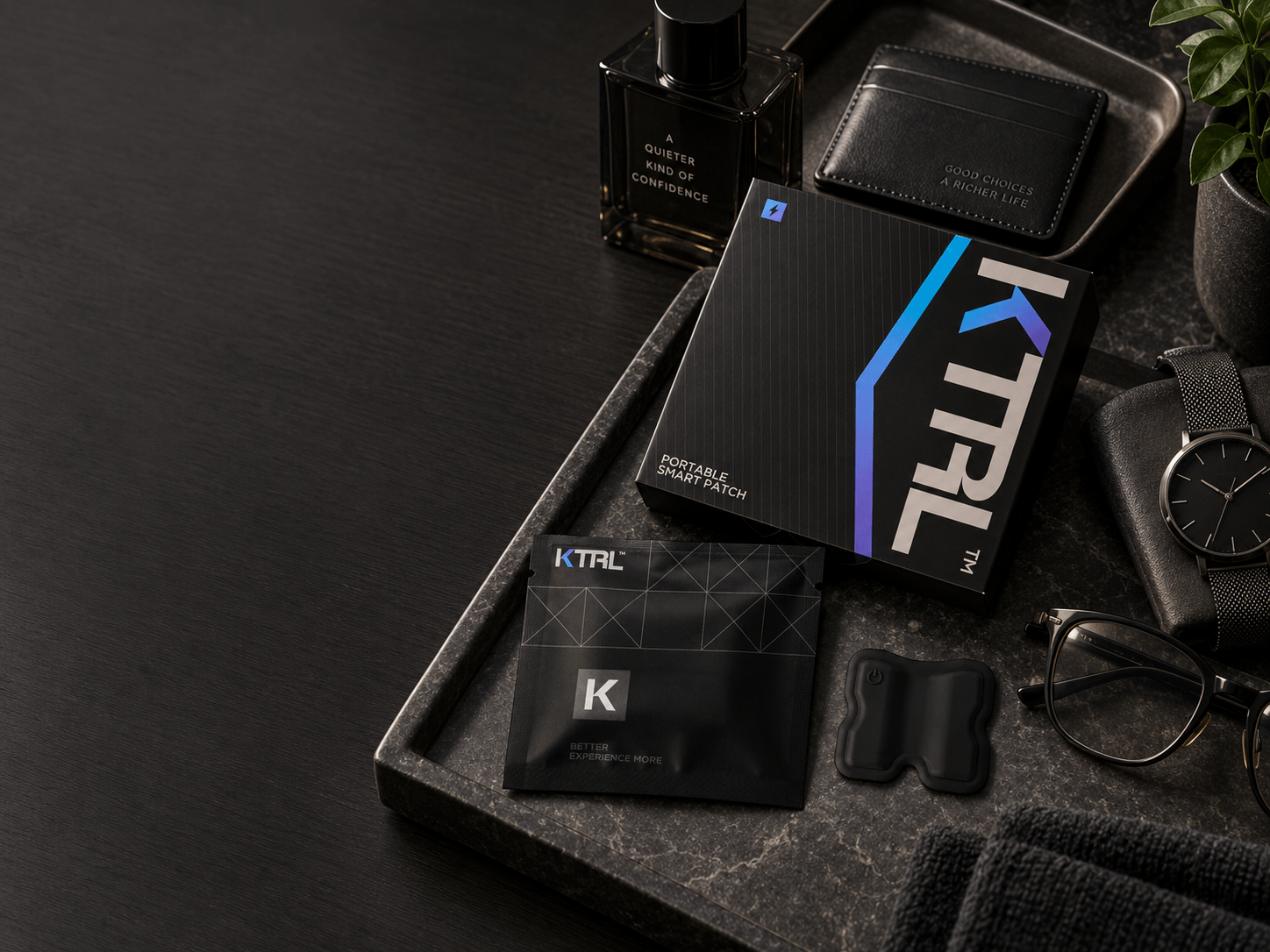
Low-Pressure Intimacy When the Outcome Feels Uncertain provides flexible expectations for couples. For individual planning, use the discreet male wellness routine guide. KTRL's rhythmic physical sensation and one-session format can be considered as an optional part of a private adult routine with clear instructions and personal choice.
Join the email list for conversation cards, no-shame education, and verified KTRL information.
KTRL Portable Smart Patch is a consumer lifestyle product for adult external use; it is not intended to diagnose or treat a medical condition, individual experiences vary, and users should follow the printed instructions and seek qualified professional advice for persistent or distressing concerns.
Frequently asked questions
Should I talk immediately after an erection problem?
A brief reassurance may help, but a fuller conversation is often easier later, when privacy and emotional regulation are better.
What if my partner assumes I am no longer attracted?
Correct that interpretation only if you can do so honestly, then explain that erection response and attraction are not identical.
Should we keep trying during the conversation?
The conversation should not create an expectation of sex. Any later activity requires fresh, mutual consent.
When does the topic need professional help?
Consider health guidance for a recurring, sudden, painful, or distressing change, and relationship support when blame, avoidance, or conflict remains stuck.
Comments (0)
Please login to comment.
No comments yet.