Low-Pressure Intimacy When the Outcome Feels Uncertain
How to protect consent, connection, and choice when erection, ejaculation timing, orgasm, or desire feels uncertain—without turning intimacy into a pass-or-fail...

Low-pressure intimacy means neither partner has to produce a specific body response or complete a predetermined sequence. Both people agree that closeness can continue, change direction, pause, or stop. The purpose is to protect consent and connection when erection, ejaculation timing, orgasm, or desire feels uncertain.
Pressure grows when only one ending counts
If success means “the erection must stay firm,” “penetration must happen,” “ejaculation must take a certain amount of time,” or “both people must reach orgasm,” every body change can feel like a warning. Attention shifts from sensation and communication to monitoring.
NIDDK's diagnostic guidance separates erection, desire, ejaculation, and climax, reminding readers that sexual function contains several domains rather than one pass-or-fail response (NIDDK).
Low pressure does not mean low care. It means the couple cares about choice and communication more than a single endpoint.
Agree on the purpose before the moment
Ask:
“Would you like some closeness tonight with no required outcome? We can check in, change direction, or stop at any point.”
Clarify what each person is open to and what is off the table. Consent is specific and current; agreement to affection is not agreement to every sexual activity.
ISSM-reviewed guidance on desire discrepancy emphasizes open, nonjudgmental communication, clear boundaries, and consensual encounters without pressure (ISSM).
Use a choice-based intimacy menu
Option | Example language | What it protects |
Continue | “This feels good; I want to keep going.” | active interest |
Change | “I want closeness, but a different pace or activity.” | flexibility |
Affection only | “I want touch without sexual escalation.” | warmth without obligation |
Pause | “I need a moment without questions or fixing.” | regulation and body awareness |
Stop | “I am done for tonight.” | clear consent boundary |
The menu is not a staircase. No option must lead to another, and either person can revise a choice.
Before: remove the hidden scorecard
Each person names one worry and one preference:
· “I worry that an erection change will disappoint you.”
· “I worry that a pause means you no longer want me.”
· “I prefer neutral questions rather than reassurance demands.”
· “I prefer affection to remain available even if we stop.”
Then agree on language. “What would feel good now?” is usually less evaluative than “Is it working?”
If silence has already created arguments, first use How to Talk About Erectile Dysfunction With a Partner.
During: notice without monitoring
Monitoring asks, “Am I firm enough? How long has it been? Is my partner disappointed?” Noticing asks, “What do I feel, and what do I choose?”
Use short check-ins:
· “Comfortable?”
· “Same, slower, different, pause, or stop?”
· “Do you want words, quiet, or space?”
· “I am interested, and I want to change direction.”
Do not repeatedly test the erection or time ejaculation. If either person becomes distressed, pause the activity rather than turning relaxation into another assignment.
After: discuss connection before performance
Ask:
1. What felt comfortable or connecting?
2. Was any boundary unclear?
3. Did either person feel evaluated, rejected, or pressured?
4. What should stay the same or change next time?
5. Is a health or relationship conversation needed outside intimacy?
Avoid grading firmness, duration, or orgasm unless the person wants to share that information for a health history. The review should build clarity, not create a delayed test.
Low pressure is not avoidance
Flexible intimacy should not become a way to ignore a recurring, sudden, painful, or distressing change. NIDDK explains that erection concerns may warrant medical, sexual, and mental-health history and targeted assessment (NIDDK).
Track relevant patterns outside the moment: onset, frequency, context, morning or solo erections when relevant, desire, ejaculation, orgasm, pain, urinary symptoms, medicines, and health changes. Do not stop prescribed medicine on your own.
Qualified relationship or sexual-health support may help if pressure, avoidance, blame, or anxiety remains stuck.
Keep both partners visible
The ESSM position statement supports a biopsychosocial and partner-aware approach to erectile dysfunction while acknowledging variation in preferences and evidence limitations (ESSM).
The man should not be reduced to his erection. The partner should not be reduced to a cheerleader or silent observer. Both can state feelings, desires, and limits. Neither is responsible for producing the other's body response.
If a partner feels rejected, Why a Partner May Feel Rejected When Erection Difficulties Happen provides before-during-after language.
Communication helps, but keep expectations realistic
A peer-reviewed meta-analysis found positive associations between sexual communication and sexual and relationship satisfaction, with the quality of communication particularly relevant (PubMed). This does not mean one conversation determines outcomes.
The practical goal is smaller: reduce mind-reading, clarify boundaries, and make the next decision together.
When low pressure is not safe enough
Do not use this menu where there is coercion, repeated boundary violation, fear, or violence. A communication exercise cannot make an unsafe situation safe. Prioritize local specialist support and immediate safety needs.
Fit personal wellness into a calm routine
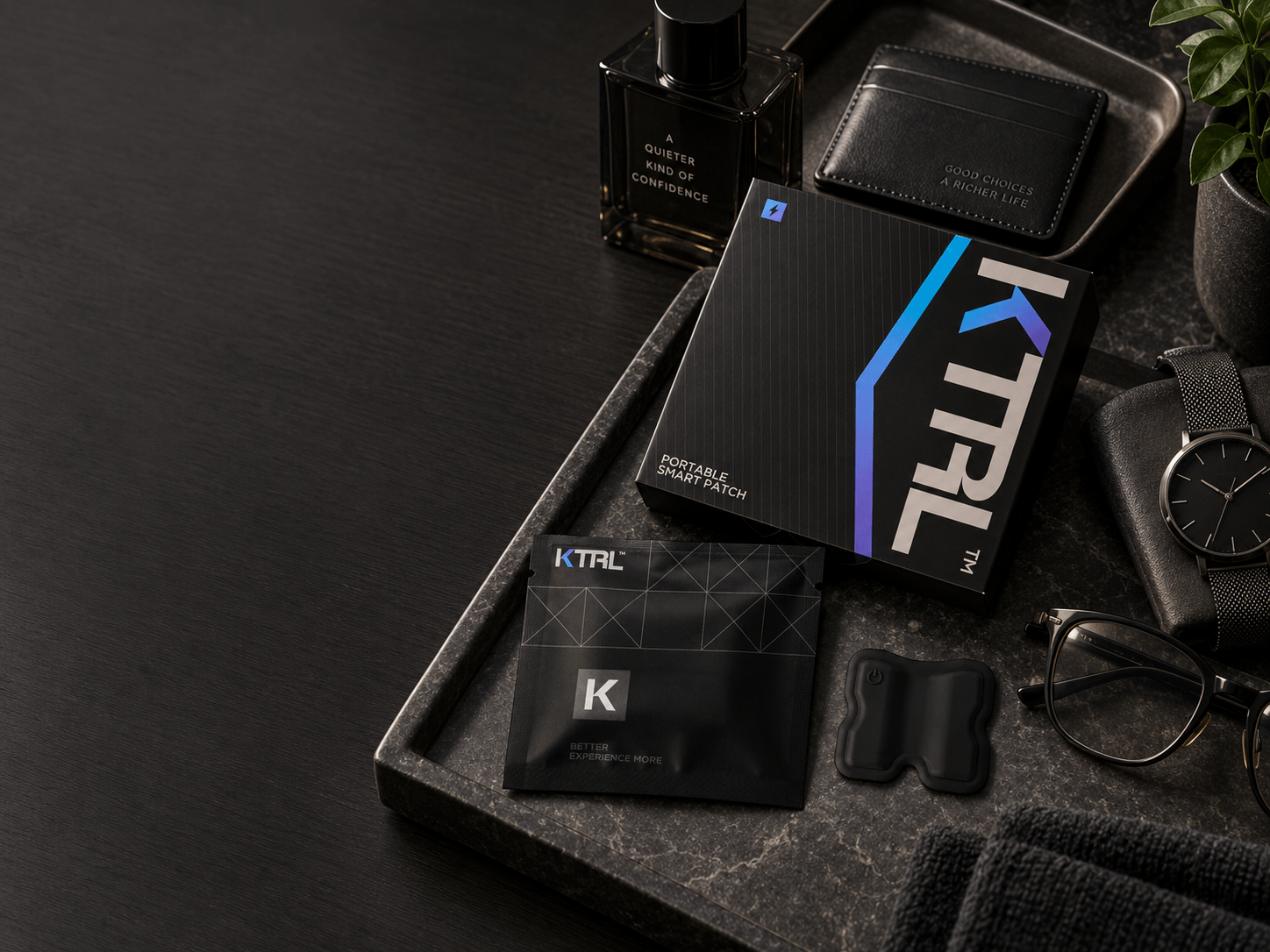
Some adults prefer to explore a personal routine separately from partnered intimacy. How KTRL Fits Into a Private Wellness Routine explains preparation, privacy, and one-session planning. KTRL's rhythmic physical sensation can be considered as an optional component of that self-directed routine, with instructions and comfort guiding use.
Join the email list for low-pressure conversation tools, no-shame education, and verified KTRL information.
KTRL Portable Smart Patch is a consumer lifestyle product for adult external use; it is not intended to diagnose or treat a medical condition, individual experiences vary, and users should follow the printed instructions and seek qualified professional advice for persistent or distressing concerns.
Frequently asked questions
Does low-pressure intimacy mean avoiding sex?
No. It means any sexual activity is mutually chosen and no single body response or ending is mandatory.
What if an erection changes during intimacy?
Use the agreed menu: continue differently, choose affection, pause, or stop. Do not treat the change as a verdict about attraction.
Can we plan intimacy without creating pressure?
Yes. Planning can cover privacy, boundaries, and available time while keeping the outcome flexible.
When should we seek professional guidance?
Consider health guidance for persistent, sudden, painful, or distressing changes and qualified relationship support when conflict or avoidance continues.
Comments (0)
Please login to comment.
No comments yet.