Desire Present, Erection Absent: What Questions Help Separate the Possibilities?
A practical question map for separating desire, body response, context, and when to seek qualified guidance.
Yes, sexual desire can be present while an erection is absent or inconsistent. Desire describes felt interest; erection is a physical response. The next useful step is to note whether the change is isolated or recurring, situational or widespread, sudden or gradual, and connected with health, medicines, stress, pain, or other sexual-function changes.
Desire and erection answer different questions
Sexual desire answers, “Do I feel interested in sexual activity?” Erection answers, “How is my body responding physically right now?” These signals often interact, but one does not reliably substitute for the other.
NIDDK explains that clinicians ask separately about sexual desire, erection, ejaculation, and climax during erectile-dysfunction assessment (NIDDK). Erection, Arousal, Desire, Ejaculation, and Orgasm provides a fuller function map.
Use the desire-body-context routing map
Route | Questions to record | Why it helps |
Desire | Is interest clearly present before or during intimacy? | separates motivation from body response |
Erection | Is the difficulty getting firm, staying firm, or both? | identifies the main erection pattern |
Situation | Does it differ alone, with a partner, on waking, or by setting? | shows whether context changes the response |
Timeline | One event, occasional, recurring, sudden, or gradual? | distinguishes variability from a pattern |
Health inputs | Medicines, illness, pain, sleep, alcohol, substances, mood? | prepares a safer health discussion |
Impact | Distress, avoidance, arguments, or rushing? | shows the personal and relationship burden |
The map cannot identify a cause by itself. It makes the conversation more precise.
Ask whether the erection is absent or difficult to maintain
“No erection” and “an erection that becomes softer” are different experiences. NIDDK lists getting an erection only sometimes, getting one that does not last long enough, and being unable to get one as possible ED symptoms (NIDDK).
Record:
· whether firmness begins at all;
· whether it changes after a condom, position, interruption, or thought;
· whether rushing begins because of fear that the erection will change;
· whether ejaculation happens before or after the erection concern;
· whether the pattern occurs across different forms of sexual activity.
Read Why Can I Get Hard but Not Stay Hard? if maintenance is the main issue.
Compare situations without declaring a diagnosis
Morning or solo erections can be useful history, but they do not produce a home diagnosis. A man may notice reliable erections in one setting and difficulty in another. That pattern may prompt questions about pressure, privacy, relationship dynamics, stimulation, or learned attention, while health factors can still be relevant.
Use Morning Erections but Trouble During Sex and Situational vs. Recurring Erection Difficulties to organize the pattern.
The ESSM position statement recommends a biopsychosocial view that includes subjective arousal, anxiety, beliefs, couple communication, conflict, and medical context (ESSM). This broad view prevents one situational clue from being mistaken for a complete explanation.
Review health and medicines alongside context
NIDDK lists several possible contributors to erection difficulty, including health conditions, medicines, mental or emotional issues, and lifestyle behaviors. Anxiety, depression, and stress can be relevant, as can alcohol and other substances (NIDDK).
Write down:
· new diagnoses, illness, injury, or pain;
· new prescriptions, dose changes, over-the-counter products, or supplements;
· changes in sleep, mood, energy, alcohol, or substance use;
· urinary, penile, pelvic, orgasm, or ejaculation changes;
· whether the onset was sudden or gradual.
Do not stop or change a prescribed medicine on your own. Bring the exact medicine and dose to the prescriber.
Notice the pressure-rushing loop
Desire can be strong while attention becomes dominated by “Will I get hard?” The man monitors the body, notices a change, rushes, and becomes more anxious. A partner may interpret the urgency or withdrawal as lack of attraction, creating more tension.
Try:
“My desire is present, but I am monitoring my erection so closely that the moment feels like a test. I want us to separate interest from body response and choose a lower-pressure pace.”
The Self-Monitoring Loop explains how watching the body can become part of the experience.
Decide whether this is an observation or an appointment question
One variable event may call for context and observation. Arrange qualified guidance when the difficulty recurs, begins suddenly, causes distress, or appears with pain, urinary symptoms, medicine or health changes, or other sexual-function changes.
NIDDK states that health professionals use medical, sexual, and mental-health history, physical examination, and selected tests when appropriate (NIDDK). Use How to Talk to a Doctor About Erection Difficulties to prepare.
Where an optional sensory routine may fit
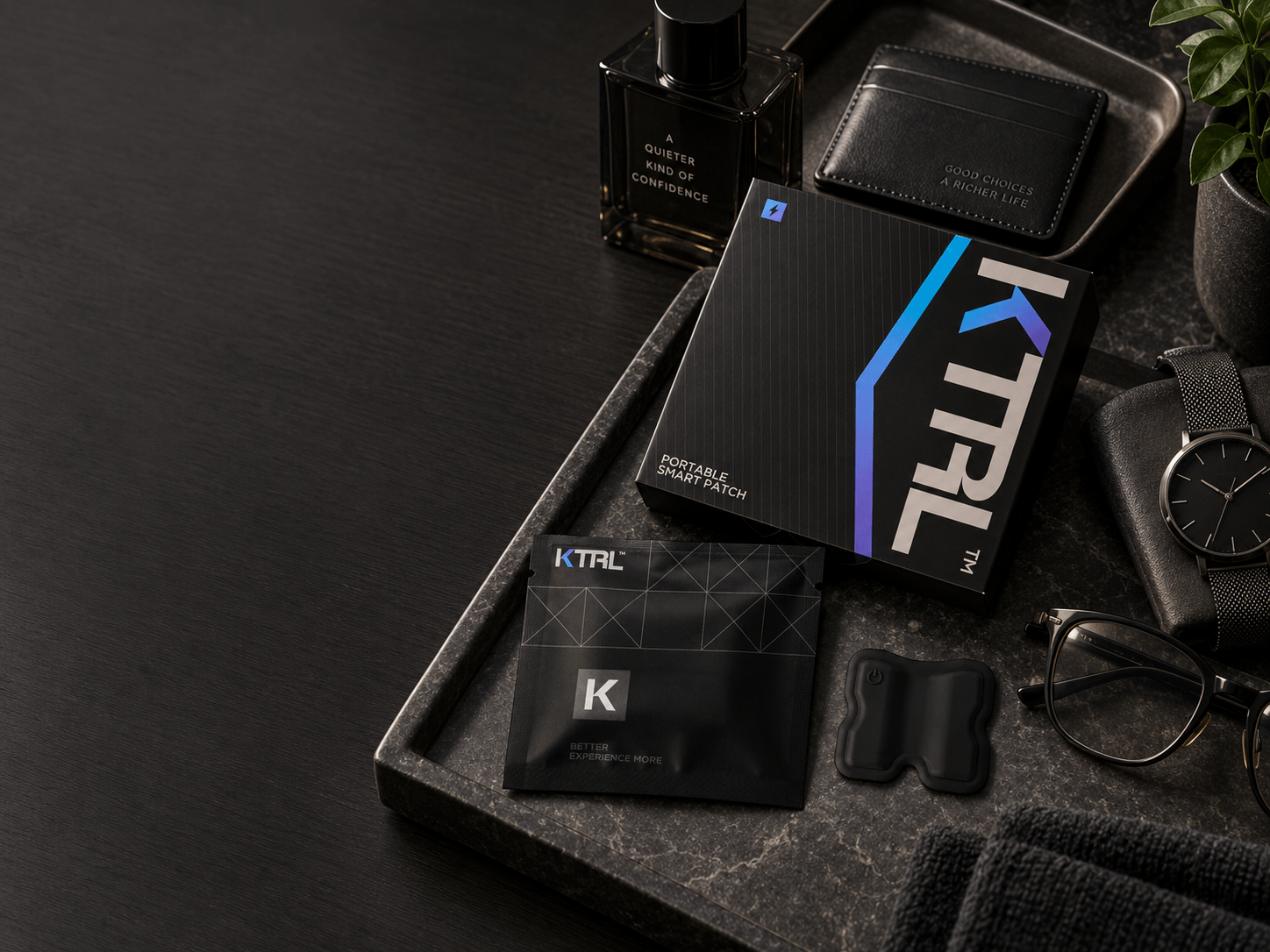
After separating the health question from the experience goal, some adults may still value a deliberate routine centered on privacy, rhythmic physical sensation, and attention. The discreet adult wellness routine guide helps match the routine to the actual goal. KTRL can add a repeating sensory cue within that self-directed routine when sensory exploration is the reason for choosing it.
Join the email list for no-shame function maps, appointment tools, and verified KTRL information.
KTRL Portable Smart Patch is a consumer lifestyle product for adult external use; it is not intended to diagnose or treat a medical condition, individual experiences vary, and users should follow the printed instructions and seek qualified professional advice for persistent or distressing concerns.
Frequently asked questions
Can I have strong libido and erectile dysfunction?
Yes. Desire and erection are separate domains. A clinician determines whether a recurring erection pattern meets diagnostic criteria and what factors may matter.
Do morning erections prove everything is physical or psychological?
No single observation establishes the cause. Morning erections are one part of a broader medical, sexual, and mental-health history.
Should I keep testing myself?
Repeated self-testing may add pressure and produce confusing data. Record naturally occurring patterns and seek qualified guidance when the concern persists or causes distress.
What should I tell my partner?
State both signals: “My interest is present, and my erection has been inconsistent. I want us to avoid treating either one as a judgment about attraction.”
Comments (0)
Please login to comment.
No comments yet.