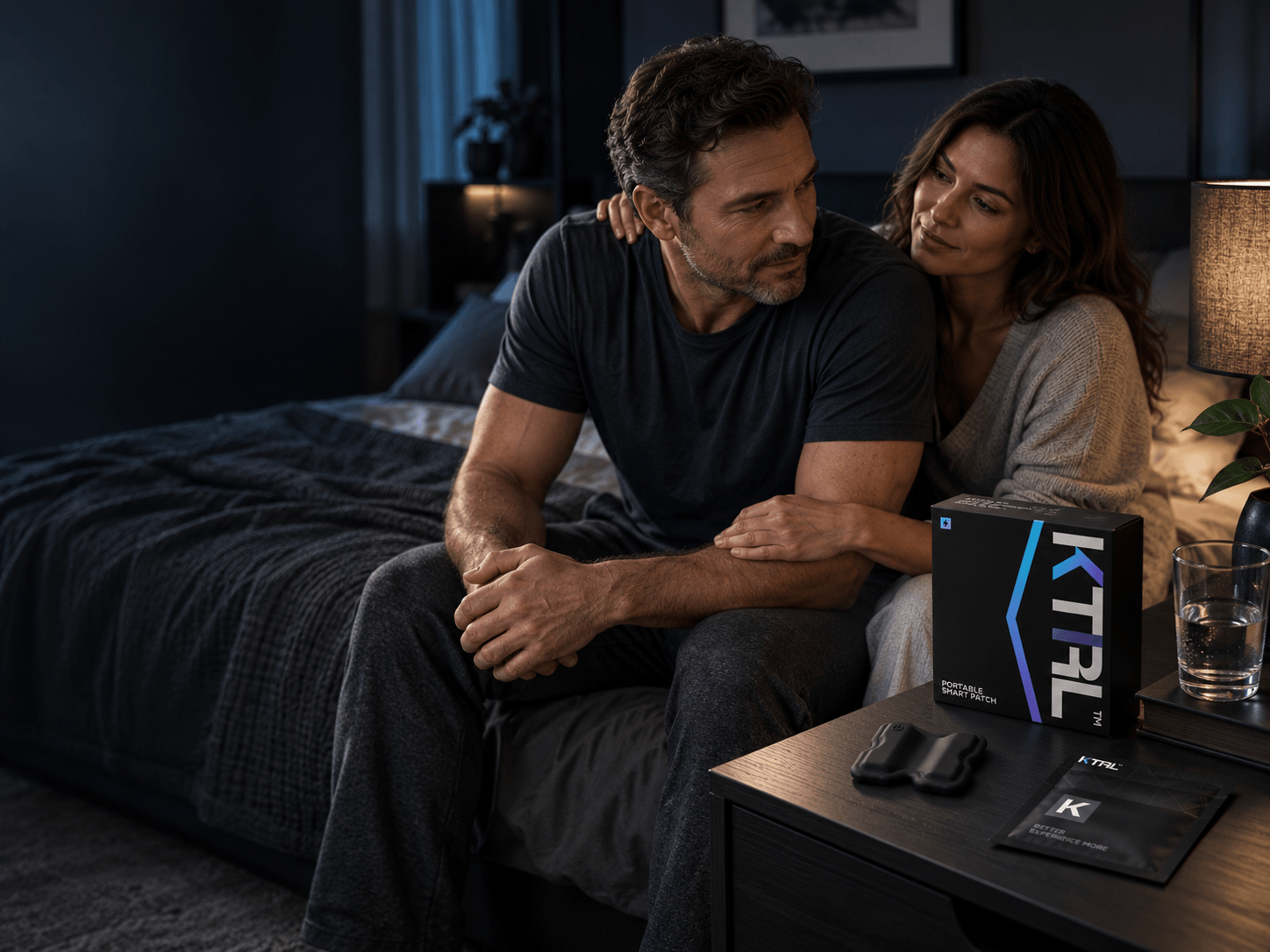
Can Rhythmic Sensation Help You Notice Rising Arousal?
Using a steady sensory cue to track changes in arousal without turning it into a test
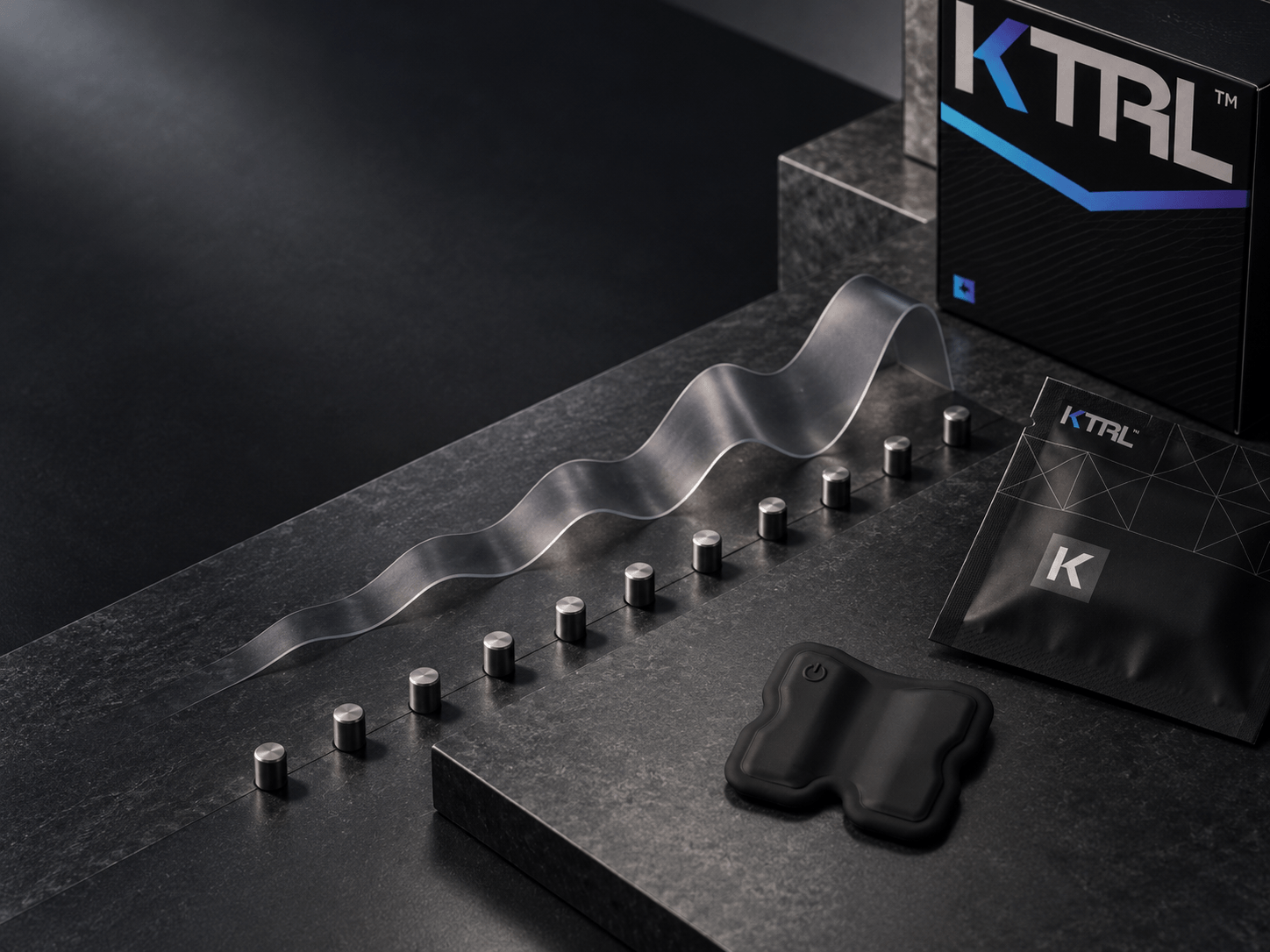
A clear rhythmic sensation may help some people notice how their arousal is changing by giving the body a steady reference point. KTRL directly provides that repeating physical cue. Whether it improves awareness or pacing is personal, so the useful test is observation—not a fixed performance expectation.
A cue is different from arousal itself
Arousal is a developing mental and physical response. A sensory cue is simply something noticeable that can help a person pay attention to that response.
The KTRL Portable Smart Patch creates rhythmic physical sensation through controlled electrical pulses and external skin contact. This broad delivery route is known as Transcutaneous Electrical Stimulation (TES).
KTRL does not need to “measure” arousal to be useful as a cue. The user notices the repeating sensation, then compares it with changes in breathing, muscle tension, urgency, attention, and comfort.
Why a steady reference point may help
Changing sensations can be difficult to notice when attention is scattered or when someone feels rushed. A repeating cue can serve as a reference point:
• “The rhythm feels steady, but my breathing is getting faster.”
• “The cue is the same, but urgency is increasing.”
• “I can still notice the rhythm clearly, so this is a good time to slow down.”
• “The cue has become distracting, so I want to pause or stop.”
This is a practical body-awareness method, not evidence that KTRL detects or clinically changes arousal.
A simple three-zone arousal map
The zones below are not a diagnostic scale. They are a personal language for noticing change.
Zone | What you may notice | How the rhythmic cue may be used |
Building | Interest, comfortable attention, early physical changes | Notice the cue without trying to control the experience |
Rising | Faster breathing, more tension, stronger urgency or focus | Compare the steady rhythm with changing body signals; choose whether to slow down |
High | Strong urgency, narrow attention, less sense of choice | Pause, change pace, communicate, or stop based on comfort and your plan |
The point is not to remain in one zone. It is to notice transitions earlier and respond deliberately when that matters to you.
How to use KTRL as an awareness cue
Set one observation goal
Before the session, choose one question: “Can I notice the difference between comfortable building arousal and the point where I start to feel rushed?”
One goal keeps the product from becoming another complicated task.
Notice the rhythm first
Identify the repeating sensation while you are comfortable. This gives you a baseline before arousal changes significantly.
Compare, do not judge
As the moment develops, compare the steady cue with breathing, tension, urgency, and attention. Avoid treating any change as success or failure.
Choose one response
If urgency rises faster than wanted, choose one action: slow down, pause, change activity, breathe, or communicate. The cue is a reminder; the response remains your choice.
Review the experience afterward
Ask whether the rhythm made body changes easier to notice. Also assess comfort, sensory enjoyment, setup, and whether you would use the format again.
Awareness is not the same as control
Noticing a signal earlier may create more opportunity to choose a response, but it does not mean every response will produce the same timing outcome. Stress, fatigue, setting, relationship dynamics, erection concerns, and normal variation can all affect the experience.
Clinical evaluation of ejaculation concerns also considers perceived control, distress, and interpersonal difficulty rather than relying on time alone. (EAU guideline)
For that reason, a useful KTRL observation may be “I noticed urgency earlier and felt less rushed,” even when elapsed time is not measured.
When the cue becomes too much
A useful cue should remain comfortable. Stop use if the patch causes pain, burning, unusual heat, itching, concerning or persistent redness, or other obvious discomfort.
Thirty minutes is the maximum total session time, not a goal. End sooner whenever you choose. Do not increase attention to the cue by pressing, repositioning, adding conductive material, or altering the product outside the printed instructions.
Why the product format may support attention
KTRL is self-contained and single use. It has built-in non-rechargeable power and needs no app, cable, charging routine, or separate controller. It also needs no separately applied topical delay formula.
For some users, fewer setup decisions can make it easier to focus on comfort, rhythm, and communication. That practical simplicity may be as important as the sensory cue itself.
Frequently asked questions
Does KTRL monitor arousal?
No. KTRL creates rhythmic physical sensation. The user may choose to use that sensation as a reference point for personal body awareness.
Can a rhythmic cue help me slow down?
It may help some users remember to pause or adjust pace. The cue does not make the decision automatically; it provides something noticeable around which a pacing routine can be built.
Do I need premature ejaculation to use this approach?
No. Body awareness and deliberate pacing may be relevant to adults who want a more intentional experience, even without a diagnosis.
Should I count every pulse?
No. Counting can create unnecessary mental work. Notice the overall rhythm and compare it with how your body is changing.
What if I notice the rhythm but no change in timing?
Evaluate whether the sensation, routine, and awareness still added value. KTRL can remain a worthwhile sensory product even when timing varies.
Use rhythm as information, not a test
KTRL provides a steady physical cue that may help some adults notice rising arousal earlier and make pacing choices more deliberately. Its value should be judged through comfort, awareness, sensory enjoyment, and routine fit rather than a stopwatch result.
Review the current KTRL sensory format if a repeating external cue fits the kind of body-awareness routine you want.
KTRL Portable Smart Patch is a consumer electronic product intended for adult external skin-surface contact use only. It is not a medical device and is not intended to diagnose, treat, cure, or prevent any disease or medical condition. Individual experience may vary. Always read and follow the printed product instructions. Stop use immediately if discomfort occurs, and seek qualified professional advice for persistent or distressing sexual health concerns.
Comments (0)
Please login to comment.
No comments yet.