
Can KTRL Help When Stress Has Reduced Sexual Interest?
How to separate stress-related low interest from a desire for novelty, and when a sensory routine may make sense.
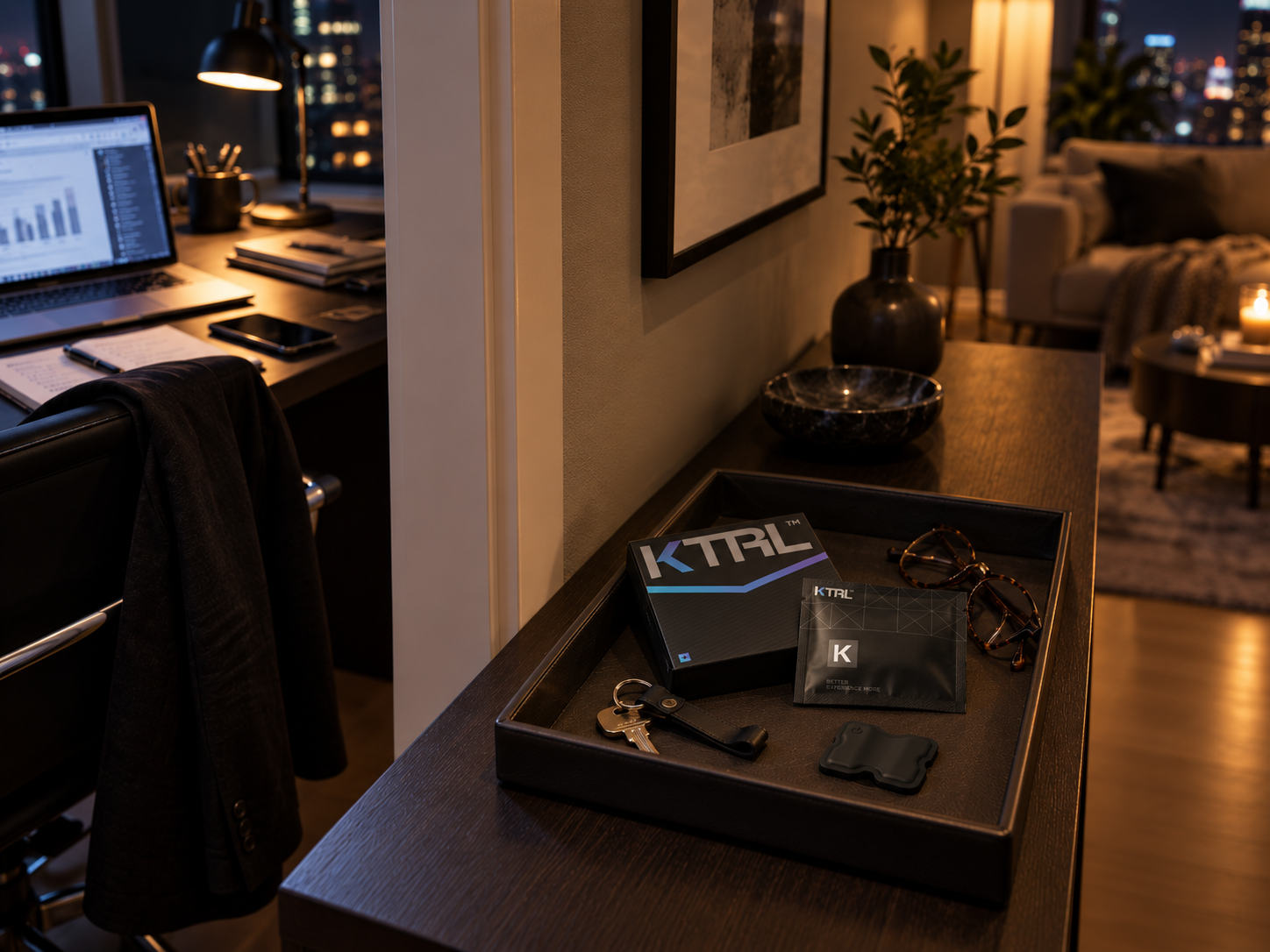
Stress can contribute to low sexual desire, but it is not the only possible explanation. Start by asking what, if anything, you want now: sex, non-sexual closeness, a conversation, time alone or nothing further. You do not have to agree to an activity to find out whether you might enjoy it. KTRL should not be expected to treat stress or restore desire; the product materials available for this article do not establish those effects.
By KTRL | Updated:
Talk about what you want without pressure
You can describe your current wishes without identifying the cause of a change in desire. Choose a time when either person can speak without an expectation that the conversation will lead to sex.
The NHS guidance on low sex drive lists stress, anxiety, depression, relationship problems, medicines and long-term health conditions among possible contributors. A conversation can clarify what you want; it does not diagnose which of those factors applies.
Say what you want without promising a result
These examples offer ways to express a preference, not a method that promises to restore desire. Adapt them to your situation, or simply say no.
“I have less interest at the moment, and I do not want that to become a test of either of us.”
“I would like closeness tonight, but I do not want sexual activity.”
“I am unsure what I want. Please treat that as a reason to wait.”
“I would like to talk about this, without deciding that we have to try anything.”
You do not owe a promise to feel differently later. You can also choose not to discuss the subject at that moment.
Ask, then accept the answer
A partner might ask, “Would you like any kind of closeness, or would you prefer space?” Offer only choices you are prepared to accept. Repeating the request, bargaining over a refusal or presenting a purchase as a reason to proceed can turn an invitation into pressure.
A declined activity does not need to be replaced with another one. Someone can decline sex, touch and a conversation; none is owed as compensation for saying no.
Keep consent specific and ongoing
Consent to one activity does not cover another, and an initial yes can change. What matters is a freely given agreement to the activity being proposed.
A discussion is not agreement to try something
Someone may want a kiss but no further contact, or want intimacy without a product. Agreement to hear about an idea is not agreement to try it. An erection or other physical response does not establish consent either.
Ask about a new activity directly and allow a clear refusal. Buying, opening or applying a product creates no obligation to continue.
Uncertainty is a reason to pause
“Maybe”, hesitation or an unclear answer is not permission to proceed. Pause and leave the decision open. You do not need to persuade the other person to discover whether they will eventually enjoy an activity.
A previous yes does not require finishing
If someone no longer wants the activity, stop. Change direction only if everyone freely agrees to the new choice; stopping without replacing the activity is also an option.
For a broader discussion of pressure before, during and after intimacy, see stress, anxiety and relationship pressure during intimacy.
Where KTRL fits in the conversation
KTRL Portable Smart Patch, model WDC201, is a single-use consumer electronic product that adds rhythmic physical sensation through external skin contact. A change in sensation during one experience does not establish a lasting increase in sexual desire.
Discuss the product only if the idea is welcome
You might ask, “Would you like to hear about this patch, or would you prefer not to discuss products?” If the conversation is welcome, explain its format and restrictions without presenting it as a way to fix low desire.
Someone may already be interested in a new sensation. That interest is not evidence that a product will treat stress, restore desire or repair a relationship. If the suggestion is unwelcome, leave it there.
KTRL is not a medical device and is not intended to diagnose, treat, alleviate, monitor or prevent a disease or medical condition. The comparison of desire, arousal and sensation explains why these experiences should not be treated as interchangeable.
A willing conversation does not replace the use restrictions
The intended wearer must be a man aged 18–60 inclusive, meet all product restrictions and be able to follow the printed instructions. Everyone involved must freely agree. Read the restriction and consultation guide; do not proceed with an unresolved restriction or instruction.
Track the same-use limit: at most 30 minutes of cumulative powered-on time. Switched-off intervals do not count; restarting continues the existing total. Track the total yourself.
Switch off before removal or adjustment: a position or adhesion adjustment belongs to the same use. Do not reuse the patch in a later session. Gentle bending to fit the skin is permitted; excessive bending or folding is not.
Stop for discomfort: if pain, stinging, burning, redness, swelling, itching or other obvious discomfort occurs, stop immediately, switch off and gently remove the patch. Do not reapply it to test tolerance after a reaction. If discomfort persists, discontinue further use and consult a qualified healthcare professional.
Stop for a product fault: do not keep using an abnormal or malfunctioning product. Contact KTRL Support about the fault; health symptoms require appropriate healthcare advice.
The complete WDC201 user guide explains handling and stopping rules. A decision to stop does not have to wait for discomfort or the time limit.
When low sexual desire deserves separate support
Seek qualified advice if reduced interest worries you, persists, causes distress or occurs with other concerning changes. You do not have to complete a product trial or wait a set number of weeks before asking for help.
Describe the change without diagnosing it yourself
Useful details include when it began, whether it varies by situation, how it affects you and any relevant medicines or treatment changes. Mention pain, erection changes, fatigue or mood symptoms if present. These details help the discussion; they do not identify the cause on their own.
The NHS recommends speaking with a GP if you are worried about low desire or suspect a medicine is affecting it. Outside the UK, use the appropriate local healthcare service. Do not change or stop a prescribed medicine on your own because you suspect it affects desire.
Support can take more than one form
The European Association of Urology (EAU) guidance on low sexual desire describes assessment of medical, sexual, psychological, relationship and endocrine factors. It does not reduce low desire to stress alone.
A conversation may lead to healthcare, relationship support or a decision to take more time. It does not need to end with sex or a product trial. Your current boundary remains valid while you consider the next step.
Frequently asked questions
Should I try KTRL to find out whether it makes me want sex?
Do not use a product to push through a lack of willingness. The available product evidence does not establish that KTRL restores desire, and you can decline the activity entirely.
What if one person wants to try it and the other is unsure?
Pause. Curiosity from one person does not supply consent from the other, and uncertainty should not be treated as agreement.
Can I agree and then change my mind?
Yes. Everyone remains free to stop, including after a product has been bought, opened or applied. If a patch is in use, follow the instructions for switching off and gentle removal.
Does reduced interest always mean a medical problem?
No. Interest can vary with context, but an unwanted, persistent or concerning change can justify appropriate advice. A checklist or one experience cannot diagnose its cause.
Sources
Sources checked on . The NHS and EAU sources provide health context; they do not establish a KTRL effect on stress or desire. Individual health concerns belong with a qualified healthcare professional.
NHS. Low sex drive (loss of libido). Last reviewed 26 May 2026; guidance on causes and when to seek advice. Its GP pathway refers to UK services.
European Association of Urology. Low Sexual Desire and Male Hypoactive Sexual Desire Disorder. Sexual and Reproductive Health Guidelines; contributors and clinical assessment.
KTRL. WDC201 user guide. Product restrictions, handling and stopping rules; the webpage identifies the English 3c instructions updated 22 May 2026 as part of its basis.
Comments (0)
Please login to comment.
No comments yet.