
KTRL vs Delay Condoms: Different Roles, Different Feel
A delay condom provides a barrier with a product-specific timing feature. KTRL adds rhythmic sensation through a separate patch. It provides no pregnancy or STI protection.
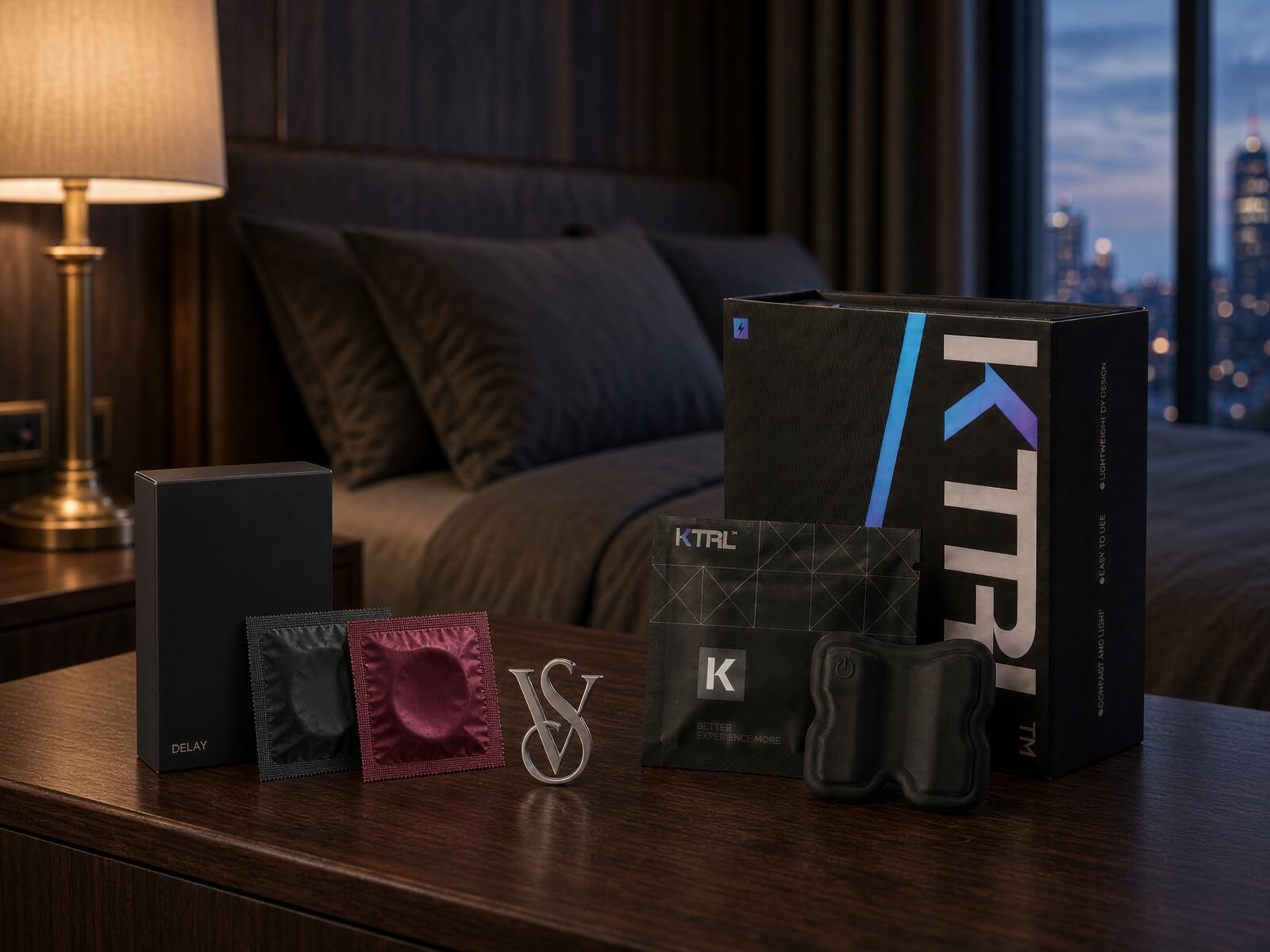
KTRL and delay condoms have different roles: a condom provides a barrier, while KTRL adds rhythmic physical sensation. A condom's delay feature changes its approach to sensation; it does not replace correct use or make protection absolute. KTRL provides no protection against pregnancy or sexually transmitted infections (STIs), including if a condom slips or breaks.
By KTRL | Updated:
KTRL vs delay condoms: protection comes first
If you need protection against pregnancy or STIs, choose a suitable condom first. A sensory patch cannot replace the barrier or act as backup protection. WHO explains that correct, consistent condom use reduces the risk of most STIs and unintended pregnancy. Material, fit, condition and instructions still matter. 1
KTRL Portable Smart Patch, model WDC201, is a single-use consumer electronic sensory product for men aged 18–60, inclusive, for designated external skin contact. It is not a medical device and is not intended to diagnose, treat, alleviate, monitor or prevent a disease or medical condition. Its user guide describes its own restrictions and handling.
| Question | Delay condom | KTRL WDC201 |
|---|---|---|
| Main format | Condom with a product-specific delay feature. | External electronic sensory patch. |
| Protective role | Barrier when suitable and used correctly; protection is not absolute. | No pregnancy or STI protection. |
| Sensory approach | Check the material, thickness and any anaesthetic ingredient. | Adds rhythmic physical sensation. |
| Label checks | Size, material, ingredients, expiry, lubricants and contact precautions. | Age, skin and health restrictions, placement and cumulative time limit. |
| Another occasion | A new condom is required. | A fresh patch is required. |
Sources: WHO condom guidance, the product instructions below and the WDC201 guide. This comparison does not establish that the products can be used together.
What does a delay condom's label tell you?
The exact label tells you how the product changes sensation and what conditions apply. “Delay condom” is a category name, not a standard formulation. NHS guidance mentions thicker condoms as one way to reduce sensation; other products contain a local anaesthetic. 2
A specific UK example: Durex Extended Pleasure
The UK manufacturer's page for Durex Extended Pleasure Regular Fit, 10 pack lists natural rubber latex, regular thickness and Performa silicone lubricant. Its linked instructions state that the Performa silicone lubricant contains 5% benzocaine, a local anaesthetic. In this example, the delay feature comes from the anaesthetic ingredient. Instructions, page 1
These details belong to that UK version. They do not establish the formulation, registration or availability of a similarly named pack in Mexico or another market. Check the label and instructions supplied with the pack sold where you live.
Read the contact and use precautions
The UK instructions include the following conditions; they are not a replacement for reading the full document:
Check both partners' suitability. Do not use with a known latex or benzocaine allergy, or if you or your partner has inflamed or broken skin. If pregnant or breastfeeding, ask a health professional before use.
Stop for discomfort. The lubricant can cause irritation, rash, burning or itching. Stop use if discomfort or irritation occurs; if it does not improve, seek medical advice.
Act immediately on urgent symptoms. If either person has breathing difficulty or blue lips during use, stop immediately and seek immediate medical help.
Check other products touching the condom. Use only lubricants recommended for condoms. The instructions warn that oil-based products and some topical medicines can damage condoms; ask a pharmacist or doctor about the exact products if unsure.
Check the expiry and individual wrapper, put the condom on as directed before genital contact, and use it once. Follow its removal and disposal instructions. Do not transfer the amount, waiting time or removal routine of a separate cream or spray to this condom. Discuss ingredients, contact precautions and reasons to stop with your partner beforehand.
Can a delay condom and KTRL be used together?
Do not assume compatibility from the product names or their separate positions. KTRL must not be used during treatment, or with medicines, that may affect skin sensation, local reactions or judgement about safe use. A condom containing a local anaesthetic is not exempt from that restriction because the ingredient is carried in a condom. WDC201 restrictions
Separate positions do not override a restriction
A pharmacist can clarify the exact ingredient and label, but advice does not override either product's prohibited-use conditions. If suitability cannot be established or you cannot follow both sets of instructions, do not combine the products.
Never put the patch inside a condom, attach it to the condom or use it to alter condom fit. Each product must stay in its permitted position, and the patch needs a clean, dry contact area. These handling conditions are not a compatibility promise.
KTRL's skin-contact materials include conductive gel and TPE insulating foam. Its stated sensory role does not require a separate anaesthetic formulation. That difference does not establish that it is safer than a condom containing an anaesthetic or suitable with every condom material and formulation.
The patch's own time and stop rules remain
For permitted use on the designated clean, dry, intact external skin, KTRL's limit is 30 minutes of cumulative powered-on time during the same use. Switched-off intervals do not count; restarting continues the previous total. Switch off before removing or repositioning for an adjustment during that use. This does not permit a later session with the used patch.
Stop immediately for pain, stinging, burning, redness, swelling, itching or other obvious discomfort; switch off and gently remove the patch. If discomfort persists, discontinue further use and consult a qualified professional. Read the first-use checklist and full restrictions before use.
What should you do if a condom breaks or slips?
Stop the activity and seek prompt advice about pregnancy risk and STI exposure. Emergency contraception or an STI assessment may be relevant. NHS guidance directs people to get urgent help after a condom splits or comes off; KTRL provides no backup barrier and cannot address an exposure. 5
Possible HIV exposure needs immediate assessment
CDC guidance says HIV post-exposure prophylaxis (PEP) must start within 72 hours, and sooner is better. Contact a medical service immediately for assessment instead of waiting until that limit. PEP is not required for every condom failure: a healthcare professional assesses the exposure. The 72-hour window is specific to HIV PEP, not a universal deadline for all care after condom failure. 6
For readers in Mexico: seek a local emergency department or medical service promptly for possible HIV exposure, and qualified healthcare or pharmacy advice about pregnancy risk as appropriate. Do not delay time-sensitive care while waiting for an information website or product-support reply. Seek healthcare advice even if more than 72 hours have already passed.
The linked NHS and CDC pages provide UK and US health information respectively. Their service numbers, eligibility and funding arrangements do not describe Mexican services.
Frequently asked questions
Protection, the specific delay feature and whether a combination is permitted are separate decisions.
Can KTRL replace a condom?
No. KTRL provides no pregnancy or STI protection. If a barrier is needed, choose a suitable condom and follow its instructions regardless of any sensory preference.
Do all delay condoms contain benzocaine?
No. Some approaches reduce sensation through thickness, while others use an anaesthetic ingredient. The 5% benzocaine detail here applies to the Performa lubricant in the named UK example; read the exact local pack.
Does correct use of each product prove that the combination is suitable?
No. Each product's conditions still apply, including KTRL's restriction concerning treatment or medicines that affect sensation or safe use. Correct positioning cannot cancel a prohibited-use condition.
Where can I compare other formats or get help for an ongoing concern?
See the comparison of product formats and the delay spray comparison for their separate purposes and instructions. For persistent or distressing sexual concerns, read when to seek professional advice. Sensory preference should never compromise required protection or consent.
References
Sources checked on . The Durex example is a UK product and instruction document. WHO provides general health information; NHS and CDC guidance retain their UK and US service contexts. None of these sources establishes compatibility between KTRL and a particular condom.
WHO. Condoms. Fact sheet dated 14 February 2025; correct and consistent use and the protective role of condoms.
NHS. Ejaculation problems. General discussion of thicker condoms to reduce sensation; page last reviewed 9 February 2023.
Durex UK. Extended Pleasure Regular Fit, 10 pack. Product material, regular thickness and lubricant details.
Durex UK. Benzocaine-condom instructions (PDF). Pages 1–2: ingredients, precautions and use instructions. Issue Rev 04 (06/2024), with a June 2025 note about obtaining the safety and clinical-performance summary.
NHS. Condoms. Use guidance and urgent advice after splitting or coming off.
CDC. Preventing HIV with PEP. Immediate assessment after possible exposure and the 72-hour initiation window.
KTRL. WDC201 user guide. Model identity, contact materials, use restrictions and cumulative powered-on time. Its stated basis is the English 3c instructions, updated 22 May 2026, and confirmed website instructions.
Comments (0)
Please login to comment.
No comments yet.