
KTRL vs Pelvic Floor Exercises: Which Goal Comes First?
KTRL adds rhythmic sensation during one private session. Pelvic floor exercises involve practicing muscle contraction and relaxation over time. The useful starting point is your goal.
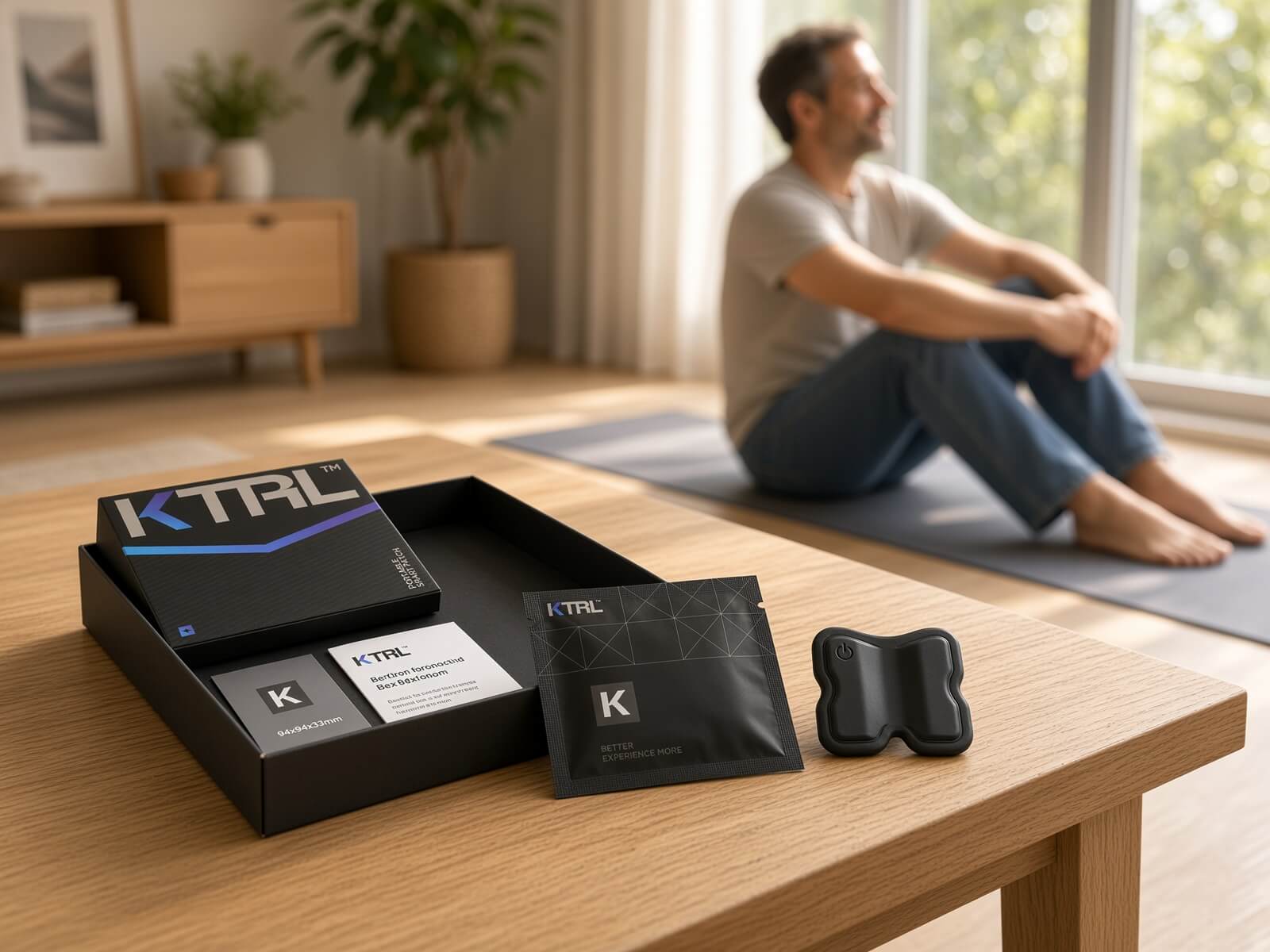
KTRL and pelvic floor exercises serve different goals. KTRL adds rhythmic physical sensation during one use. Pelvic floor exercises involve practising a controlled muscle contraction and full relaxation over time. Feeling a pulse from a patch does not show that you have found the right muscles, strengthened them or completed rehabilitation. Start with your goal: sensory experience, muscle coordination or help with a persistent symptom.
By KTRL | Updated:
KTRL vs pelvic floor exercises: the main difference
Pelvic floor practice involves an active skill: finding the relevant muscles, contracting them and fully releasing them. KTRL is an optional sensory product. These are different activities, with different ways to assess whether they suit your goal.
KTRL Portable Smart Patch, model WDC201, is a single-use consumer electronic product for men aged 18–60, inclusive. It creates a rhythmic physical sensation through external skin contact and uses built-in, non-rechargeable power. It is not a medical device and is not intended to diagnose, treat, alleviate, monitor or prevent a disease or medical condition. 3
| Question | Pelvic floor practice | KTRL |
|---|---|---|
| Main activity | Learn a controlled contraction and full release. | Experience added rhythmic sensation. |
| Preparation | Identify a suitable technique and plan. | Check suitability, prepare the skin and position the patch. |
| Timeframe | Repeated practice suited to the individual plan. | One chosen use. |
| Useful feedback | Technique and symptoms relevant to the plan. | Comfort and sensory preference. |
| What cannot be inferred | One session proves a sexual outcome. | A felt pulse proves training or stronger muscles. |
| Follow-up | Review technique and the plan as advised. | A future occasion requires a fresh patch. |
Clinical discussions of electrical stimulation do not establish that WDC201 strengthens the pelvic floor, restores continence or provides rehabilitation. A physical sensation is not a measure of muscle strength or correct exercise technique.
What pelvic floor practice involves
Learning the contraction and the release matters more than copying a repetition count. The male pelvic floor supports the bladder and bowel and contributes to continence. NHS and NIDDK guidance explains how to identify and practise using these muscles. 1 2
Use an anatomical illustration to understand the area
Gloucestershire Hospitals NHS Foundation Trust provides an illustrated leaflet on pelvic floor exercises for men. Open its Figure 1: pelvic floor muscles to see the anatomy described in the leaflet.
This is an anatomical learning resource. It is not a KTRL placement diagram or evidence that the patch trains the muscles shown.
Learn to contract and fully relax
NIDDK describes squeezing, holding and then fully relaxing the pelvic floor. Tightening the abdomen, thighs or buttocks is not a substitute for finding the intended muscles. If you cannot recognise a contraction or complete release, ask a pelvic health physiotherapist or another appropriately qualified professional to check your technique. 2
Do not make stopping urine midstream your routine exercise, and do not assume extra repetitions bring extra benefit. NIDDK cautions that overdoing the exercises can lead to straining when urinating or having a bowel movement.
The NHS leaflet describes progress over weeks and continued practice over months. That timeframe belongs to its exercise guidance; it is not a promised sexual result or a reason to practise through pain. 1
When an individual exercise plan matters
Your symptoms and ability to relax can change the guidance you need. Pain, urinary symptoms, recent surgery or an existing rehabilitation plan are reasons to seek advice suited to your situation, rather than adopt someone else's exercise schedule.
NIDDK recommends asking a healthcare professional for an exercise plan that meets your individual needs. Useful questions include: 2
Am I contracting the intended muscles and releasing them fully?
What movement, amount of practice and rest are appropriate for me?
What changes should I monitor, and when should the plan be reviewed?
Stop practising if it causes pain or worsens symptoms, and seek advice. Discomfort is not proof that training is working. Persistent concerns may need assessment; see when professional advice should come first.
Considering KTRL while receiving pelvic care
Assess KTRL separately from an exercise or rehabilitation plan. Interest in both does not mean you should exercise while wearing the patch, or that combining them improves training.
Product restrictions still apply
If you are receiving pelvic care, share the exact WDC201 instructions with the professional overseeing it before making a separate product decision. KTRL's prohibited-use conditions include: 3
Surgery, treatment or ongoing recovery at the application site.
Treatment or medicines that may affect skin sensation, local reactions or judgement about safe use.
Peripheral nerve abnormalities or abnormal sensation.
A history of major cardiovascular disease or other relevant serious health risks.
Use of implanted, interventional or other electronic stimulation devices.
This is a selection of relevant restrictions, not the complete list. Read the full suitability and use restrictions. An exercise plan or professional conversation does not override a prohibited-use condition.
Keep the patch's time limit separate from exercise
For a suitable user, KTRL's maximum is 30 minutes of cumulative powered-on time in the same use. Switched-off periods do not count, and switching it on again continues the previous total. This limit is not an exercise prescription or a target duration for sex.
For an adhesion or positioning adjustment during the same use, switch off before removing the patch. This does not permit reuse in another session. Stop immediately, switch off and gently remove it for pain, stinging, burning, redness, swelling, itching or other obvious discomfort. If discomfort persists, discontinue further use and consult a qualified professional.
Use the first-use checklist for the full preparation, stopping and removal process.
Frequently asked questions
Can KTRL replace pelvic floor exercises?
KTRL is intended for sensory experience, not as a substitute for learning muscle control or following a rehabilitation plan. If your goal concerns muscle function or a persistent symptom, seek guidance appropriate to that goal.
Does feeling a pulse mean my pelvic floor is getting stronger?
No. Feeling a pulse does not demonstrate correct muscle recruitment, full relaxation or increased strength. Those cannot be established from sensation alone.
Should I do pelvic floor exercises while wearing KTRL?
Do not assume simultaneous use is suitable or offers an added benefit. Keep the exercise decision and product decision separate, follow all KTRL restrictions and discuss the exact product with the professional overseeing any pelvic care.
Choose the next step around what you want to achieve: learn coordination with suitable guidance, seek assessment for persistent symptoms, or consider an optional sensory experience if product use is permitted. For a related comparison, read behavioural pacing methods and KTRL.
References
Public sources checked on 12 October 2026. The NHS and NIDDK resources explain pelvic floor anatomy and exercise; citing them does not imply that either organisation has reviewed or endorsed KTRL or this article.
Gloucestershire Hospitals NHS Foundation Trust. Pelvic floor exercises for men. Leaflet GHPI0322_07_25; its review is due July 2028. Includes Figure 1: pelvic floor muscles.
National Institute of Diabetes and Digestive and Kidney Diseases (NIDDK). Kegel Exercises. Last reviewed November 2021; guidance on technique, full relaxation and an individual plan.
KTRL. WDC201 User Guide. Product purpose, restrictions, single-use handling and cumulative powered-on time.
KTRL. WDC201 printed guide, English text updated 22 May 2026, with subsequently confirmed use rules. The current public guide cites this basis. For questions about supplied instructions, contact KTRL Support.
Comments (0)
Please login to comment.
No comments yet.