
KTRL vs Reusable Electrical Devices: What Changes?
KTRL offers one patch for one session. Reusable electrical devices offer repeated use and may add adjustable settings, with care and maintenance that depend on the model.
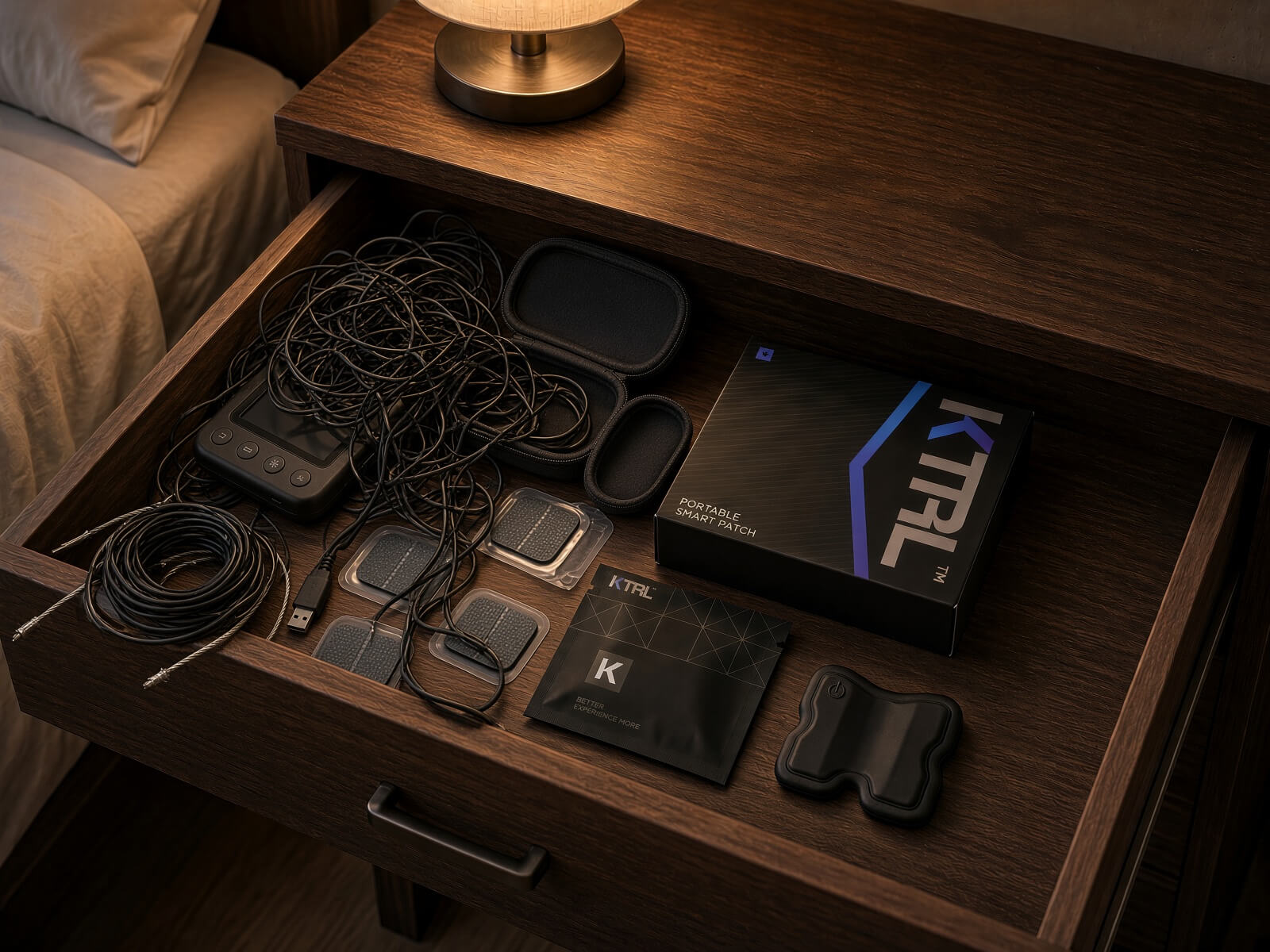
Compare KTRL with reusable electrical devices by intended use and permitted contact area before comparing settings or cost. KTRL WDC201 is a single-use sensory patch; a reusable TENS or EMS device may serve a different purpose. Generating electrical pulses does not make two products interchangeable. Once a device fits your intended use, consider its controls, replacement parts and care routine.
By KTRL | Updated:
KTRL vs reusable electrical devices: start with intended use
A device belongs on your shortlist only if its instructions permit the purpose and contact area you have in mind. A reusable format, more programmes or a lower price cannot change those conditions.
TENS, EMS and a sensory patch have different roles
TENS means transcutaneous electrical nerve stimulation. The NHS describes it as a treatment that provides temporary pain relief and notes that it does not work for everyone. EMS means electrical muscle stimulation; the EM 56 manufacturer describes its EMS function in terms of muscle training and regeneration. These descriptions concern those uses, rather than every product that delivers electrical pulses. 1 2
KTRL Portable Smart Patch, model WDC201, is a consumer electronic sensory product for men aged 18–60, inclusive, for external skin contact. Its stated role is rhythmic physical sensation. It is not a medical device and is not intended to diagnose, treat, alleviate, monitor or prevent a disease or medical condition. General TENS or EMS findings do not establish pain treatment, muscle training or rehabilitation benefits for KTRL. 5
Why the EM 56 is a hardware example
The Beurer EM 56, item 10606, combines TENS, EMS and an electrical massage function. Its manual explicitly prohibits use in the genital area. A lower intensity setting or a broad “whole body” description does not override that restriction. 3
The EM 56 therefore illustrates the parts and maintenance involved in a reusable device for its own permitted uses. It is not presented here as an interchangeable intimate-use alternative to KTRL. For any other model, check that model's instructions rather than transferring either product's rules.
What changes in hardware, settings and care?
KTRL supplies the contact components and power within each fresh patch; reusable equipment keeps its main unit while consumable parts need attention. The practical difference is what you set up, inspect and keep between uses.
The EM 56 product page lists two independently adjustable channels, four electrodes, 22 programmes and 50 intensity levels. Its English manual lists one unit, two connection cables, four 45 × 45 mm adhesive electrodes, a belt clip, three AAA batteries and instructions. This model uses non-rechargeable batteries; its manual also says not to use rechargeable batteries. 2 3
| Task | KTRL WDC201 | Reusable electrical equipment |
|---|---|---|
| Power | Built-in, non-rechargeable power. | Check the exact supply: EM 56 uses three AAA batteries; other models may differ. |
| Skin contact | Contact components are integrated into each fresh patch. | Electrodes may need care, protective liners and replacement. |
| Controls | A button on the patch. | A model-specific controller, programmes and intensity settings. |
| After use | Switch off, remove and dispose of it as directed. | Follow the device's care and storage instructions. |
| A later occasion | Use a new patch, if all use conditions are met. | Inspect the hardware, electrodes, connections and power supply. |
| Placement | Only WDC201's instructed external skin area. | Only locations permitted by that device's manual. |
Sources: the WDC201 guide and EM 56 instructions. Some reusable devices are wireless, while others have cables. Programme counts and intensity levels describe controls, not a universal scale for comparing sensation or results across products.
Reusable electrodes still have a replacement limit
The EM 56 manual says to replace electrodes immediately if their adhesion decreases, and no later than after 20 uses. That is a replacement ceiling, not a promise that the electrodes will last for 20 uses. It cannot be applied to another model's pads. 3
Care also includes returning electrodes to their carrier foil after treatment, following the specified cleaning method and protecting the cables during storage. Follow page 18 of the manual for those details. KTRL's single-use patch must not be washed or cleaned for reuse; reusable-electrode care does not transfer to it.
Before buying reusable equipment, check that the correct replacement electrodes and other required parts are available where you live. A compatible-looking connector is not enough to establish that an accessory is suitable.
What belongs in a reusable device's cost?
Include the device and the replacement supplies you actually need, then divide by actual permitted uses over a stated period. Count the electrodes and batteries supplied with the device once, within the initial purchase.
Average cost per use = (delivered device price + replacement electrodes + replacement batteries + other required parts) ÷ actual permitted uses.
A dated German price reference
On , the German Beurer shop displayed the EM 56 at EUR 59.99, including VAT. Allocating that purchase price alone across 12 permitted uses gives approximately EUR 5.00 per use, before future replacement supplies and any additional order-specific charges. This is a German price reference, not a delivered Mexican quotation.
A separate hypothetical example in Mexican pesos
For readers budgeting in Mexico, suppose reusable hardware costs MXN 900 delivered, with MXN 180 spent on replacement parts and batteries during the first year. Twelve permitted uses give (900 + 180) ÷ 12 = MXN 90 per use; three uses with the same total spending give MXN 360 per use.
A hypothetical three-patch pack costing MXN 360 delivered works out at MXN 120 per occasion only if all three patches are usable and used. These are invented budgeting inputs, not EM 56 or KTRL prices, a currency conversion, or a comparison of equivalent purposes. The single-use versus reusable cost guide covers whole-pack payments and unused stock in more detail.
A lower calculated cost does not make a prohibited use appropriate. Confirm suitability first; the calculation then tells you about spending on that use.
KTRL's own use limits still apply
Choosing KTRL means following WDC201's instructions independently of any other device's settings, timer or care routine. Read the first-use guide and the complete official restrictions before use.
Count cumulative powered-on time. The maximum is 30 minutes during the same use. Switched-off time does not count; restarting continues the previous total. Track the time yourself rather than assuming an automatic cumulative timer or shut-off.
Keep adjustment separate from reuse. Switch off before removing or repositioning the patch during the same use. Do not save it for another session, share it, recharge it or dismantle it. The single-use and adjustment guide explains that distinction.
Stop immediately for discomfort. Switch off and gently remove the patch for pain, stinging, burning, redness, swelling, itching or other obvious discomfort. If discomfort persists, stop further use and consult a qualified healthcare professional.
Do not combine electrical stimulation devices. KTRL's exclusions include use of implanted, interventional or other electronic stimulation devices. Separate contact locations do not establish that a combination is permitted.
A history of significant cardiovascular disease or other relevant serious health risks, peripheral nerve or sensation abnormalities, and abnormal skin at the application site are also among the restrictions. This is not the full list. For an unclear product instruction, contact KTRL Support; for a health concern, seek qualified advice.
Frequently asked questions
The useful choice depends on what a device permits and what owning it involves. These questions address the differences that a feature list alone cannot resolve.
Can I use an ordinary TENS or EMS device instead of KTRL?
Do not assume it is a substitute. Check the exact purpose, contact areas and restrictions in its manual; the EM 56 example specifically prohibits genital-area use. Electrical pulses alone do not establish interchangeability.
Does reusable mean rechargeable?
No. The EM 56 is reusable but uses non-rechargeable AAA batteries and its manual excludes rechargeable batteries. KTRL has built-in non-rechargeable power and is single-use.
Do more programmes mean a better experience?
More programmes provide more settings for the purposes listed by that manufacturer. They do not establish a better intimate sensation or results equivalent to a different product; intended use and placement come first.
Which comparison should guide my decision?
For KTRL vs reusable electrical devices, first remove any model whose instructions exclude your intended use or location. Then compare the remaining models' controls, maintenance and total spending. If you are still deciding what kind of product serves your goal, start with the overview of product formats and their different roles.
References
Sources were checked on . The NHS source explains TENS generally; each manufacturer's sources describe its own product and instructions.
NHS. TENS (transcutaneous electrical nerve stimulation). Temporary pain-relief purpose and general precautions; page reviewed 14 February 2025.
Beurer. EM 56 Digital TENS/EMS, item 10606. Manufacturer's description of functions, channels, electrodes, total programmes and intensity levels.
Beurer. EM 56 English instructions (PDF), document code dated 27 February 2026, revision 02. Supplied parts: page 4; genital-area prohibition: page 7; electrode replacement: page 10; batteries: pages 10–12; care and storage: page 18.
Beurer Germany. EM 56 German shop listing. EUR 59.99 including VAT when checked on 13 October 2026; prices and order conditions may change.
KTRL. WDC201 user guide. Model identity, age range, single-use restrictions, cumulative powered-on time and non-rechargeable power. The page identifies the English 3c printed instructions, updated 22 May 2026, and confirmed website instructions as its basis.
Comments (0)
Please login to comment.
No comments yet.