
You Have Sexual Desire but Cannot Get an Erection: Does KTRL Still Make Sense?
Separating sexual desire, erection difficulty, KTRL's sensory role, and sildenafil use
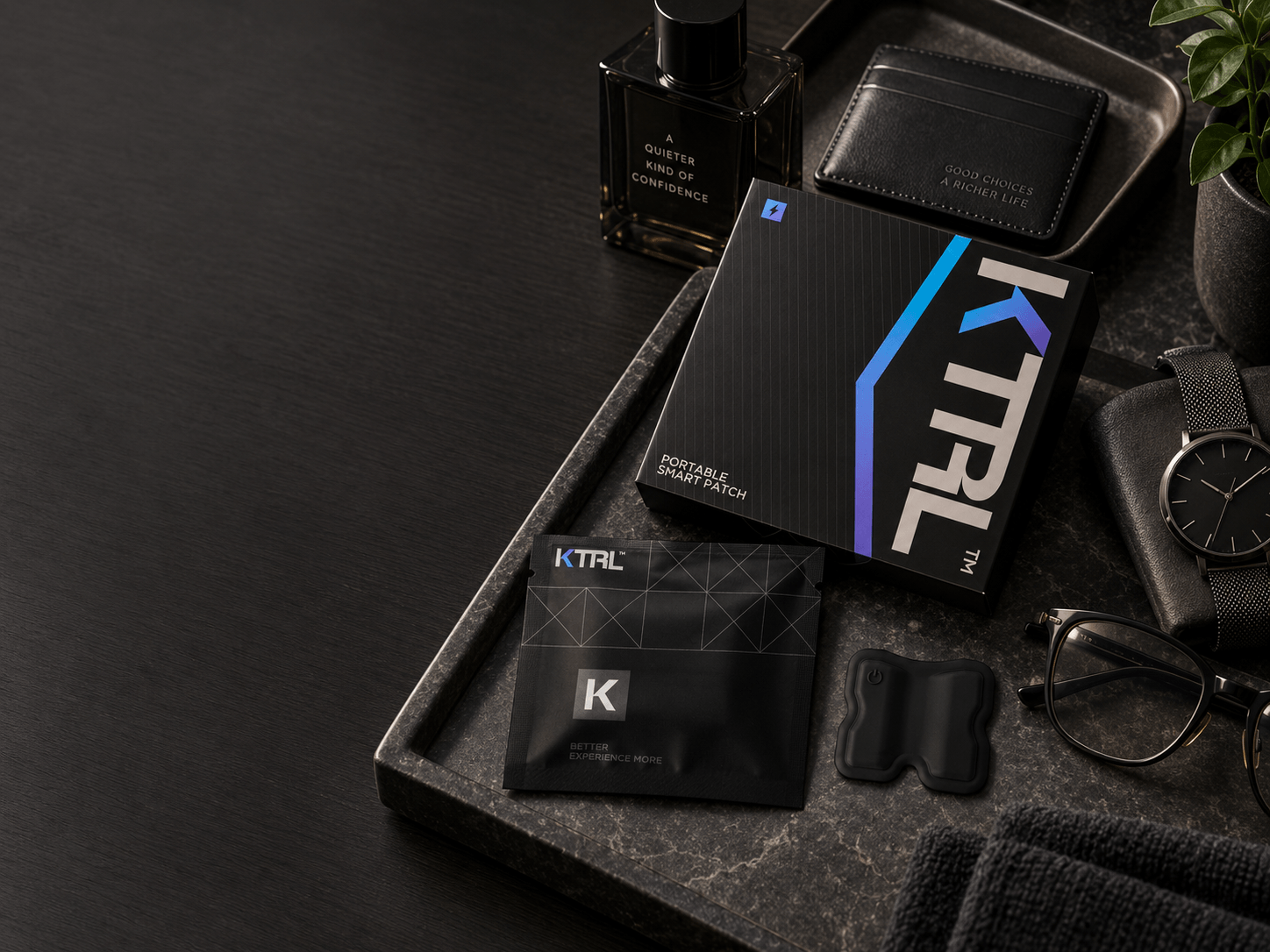
If you want sex but repeatedly have difficulty getting an erection, seek qualified healthcare advice. Sexual desire and an erection are different experiences: wanting sex does not rule out an erection concern. A sensory product cannot determine its cause, and you do not need to try KTRL before asking for help. Describe what happens and bring any medicine questions to your prescriber or pharmacist.
By KTRL | Updated:
Sexual desire but no erection: why the distinction matters
Sexual desire describes interest in sexual activity; an erection is a physical response. Strong interest does not establish that every part of that response will happen as expected.
The US National Institute of Diabetes and Digestive and Kidney Diseases (NIDDK) includes being unable to get an erection among the symptoms of erectile dysfunction. It describes possible contributors involving blood vessels, nerves, hormones, certain medicines, stress and anxiety.
Those possibilities explain why an assessment can matter. They cannot tell you which explanation applies to you. A recurring problem should not automatically be labelled a lack of desire or “just anxiety”.
An isolated difficulty and a recurring pattern are different
One difficult occasion does not establish a diagnosis. The NHS guidance on erectile dysfunction recommends seeing a GP or sexual health clinic when erection problems keep happening.
Those are UK healthcare routes; outside the UK, use the appropriate local healthcare service. You do not have to identify the cause, try a consumer product or demonstrate the problem in every setting before seeking advice.
What to note before a healthcare appointment
A brief description of the difficulty is more useful than choosing a diagnosis yourself. Note what you have already noticed, without repeatedly testing your response.
Bring five useful details
The pattern: whether the difficulty is getting an erection at all, rather than maintaining one after it starts.
The timing: when you first noticed the change and whether it keeps happening.
The circumstances: whether it occurs in different situations or only during a particular activity.
Other changes: any pain, change in sexual interest or other symptom you want to discuss.
Medicines and treatment: your medicines, supplements and recent treatment changes.
These are conversation prompts, not a screening test. Incomplete notes are not a reason to postpone an appointment.
Describe getting and maintaining an erection separately
If an erection starts but becomes less firm during sex, that is a different pattern from not getting one in the first place. See losing your erection during sex: what to note and when to seek advice.
The distinction helps describe your experience. It does not, by itself, identify the cause or select a particular medicine.
If you already use sildenafil or another medicine
An erection concern is a reason to review the exact medicine and your circumstances with a prescriber or pharmacist. It cannot establish on its own that a medicine has stopped working or that another product should be added.
Review the exact product and your treatment list
Tell the prescriber or pharmacist what has changed, which exact product you use and what other medicines or supplements you take. Ask them to review the concern and the current authorised information for that product in your market. Do not change a dose, stop prescribed treatment or add another sexual-health product on your own to address the difficulty.
The linked US VIAGRA prescribing information on DailyMed concerns a specific sildenafil medicine. It is not a dosing guide for every sildenafil product, proof of approval or availability in another country, or evidence of compatibility with KTRL.
KTRL compatibility is not established by the available evidence
No product-specific evidence supplied for this article establishes compatibility between KTRL WDC201 and sildenafil. A company statement allowing use alongside a medicine does not replace that evidence or an individual assessment. This evidence limit is not a conclusion that the combination has been proved safe or unsafe.
KTRL Support can explain patch instructions; a qualified clinician or pharmacist should address medicine and health questions. Known KTRL do-not-use conditions still apply. A discussion with support does not waive a restriction.
KTRL has a separate sensory purpose
KTRL Portable Smart Patch, model WDC201, creates rhythmic physical sensation through external skin contact. It is a single-use consumer electronic product intended for men aged 18–60 inclusive. Its format does not establish that it helps someone get an erection.
Keep an interest in sensation separate from a health concern
KTRL is not a medical device and is not intended to diagnose, treat, alleviate, monitor or prevent a disease or medical condition. Do not use the patch to test erectile function, bypass a restriction or postpone healthcare.
If added sensation is a separate interest, review the use restrictions and appropriate next steps and the complete first-use routine. Resolve any uncertainty about your health, a restriction or the instructions before considering use.
Match the next step to the question
Recurring difficulty getting an erection: arrange an appropriate healthcare assessment.
A medicine question: bring the exact product and treatment list to your prescriber or pharmacist.
An unrelated interest in added sensation: consider that preference separately, after resolving health and product-use uncertainty.
For a comparison of purposes, see KTRL, delay products, condoms and medicines: compare their purposes first. Belonging to a sexual-wellness category does not make these products interchangeable.
Frequently asked questions
Can I have sexual desire and still have an erection problem?
Yes. Desire and the erection response are different. Wanting sex does not rule out a concern that deserves assessment when it keeps happening.
Does one difficult occasion mean I have erectile dysfunction?
One occasion does not establish a diagnosis. If the difficulty keeps happening, seek qualified advice rather than repeatedly testing yourself or assuming a cause.
Should I try KTRL before deciding whether to seek help?
No. KTRL is not a test of erectile function or an established treatment for this concern. A response to the patch cannot tell you why getting an erection is difficult.
Does the VIAGRA label show that KTRL is compatible with sildenafil?
No. That source describes a specific US medicine; it does not establish KTRL compatibility. Ask a qualified clinician or pharmacist about your exact medicine and circumstances, while continuing to observe KTRL's do-not-use conditions.
Sources
Sources checked on. NHS guidance describes UK healthcare routes; NIDDK provides US public health information. DailyMed provides the specified US medicine label. These sources do not establish KTRL's clinical effectiveness or medicine compatibility.
NHS. Erectile dysfunction (impotence). Last reviewed 28 July 2023; advice on recurring erection problems and seeking help.
National Institute of Diabetes and Digestive and Kidney Diseases. Symptoms & Causes of Erectile Dysfunction. Last reviewed October 2024.
DailyMed. VIAGRA — sildenafil citrate tablet, film coated. US prescribing information; label marked revised November 2023. Consult the current authorised information for the exact medicine in your own market.
KTRL. WDC201 user guide. Product instructions and restrictions; these are not evidence of erectile-function treatment or medicine compatibility.
Comments (0)
Please login to comment.
No comments yet.