
Choosing When to Pause: KTRL's View on Personal Control
In today’s hyper-connected world, the notion of control seems tied to an endless pursuit of productivity.
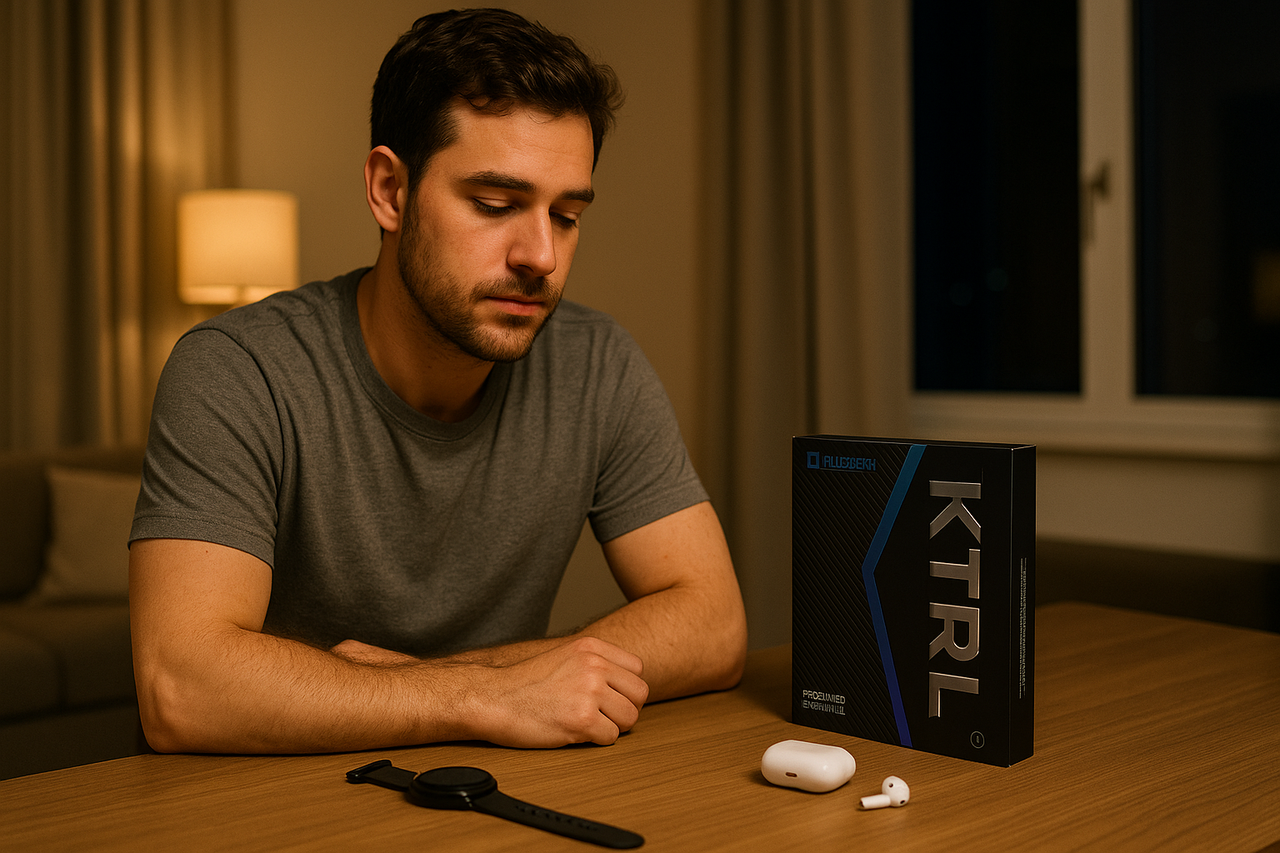
You have made plans for a private evening, but when it arrives you would rather talk, change the activity or leave it for another day. Having planned something does not mean you have to follow it through. You can decide again.
At KTRL, we believe personal control includes choosing whether to begin, asking for a pause and deciding whether to continue. This is a brand perspective on choice, not a claim that a product can restore confidence, relieve stress or improve health. You do not need to buy anything to make those decisions.
Before You Begin: Leave the Decision Open
A plan is an invitation, not a commitment to finish
Imagine that you and a partner have discussed trying something new. When the time comes, one of you is curious and the other is unsure. The useful next step is to ask what each person wants now, rather than treating the earlier conversation as permission.
You might say, "Would you still like to try this, or would you prefer something else?" Only offer alternatives you are prepared to accept. Waiting, changing the plan and doing nothing further must remain possible answers.
Buying a product creates no obligation to use it
A purchase can make a plan feel settled before anyone has made a final decision. Keep those decisions separate. Owning or opening a product does not oblige the wearer or a partner to continue.
If you are considering KTRL, first check the conditions for use and when to seek advice. A preference for a sensation cannot override an age restriction, a do-not-use condition or an unresolved instruction.
During a Private Moment: Make a Pause Easy to Ask For
Say what you want to change
Perhaps the activity is comfortable, but you want to slow down or stop paying attention to a new sensation. A short request can be enough: "I would like to pause," or "I do not want to continue with this product."
A pause does not need to produce a better experience afterwards. It can simply give you room to decide. If the moment is shared, either person remains free to stop; a physical response is not permission to continue.
Discomfort calls for stopping, not a performance decision
If KTRL causes pain, stinging, burning, redness, swelling, itching or other obvious discomfort, stop immediately. Switch it off and gently remove it as directed. If discomfort persists, discontinue further use and consult a qualified professional. Stop using an abnormal or malfunctioning product and contact support.
Do not wait to see whether discomfort becomes worthwhile. The first-use guide covers practical operation; follow the complete supplied instructions and resolve any uncertainty before use.
After a Pause: Choose Again Without a Target
Continuing and finishing early are both possible
Ask yourself, "Do I want to continue, change the activity or finish?" In a shared experience, check with the other person rather than assuming their answer matches yours. A previous yes can become a no.
These questions are suggested wording, not a validated technique for changing sexual performance. For a fuller discussion of freely choosing closeness or space, see how to talk about whether you want intimacy.
Restarting a patch does not create a new time allowance
For KTRL WDC201, the limit is 30 minutes of cumulative powered-on time during the same use. Switched-off intervals do not count; switching it on again continues the existing total. Track the total yourself. The limit is not a target for intercourse, and the patch must not be reused in a later session.
Where KTRL Fits in This View
The KTRL Portable Smart Patch, model WDC201, is a single-use consumer electronic product for men aged 18-60, inclusive. It creates rhythmic physical sensation through controlled electrical pulses and external skin contact. Whether you want that sensation is a personal preference.
Our view is that a product should leave room for that preference to change. The ability to pause or decline belongs to you; it is not a benefit you acquire from the patch. No product-specific evidence has been supplied to establish that KTRL relieves stress, increases confidence or improves sexual performance.
The situations above are illustrative, not customer accounts. Product rules follow the supplied WDC201 3c bilingual instructions, with English text updated 22 May 2026, and the confirmed use rules. KTRL is not a medical device and is not intended to diagnose, treat, alleviate, monitor or prevent any disease or medical condition.
Comments (0)
Please login to comment.
No comments yet.