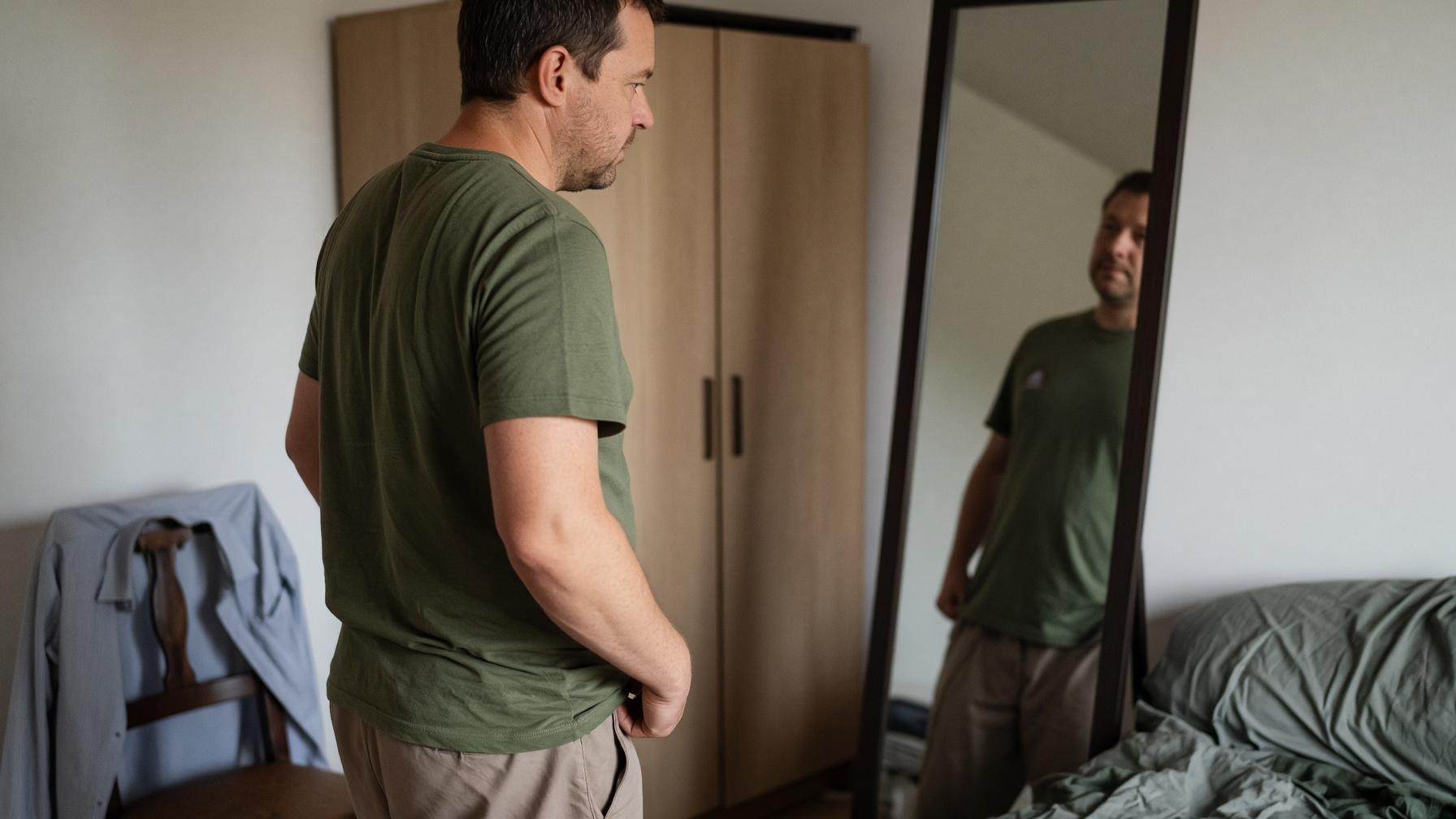

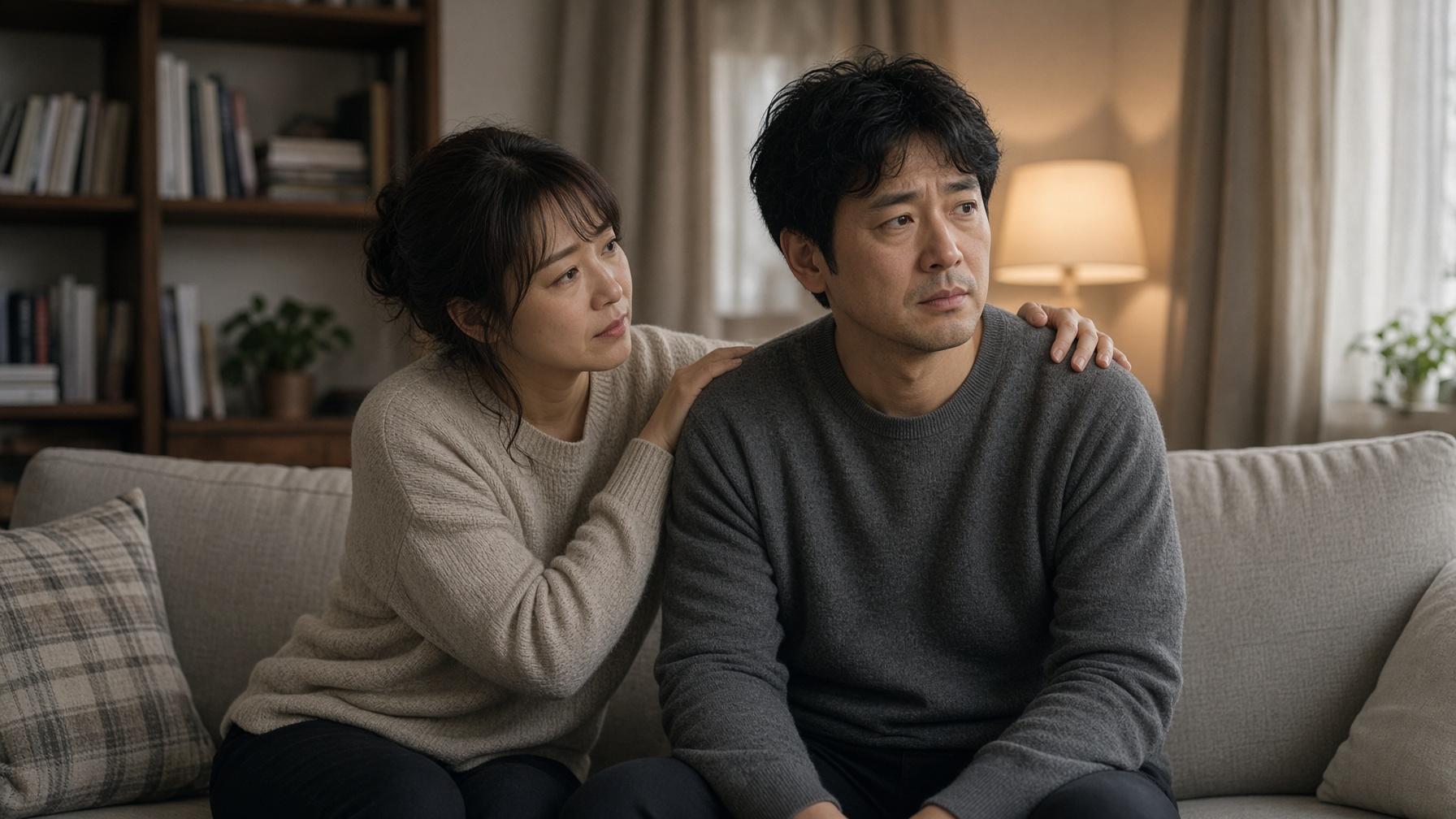
Distraction can change sexual responding, but the research discussed here does not establish it as a reliable way to last longer during partnered sex. In a laboratory study of 49 men, increasing distraction reduced genital response without reducing reported sexual arousal. That result concerns arousal, not time before ejaculation. When considering the advice, pleasure, erection quality and awareness of your partner matter alongside duration.
Updated:
Does distraction help you last longer during sex?
Thinking about something unrelated can influence arousal, but a reduction in genital response does not demonstrate delayed ejaculation. The distinction matters when advice about counting or mental arithmetic is presented as a dependable technique.
The advice is familiar: think about something boring. Count, make a mental shopping list or attempt a calculation you would usually leave to your phone. The hope is that your mind can go elsewhere while your body carries on.
There is a plausible starting point: an unrelated task competes with attention to erotic information. The leap is treating that effect as proof of extra time before ejaculation. Sexual interest, genital response, pleasure and ejaculation timing are related, but measuring one does not measure the others.
What the 2004 distraction study found
In a 2004 study by Jacques van Lankveld and Marcel van den Hout, 49 men watched erotic videos while the researchers varied distraction and the intensity of erotic stimulation. The sample included 23 men with sexual difficulties and 26 without.
Participants received different instructions for dealing with pairs of random digits, changing the mental demand of the task. The researchers measured genital responding and the men's own reports of sexual arousal.
-
Genital response: increasing distraction inhibited responding in both groups.
-
Reported arousal: distraction did not change how sexually aroused the men said they felt.
-
Erotic stimulation: more intense content produced higher physiological and reported arousal. The pattern linking distraction to genital response also depended on stimulation level.
The important finding is that bodily response and felt excitement did not change together. A demanding mental task did not turn down every part of arousal in the same way.
What the experiment did not measure
The men were watching videos and completing a task. This was not a trial of whether counting gave couples extra minutes before ejaculation during sex. Its findings support an effect on genital response under laboratory conditions; they leave that practical timing claim unanswered.
Similarly, a longer encounter after counting is an observation, not proof of cause. Pace, position and ordinary variation between encounters may also have changed.
What can distraction change about the experience?
Deliberate distraction gives part of your attention to another task, leaving less available for touch, bodily changes and communication. Whether that trade-off feels worthwhile depends on your experience.
Imagine trying to follow a conversation while calculating a bill. You may still want to hear the speaker, yet miss part of what they say. During sex, the competing information can include a partner's words, movements and responses, as well as your own sensations.
| Aspect | Useful question | What to keep separate |
|---|---|---|
| Felt excitement | Did I still feel sexually aroused? | Felt arousal can remain even when genital response decreases. |
| Physical response | Was I maintaining the erection I wanted? | A reduced genital response does not establish more time before ejaculation. |
| Pleasure and involvement | Was I enjoying and following the encounter? | Completing a calculation says little about enjoyment or communication. |
| Duration | Did timing seem different, and what else changed? | One encounter cannot isolate the effect of distraction. |
Brief mind-wandering is different from a demanding strategy
Minds wander during many enjoyable activities. Briefly remembering tomorrow's appointment is different from committing to a difficult mental task whenever excitement builds.
You might notice the demand when you repeatedly ask a partner to repeat themselves or struggle to recall how a touch changed. These are everyday signs that your attention was elsewhere, rather than a measure of whether the technique extended the encounter.
Why does recognising arousal matter?
Noticing how excitement changes gives you information about your experience. A strategy that keeps attention elsewhere may be an awkward fit for someone who already finds those changes difficult to recognise.
In his 2016 review of psychosexual therapy for premature ejaculation, Stanley E. Althof discusses mental calculations and other distraction tactics used to reduce excitement. He describes how these approaches can curtail pleasure, while therapy may address awareness of arousal alongside performance anxiety and relationship concerns.
Althof also describes a clinical pattern in which men recognise mainly two states: little excitement and the point at which ejaculation feels inevitable. The intermediate changes receive less attention. This helps explain why a clinician may ask what you notice as arousal builds, as well as how long sex lasts.
These are observations and treatment discussions in a clinical review. They do not show that counting caused premature ejaculation, that every distracted person misses the same sensations or that paying closer attention guarantees longer sex.
How can you assess whether distraction is helping?
Consider the whole encounter: whether you enjoyed it, maintained the physical response you wanted and stayed involved enough to make choices comfortably. An apparent change in duration is only one part of that assessment.
There is no need to monitor every moment. A brief reflection afterwards can be more useful than checking your performance while you are trying to enjoy time together.
-
Pleasure: did the extra mental task leave room to enjoy the contact?
-
Physical response: did you remain comfortable with how your body was responding?
-
Communication: could you follow and respond to what your partner wanted?
-
Effort: did keeping up the distraction become a job of its own?
-
Context: if timing changed, did pace, position or anything else change too?
Someone might feel just as excited while finding it harder to maintain an erection. The laboratory result makes that combination less surprising, but does not predict it for everyone. Someone else might find the task easy, yet notice little difference in duration.
When to seek support
If ejaculation repeatedly happens sooner than you want and causes distress, a GP or sexual health professional can help assess the pattern and discuss suitable options. Mention when it happens, whether it is a recent change, how it affects you and what you have already tried.
The useful conclusion is specific: distraction can affect sexual responding, but the cited research does not establish it as a reliable way to delay ejaculation during partnered sex.
Exploring physical sensation with KTRL
Advertisement — KTRL product information.
For readers also interested in exploring a different kind of physical sensation, KTRL™ Portable Smart Patch is a compact, single-use consumer electronic product. Controlled electrical pulses create rhythmic sensation through external skin-surface contact. Its built-in power and app-free design keep the electronics in one unit.
You can view the KTRL patch and available packs privately or with a partner. Whether to include a sensory product is a matter of preference; the research above does not establish an ejaculation-delay benefit for KTRL.
KTRL is for men aged 18–60, subject to the complete suitability restrictions. It is not a medical device and is not intended to diagnose, treat or prevent medical conditions. Follow the printed instructions and complete user guide, including external contact on clean, dry, intact skin and a maximum of 30 minutes of cumulative powered-on time in one session. Switching off pauses that total; switching on again does not reset it. Do not reuse the patch across sessions.
Frequently asked questions
Does counting backwards help you last longer?
The study discussed here did not test counting backwards as a method of delaying ejaculation during partnered sex. It found that distraction could reduce genital response without changing reported arousal.
Can you feel excited while your erection becomes less firm?
Yes, felt excitement and genital response do not always change together. The 2004 experiment supports that distinction, but does not diagnose the cause of a particular person's erection changes.
Does distraction cause premature ejaculation?
The cited research does not establish that. Althof's review discusses distraction among strategies used by men with premature ejaculation; this does not show that the strategy caused their difficulties.
Should you focus harder on every sensation instead?
There is no need to turn attention into another performance task. Awareness of changing arousal can be part of psychosexual therapy, but the review does not provide a universal instruction that guarantees more time.
When should ejaculation timing be discussed with a professional?
Seek support if ejaculation repeatedly happens sooner than you want and causes distress. You can discuss the pattern, its effect on you and your partner, and anything you have already tried.
Sources
-
van Lankveld JJDM, van den Hout MA. (2004). Increasing neutral distraction inhibits genital but not subjective sexual arousal of sexually functional and dysfunctional men. Archives of Sexual Behavior, 33(6), 549–558. Laboratory study of 49 men; measured genital and reported arousal rather than ejaculation timing during partnered sex.
-
Althof SE. (2016). Psychosexual therapy for premature ejaculation. Translational Andrology and Urology, 5(4), 475–481. Clinical review discussing distraction, awareness, pleasure and psychosexual treatment.
-
KTRL. Portable Smart Patch product information and user guide. Brand sources for product format and use restrictions.