

Featured·News
Private Time and Privacy: What to Arrange Before an Intimate Moment
Today, for a discerning group of modern men, luxury has taken on a new form—control over one’s own time, attention, and privacy.
KTRL·Jun 15, 2026·4 MIN READ
Perspectives on personal technology, thoughtful design, modern routines, and the value of staying in control of your own experience.
Today, for a discerning group of modern men, luxury has taken on a new form—control over one’s own time, attention, and privacy.

Why attraction and uncertainty can arrive together when you are learning how to be intimate with someone new
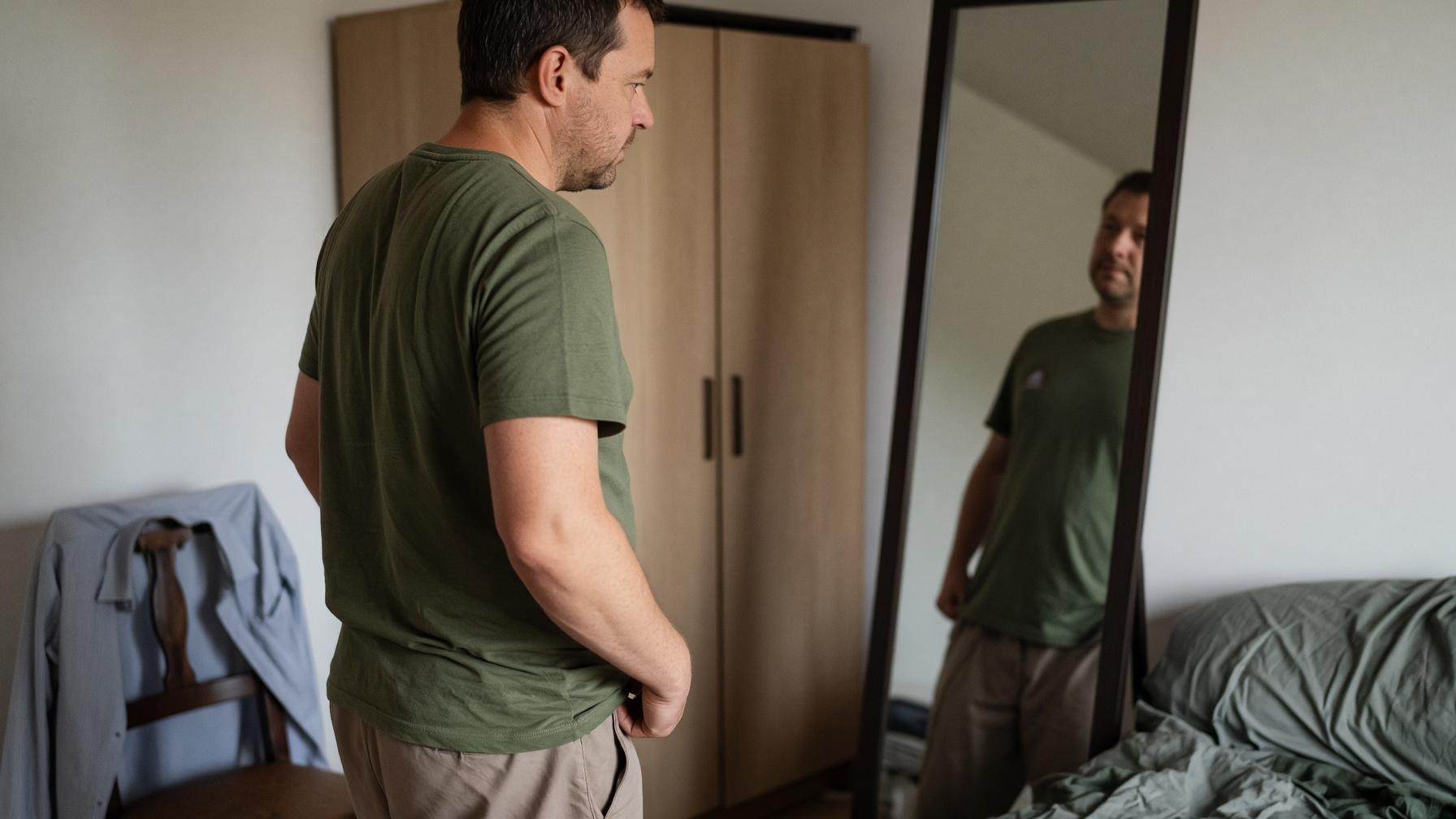
How worries about appearance can compete with pleasure and make it harder to stay present during intimacy.

How health, stress, relationships and daily life can shape desire in your forties, with no single pattern for everyone.

How physical activity relates to sexual wellbeing through fitness, mood and the way you feel about your body.

Why feeling less inhibited after a drink does not necessarily mean your body is more sexually responsive.
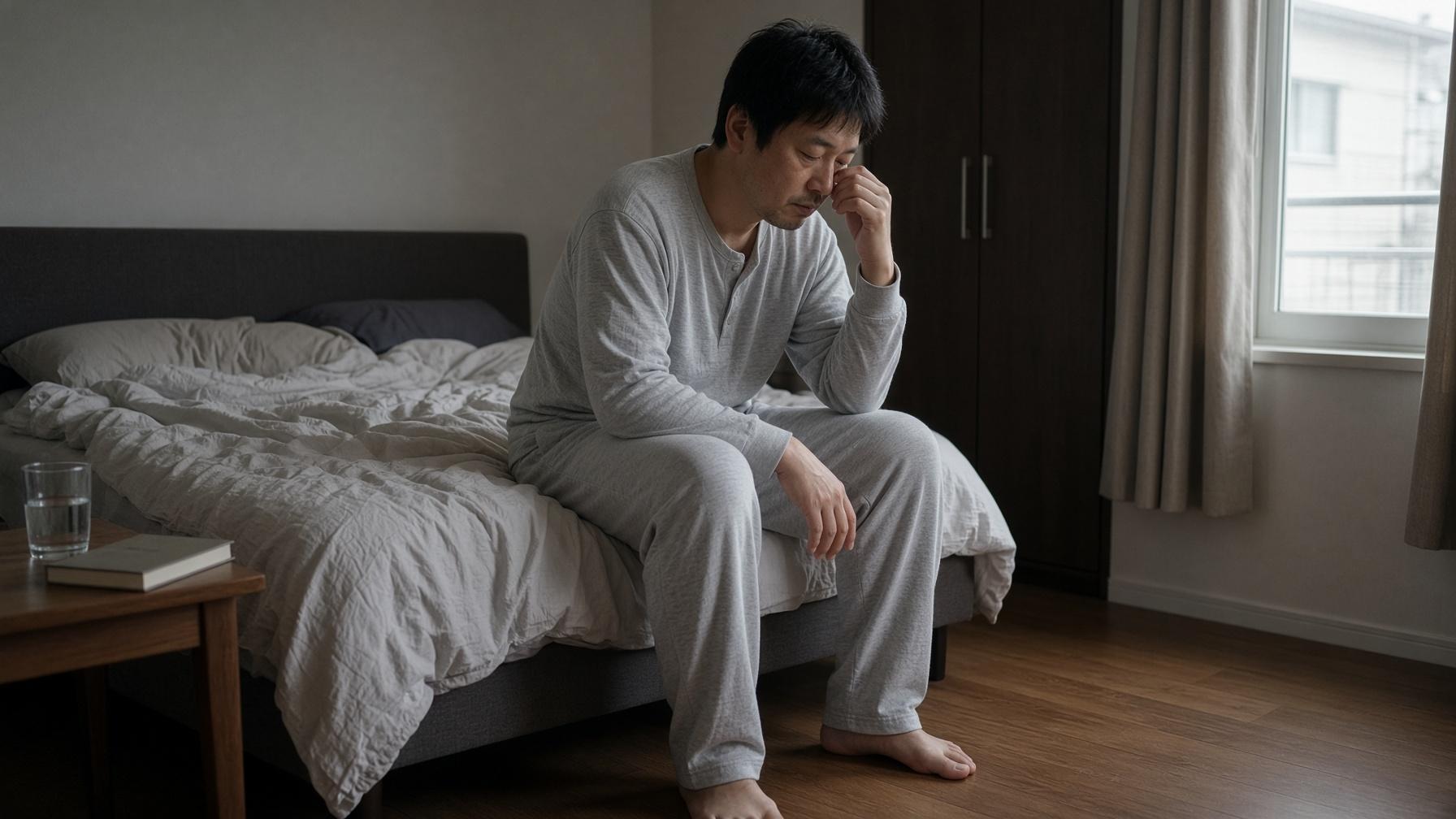
How poor sleep can affect energy, mood and sexual interest, without explaining every change in desire.

Why feeling close after an argument can matter, while the disagreement may still need a conversation.
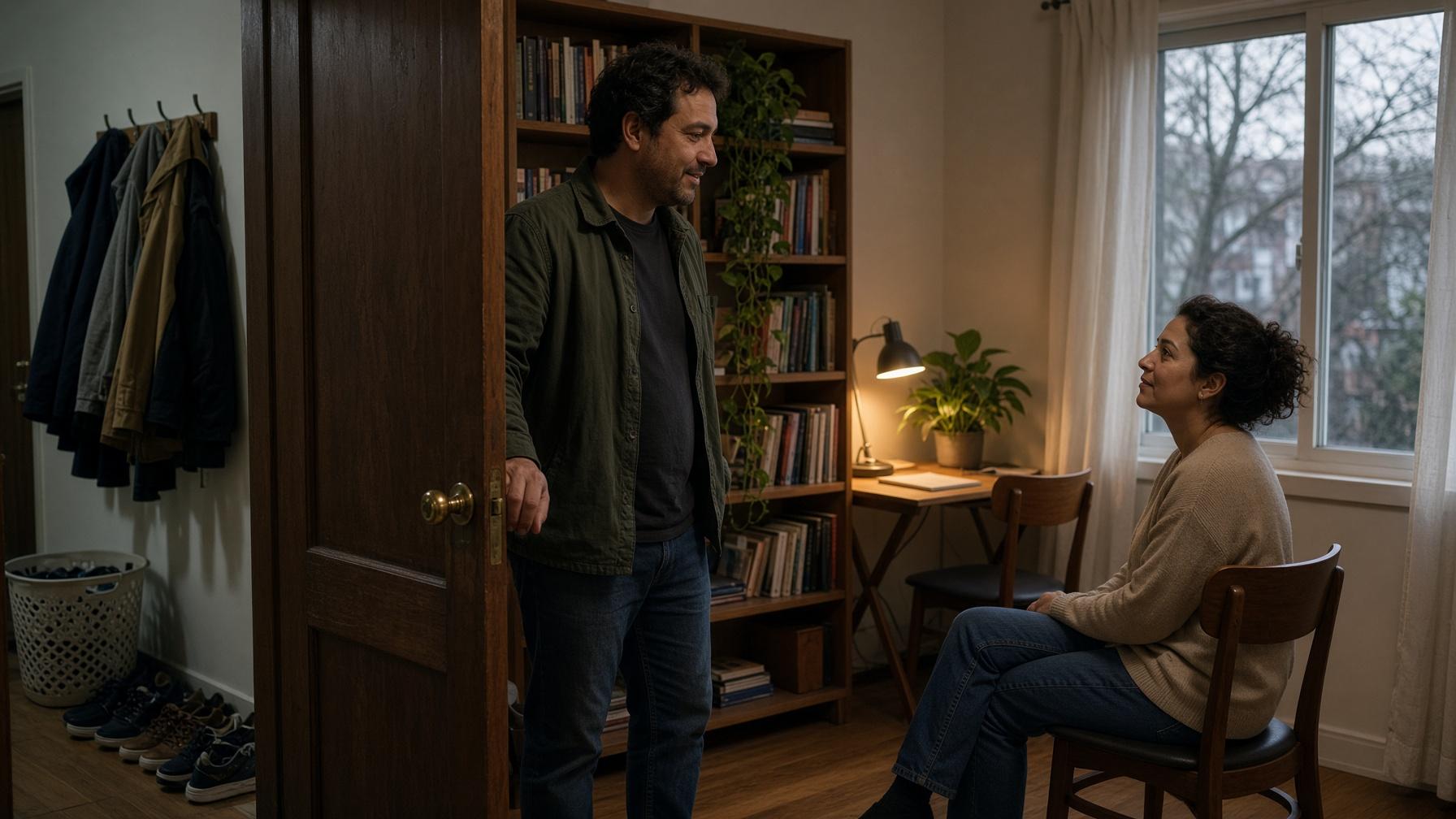
How shared living arrangements can shape privacy, timing and the freedom to feel at ease together.

How work stress can follow you home and affect the attention and energy you bring to intimacy.

How making time for intimacy can leave room for choice, anticipation and moments you did not plan.

Why monitoring your performance can pull attention away from pleasure and make intimacy feel like a test.

How sexual media can shape expectations about bodies, timing and pleasure—and where real encounters differ.

What an imbalance in initiation can mean, and how to discuss feeling wanted without turning sex into an obligation.
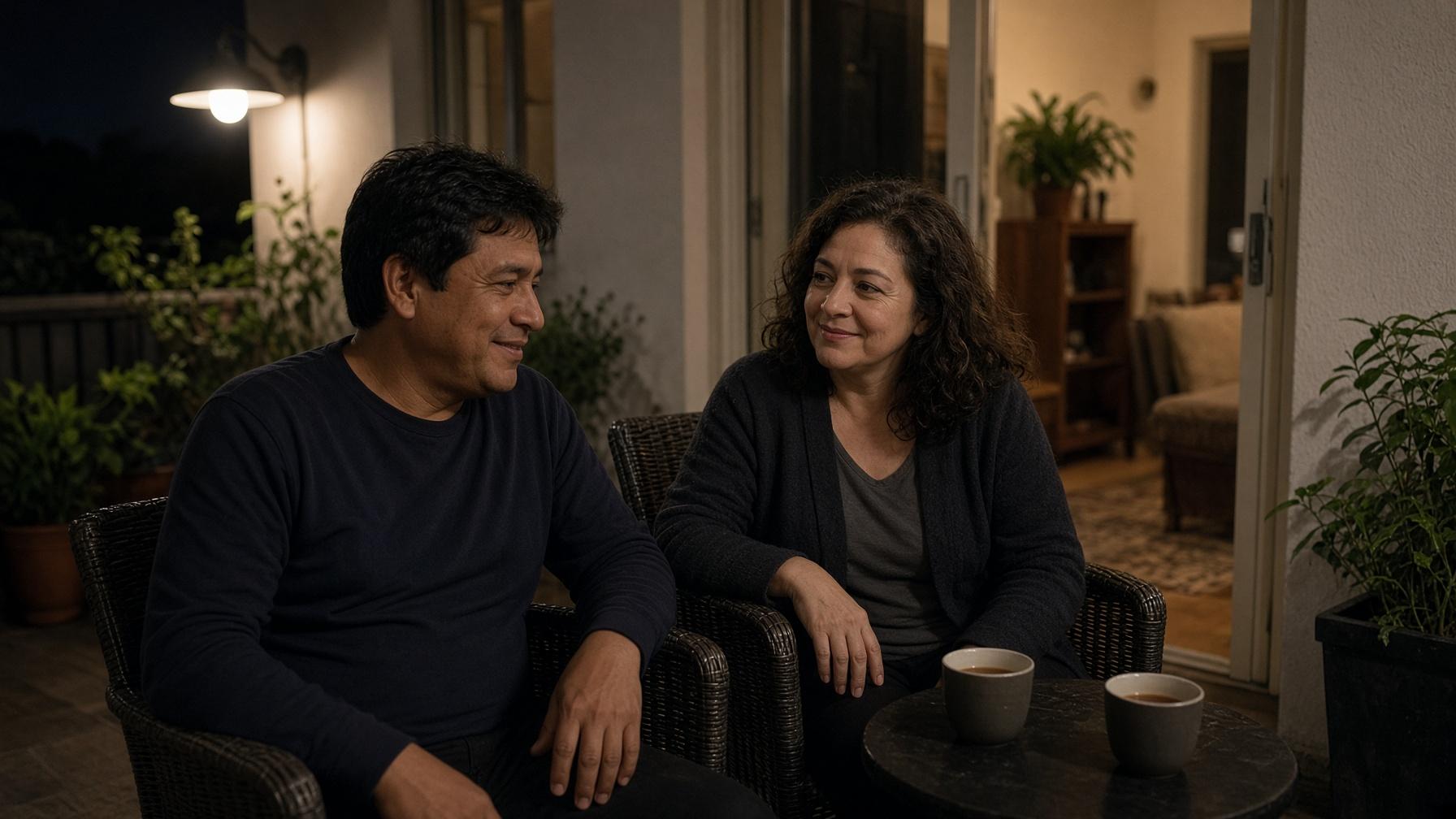
How time apart from sex can bring back uncertainty, and why reconnecting can happen at a pace that suits you both.

Why finishing together is not the only way to share pleasure, and how to talk about what each of you wants next.
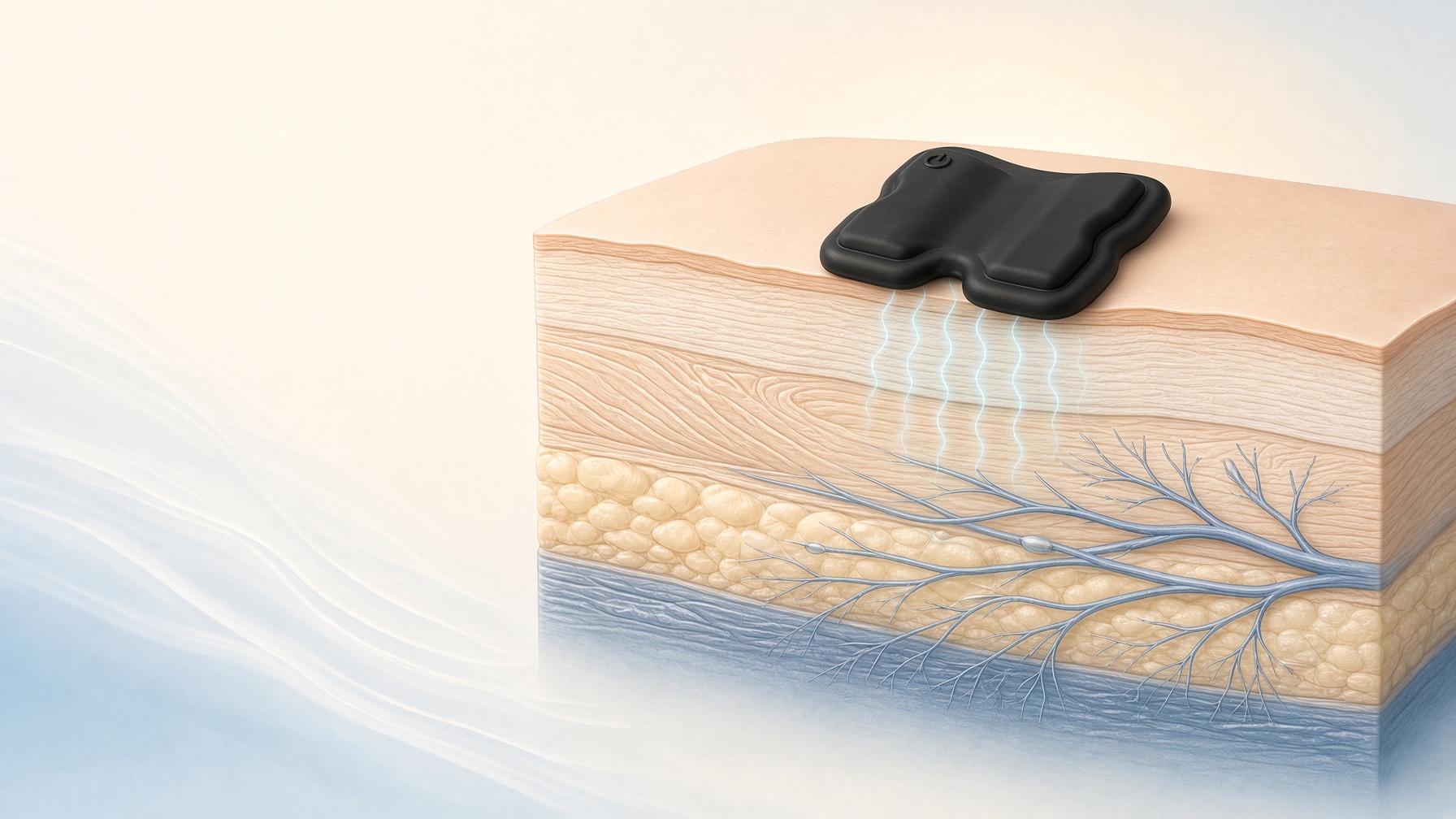
How surface electrodes deliver electrical pulses, how nerves respond, and what “transcutaneous” actually means
Understanding repeated use, personal preferences and what current information can tell you about lasting effects.

How sensory signals, spinal reflexes and the brain work together to produce an erection.

What frequency statistics can tell you, what they cannot, and how to find a rhythm that suits you both.

Understanding differences in desire, what each partner needs and how to discuss intimacy without pressure.

How to share your curiosity, discuss expectations and leave room for either partner to say no.
How to talk about an uncomfortable encounter without letting assumptions define what it means for your relationship.

Why preferences can change, and how staying curious helps you understand what your partner enjoys now.
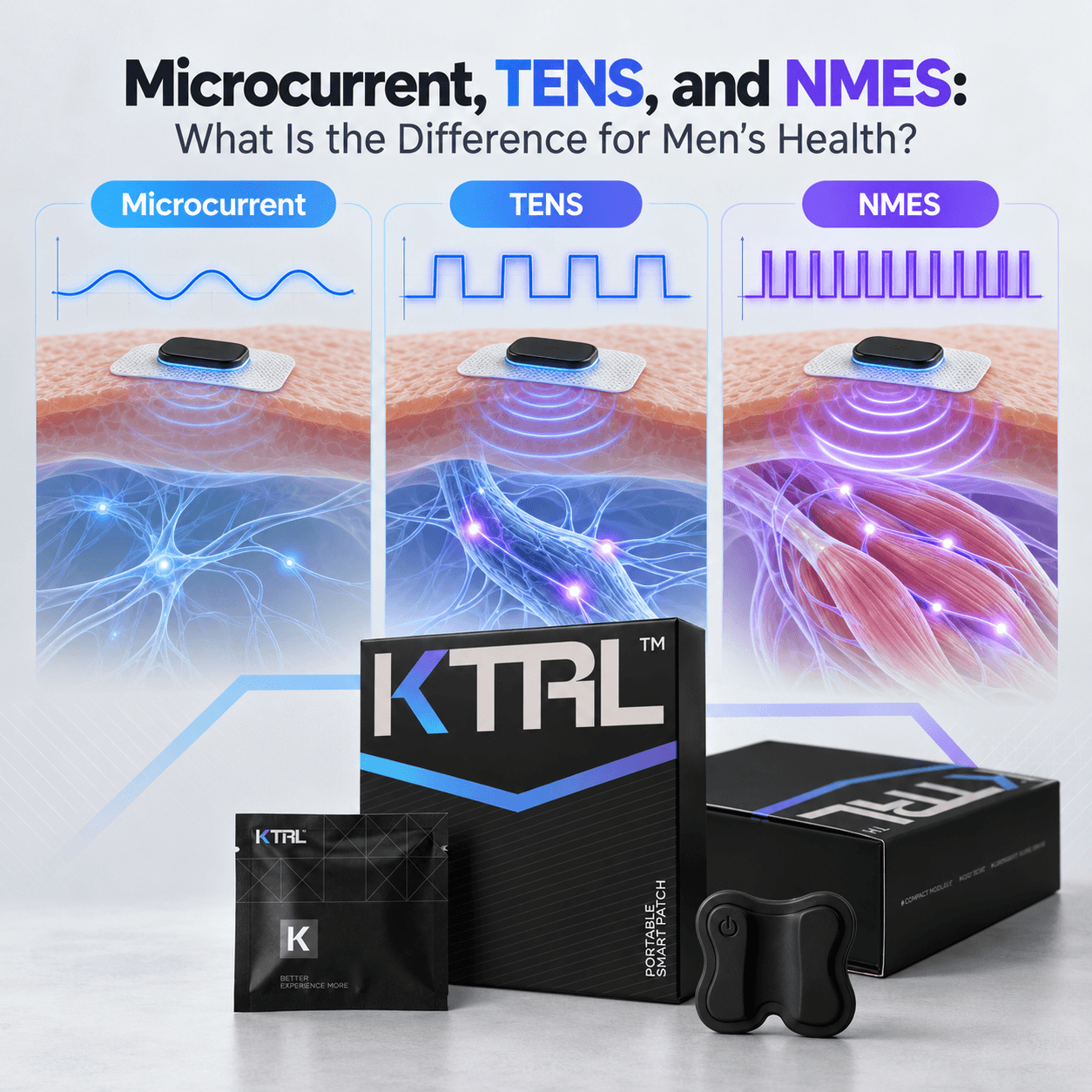
Microcurrent, TENS, and NMES: a terminology comparison

How to listen, acknowledge the worry and understand what kind of support your partner wants.

How to explain what lasting longer means to you and make space for your partner’s perspective.
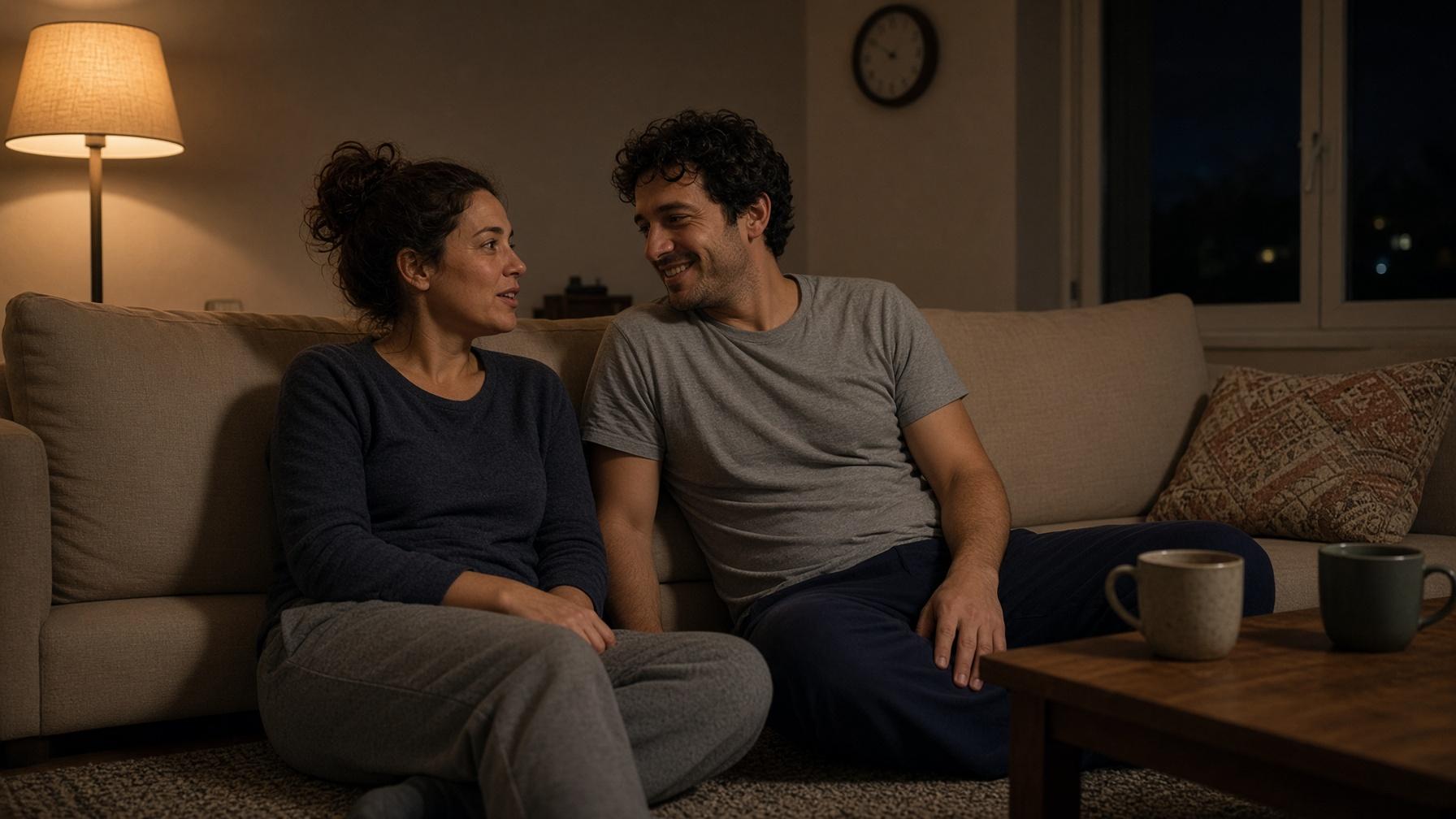
How attention and immersion can shape your sense of time during sex—and your memory of it afterwards.

Why enjoying a sexual fantasy does not necessarily mean wanting to experience it in real life.

How sensory adaptation, habituation and attention can change the way repeated contact feels.

How touch, control and attention shape the differences between solo and shared sexual experiences.

What shifting attention may change about arousal, bodily awareness and pleasure when trying to last longer.

How the brain predicts self-generated touch, and why similar contact can feel different depending on its source.

How breathing, muscle tension and other physical changes fit into the experience of arousal.

Why speed, pauses and continuity can change how touch feels, even without adding pressure.
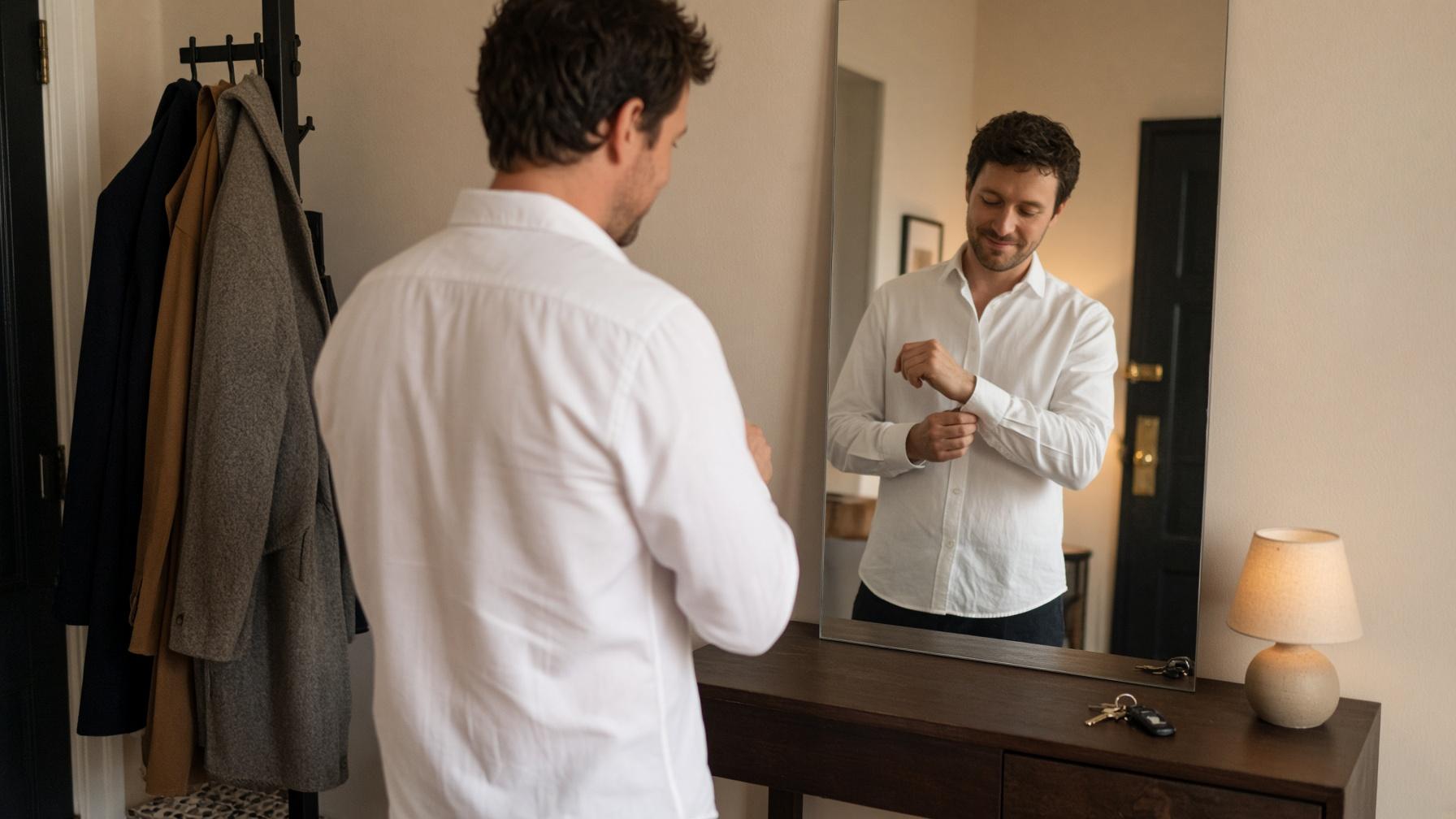
How looking forward to intimacy can shape attention, excitement and the experience of touch.

The difference between seeking a sexual experience and enjoying it once it happens.

Understanding spontaneous and responsive desire, and why wanting sex does not always come first.

Why arousal, sensitivity and readiness can change after orgasm, with no single recovery time for everyone.

What the “point of no return” describes, and why the transition towards ejaculation can feel sudden.

How attention, stimulation and changing circumstances can shape arousal within the same encounter.

How erections and felt arousal relate—and why one cannot tell you everything about the other.

Why a stronger physical sensation does not always mean greater arousal or more pleasure.

Two responses that often happen together, but describe different parts of the sexual experience.

What studies count as sex, what averages leave out, and why duration alone cannot measure satisfaction.
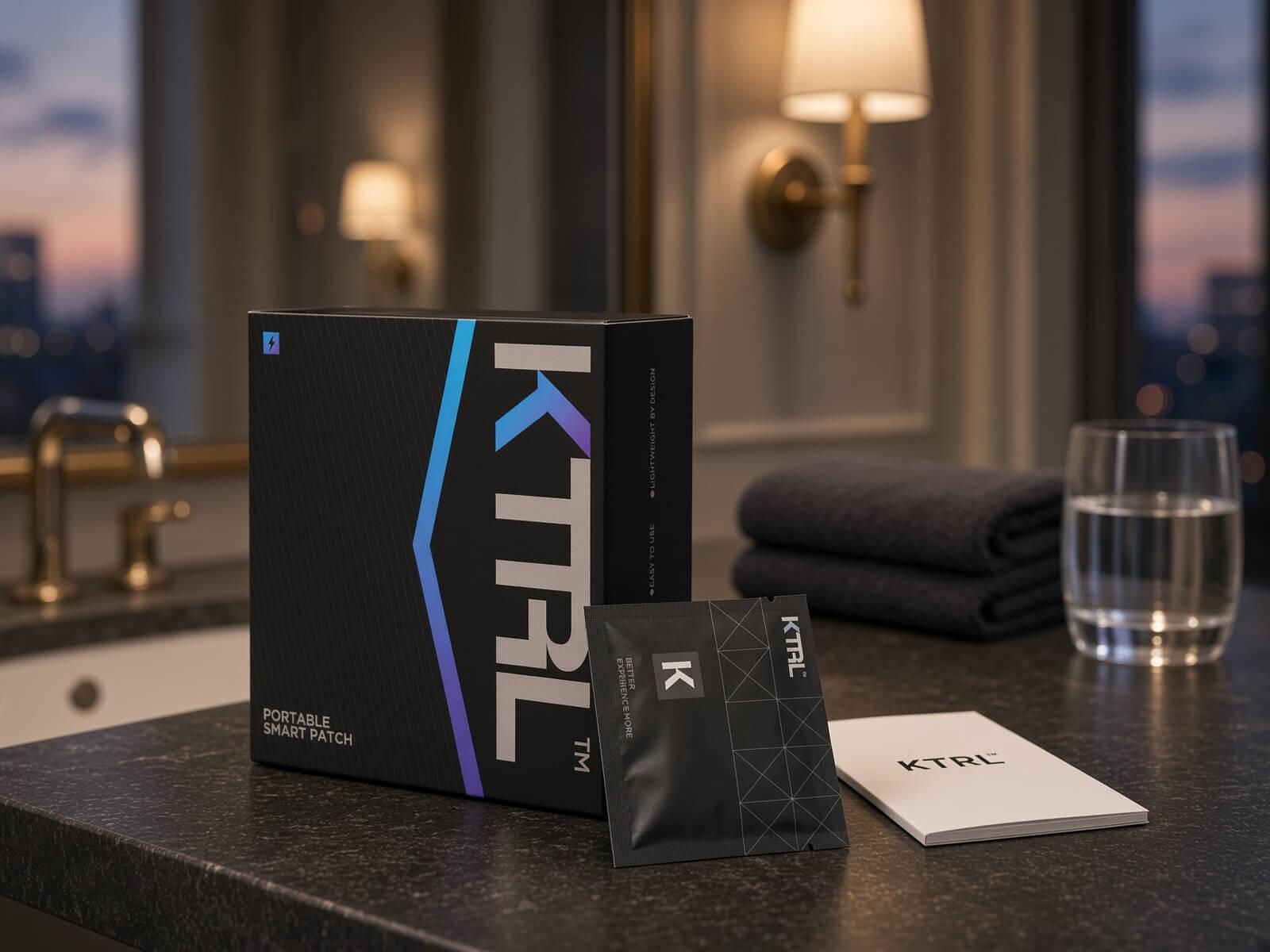
KTRL's company-provided guidance specifies external perineal skin. Confirm the position before opening the patch, and apply only to clean, dry, intact skin as directed.
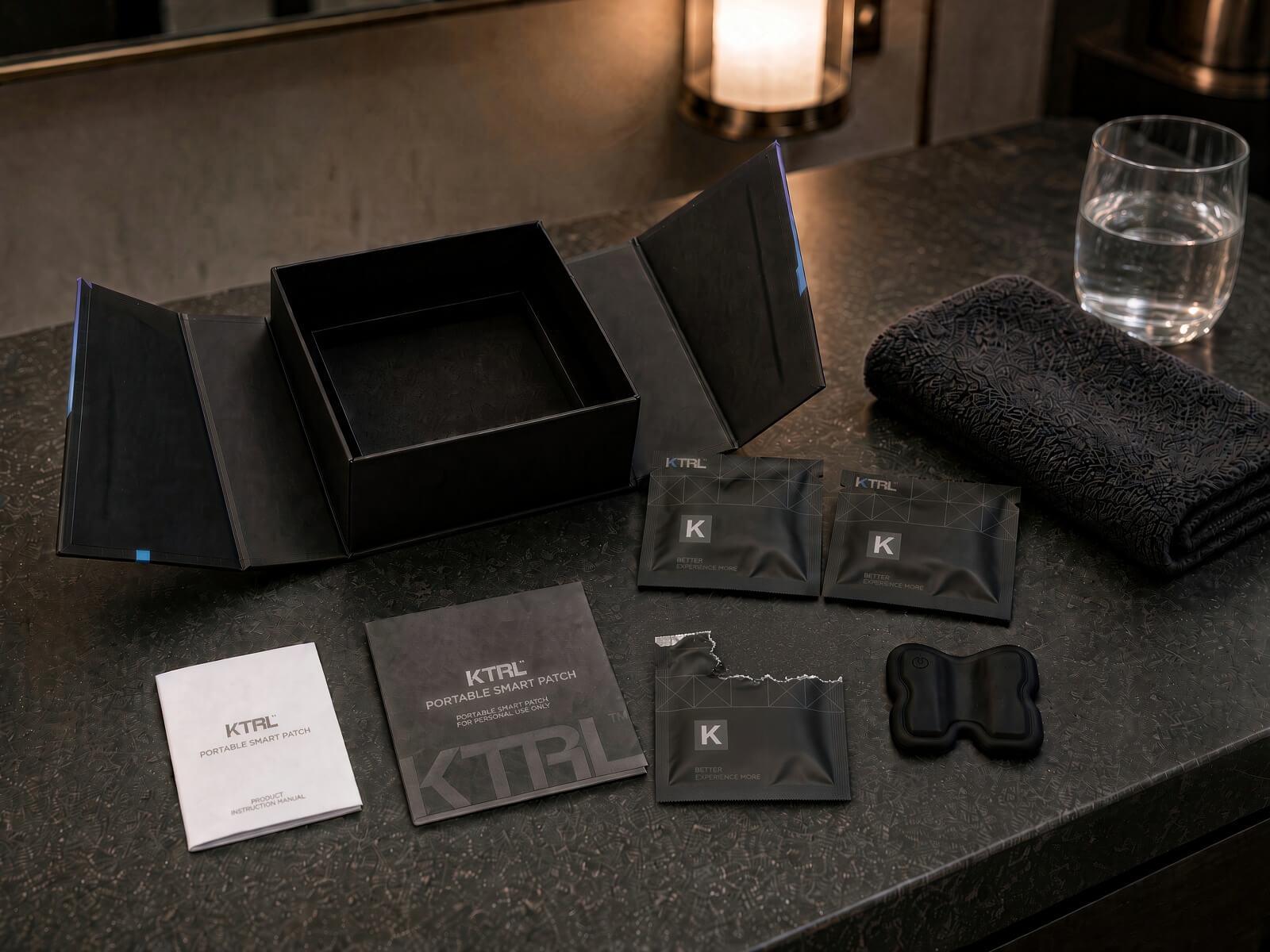
Prepare your skin, confirm placement, and use one KTRL patch for one session. Follow the supplied instructions, keep total use within 30 minutes, then switch it off, remove it, and dispose of it.
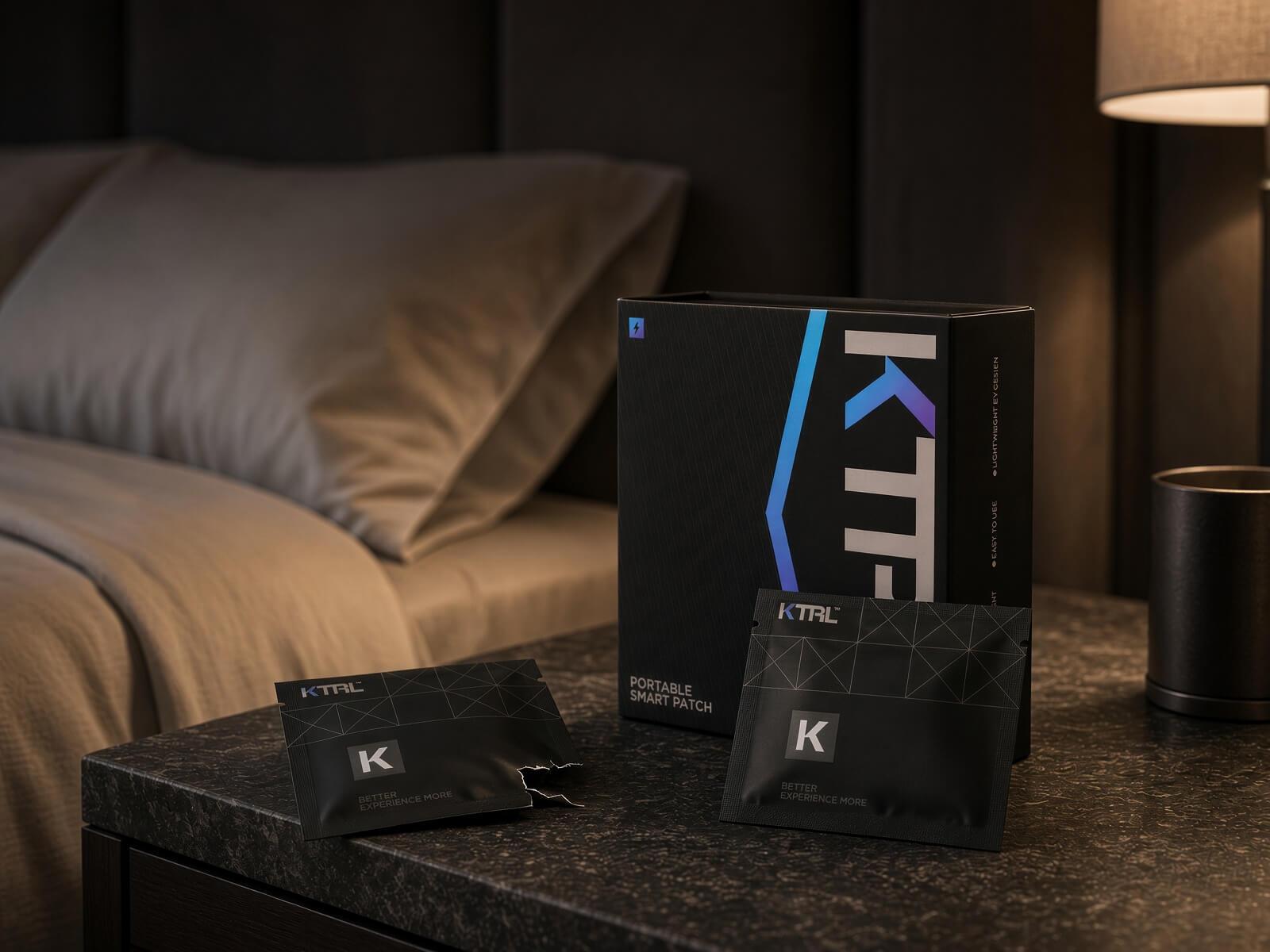
KTRL is a single-use patch. Once it has been worn and removed, dispose of it as directed. A short session, remaining stickiness, or apparent battery power does not make it reusable.
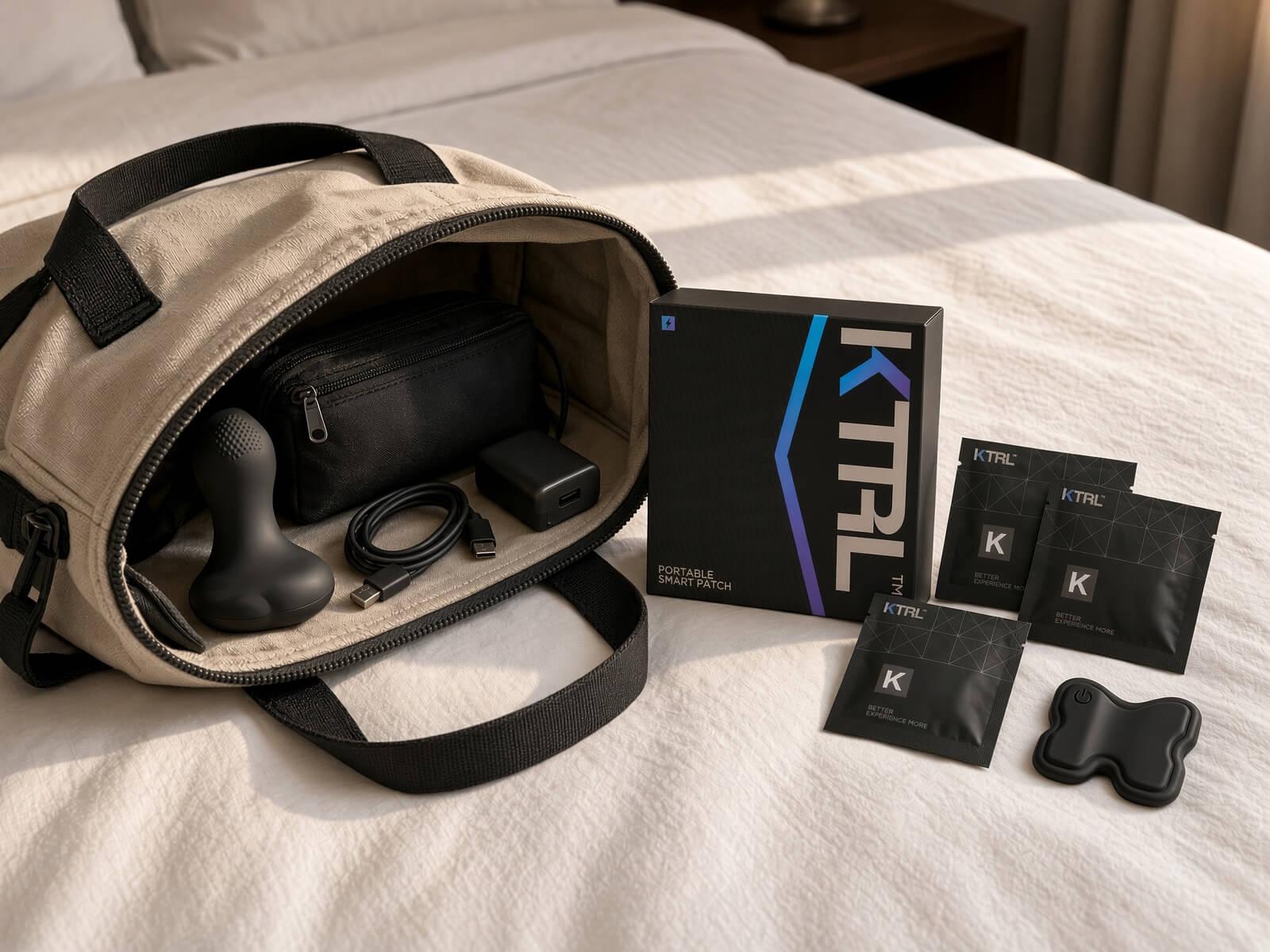
Single-use products provide one unit for one session. Reusable products stay with you across sessions. The better purchase depends on how often you will use it and the care you are willing to do.
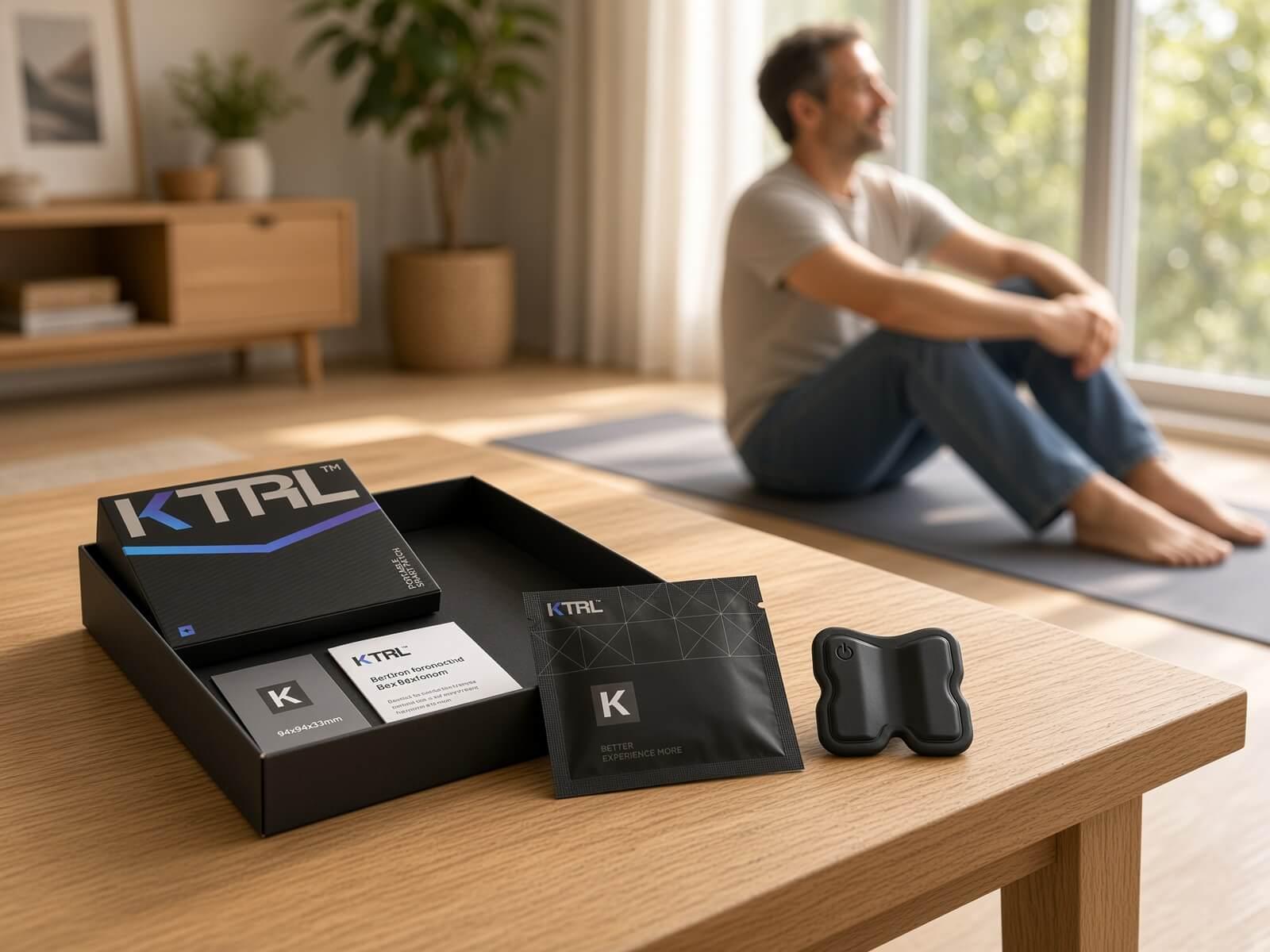
KTRL adds rhythmic sensation during one private session. Pelvic floor exercises involve practicing muscle contraction and relaxation over time. The useful starting point is your goal.
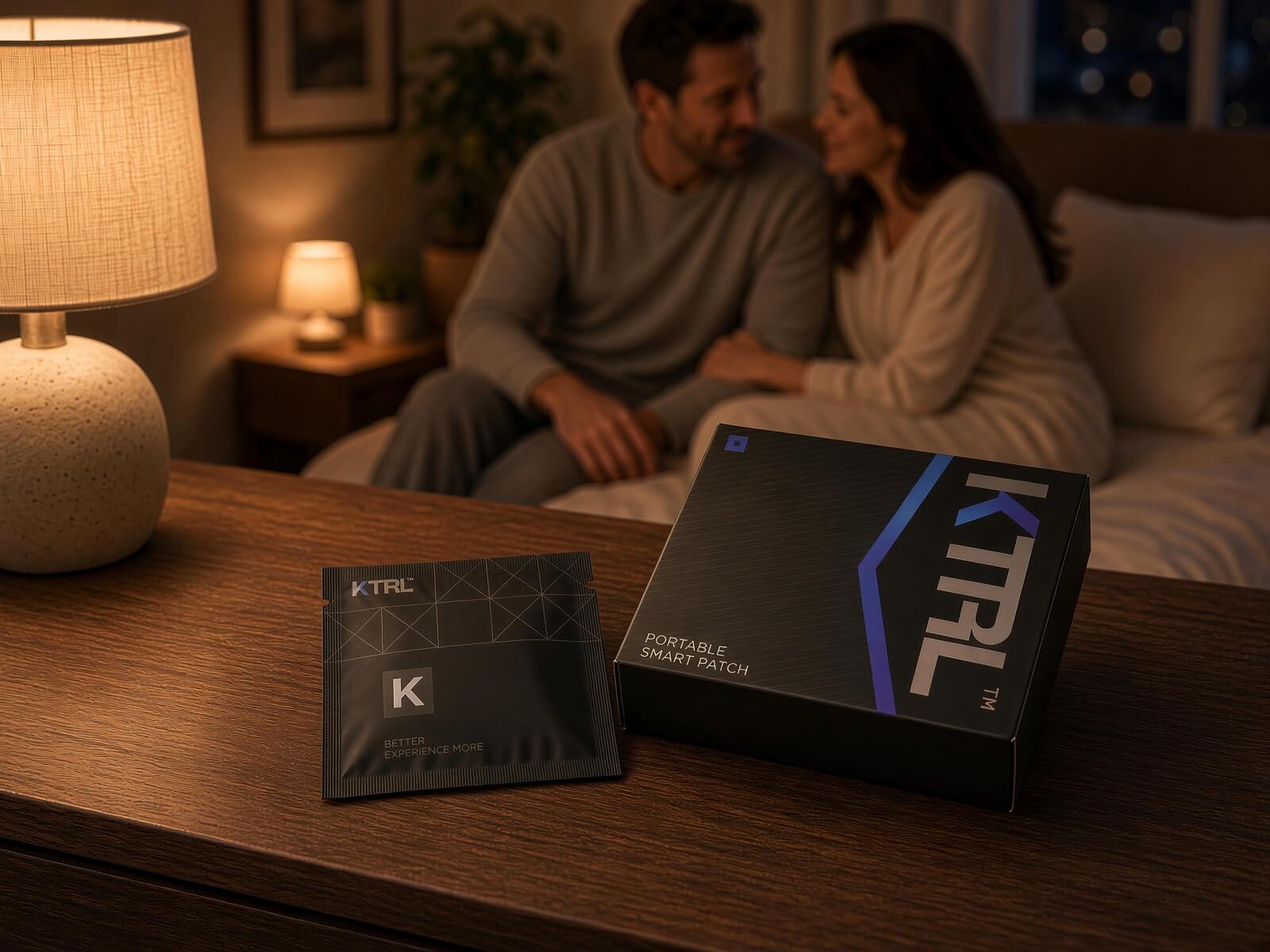
Behavioral timing methods involve learning when to slow down or pause. KTRL adds rhythmic physical sensation during one session; the wearer still makes the pacing decisions.
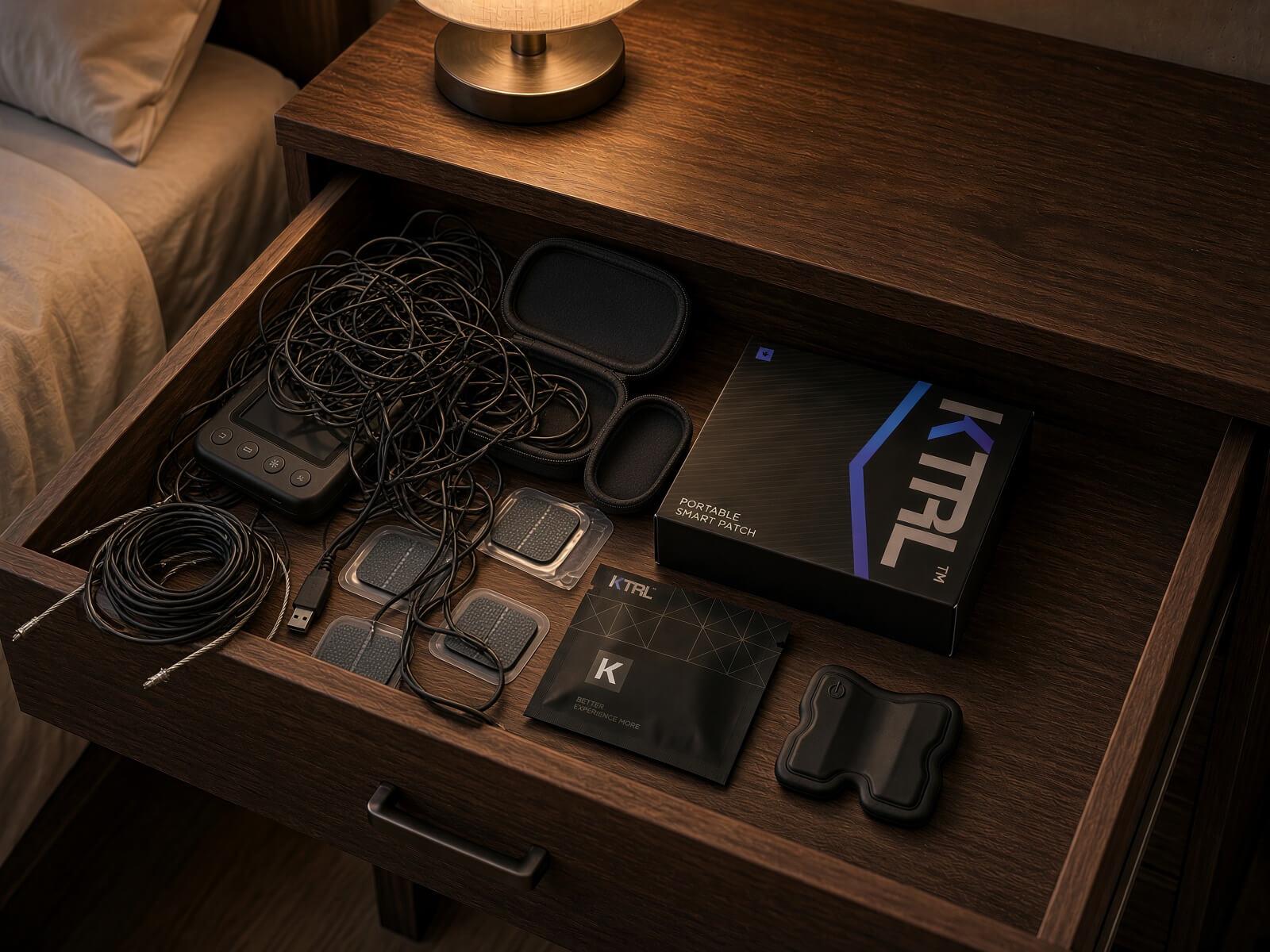
KTRL offers one patch for one session. Reusable electrical devices offer repeated use and may add adjustable settings, with care and maintenance that depend on the model.
KTRL adds rhythmic physical sensation through an external patch. Medicines and supplements are swallowed for different purposes, so choosing between them starts with the result you want.
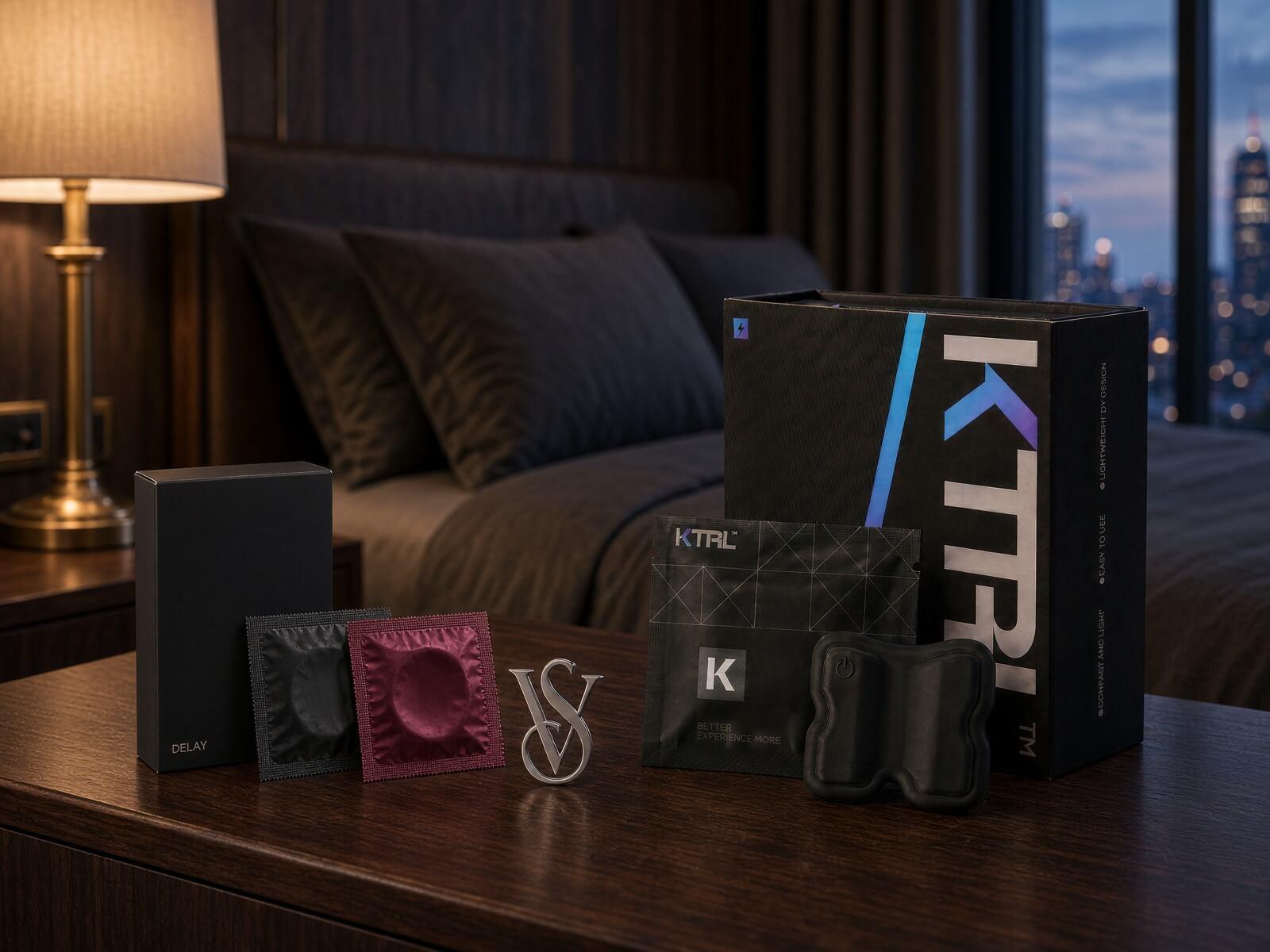
A delay condom provides a barrier with a product-specific timing feature. KTRL adds rhythmic sensation through a separate patch. It provides no pregnancy or STI protection.
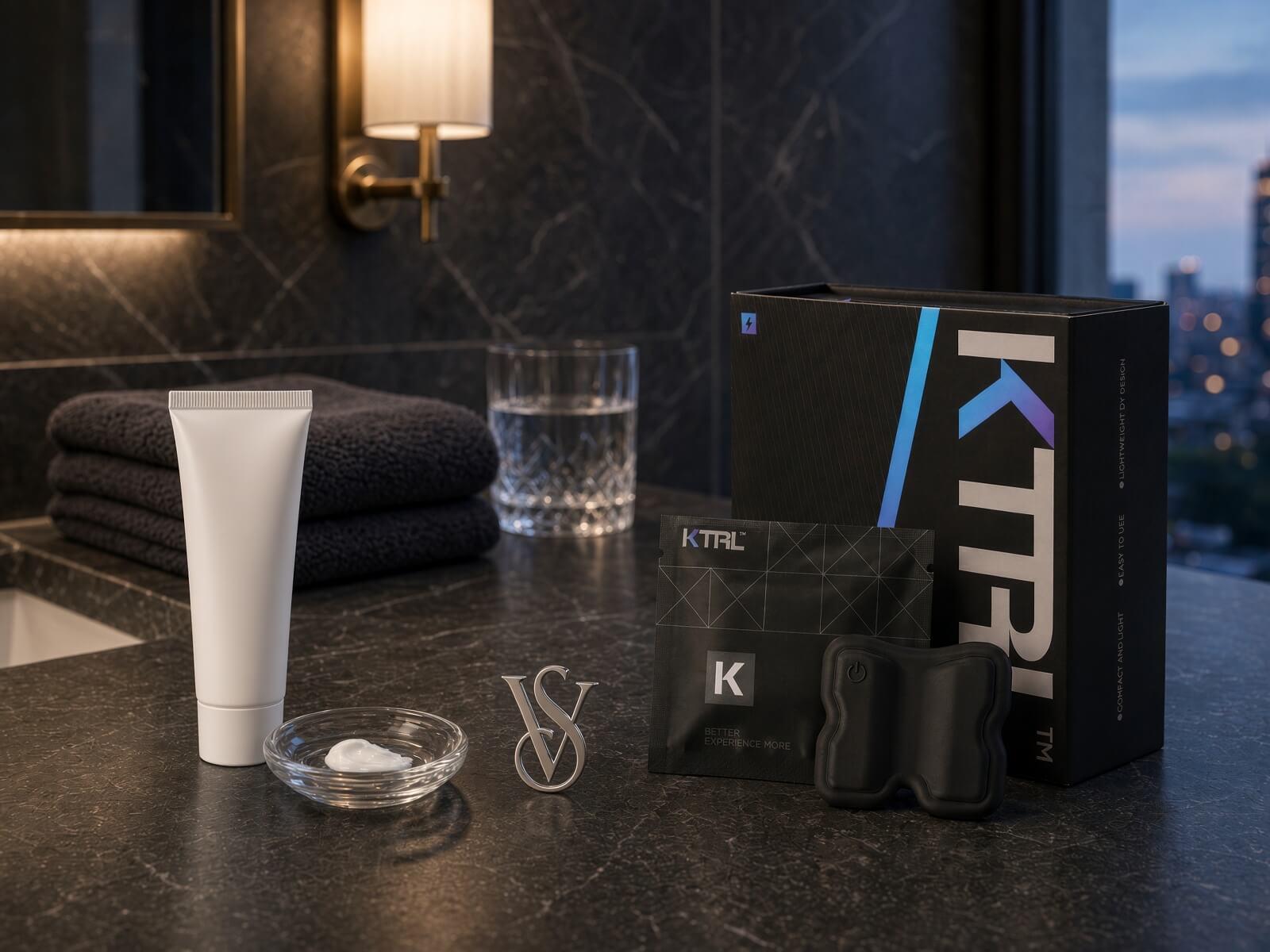
KTRL adds rhythmic sensation through an external patch. Delay creams use a topical formula. Your choice depends on the sensation you want and the preparation you prefer.
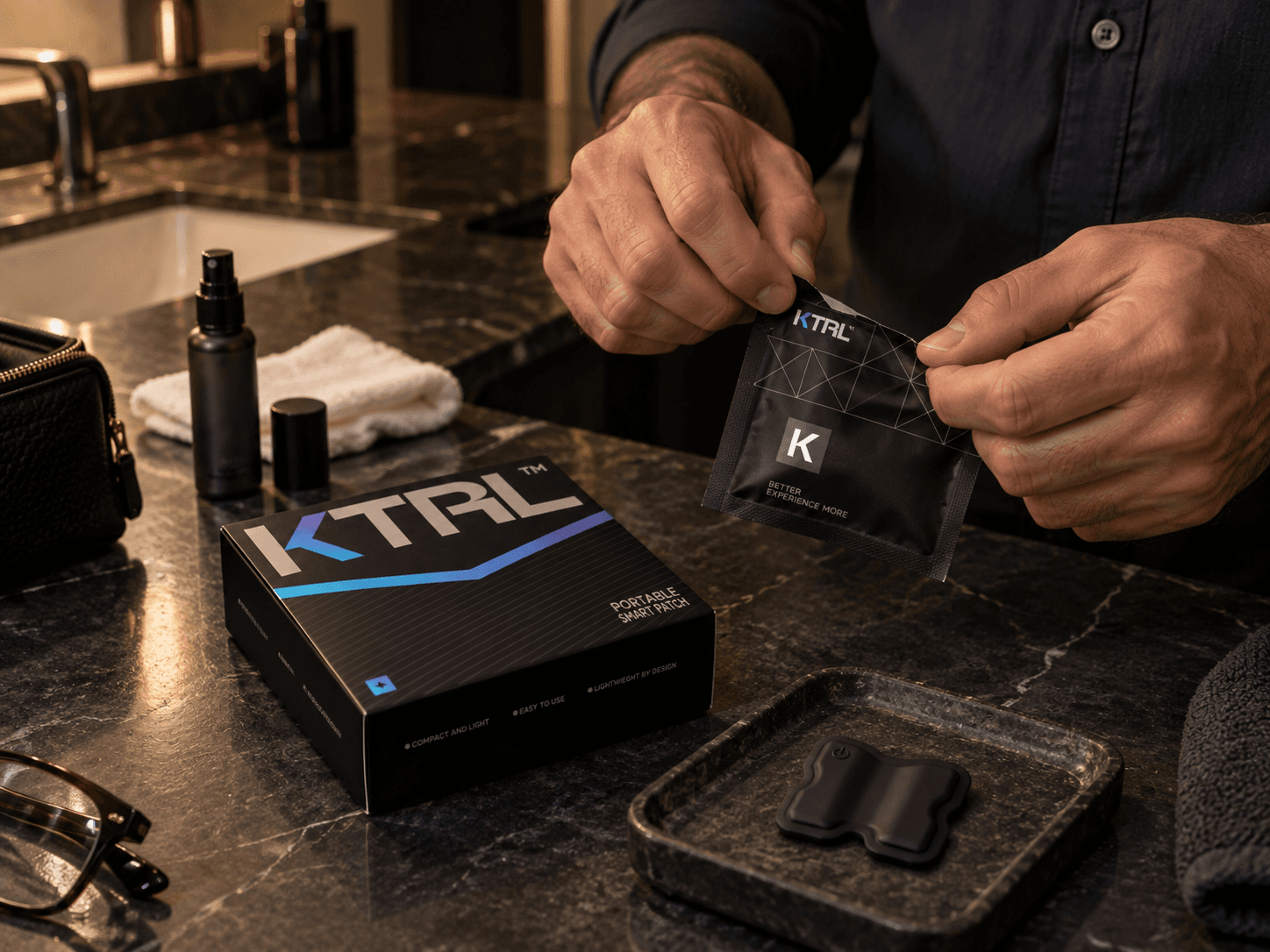
A format-first comparison of added rhythmic sensation versus topical sensitivity reduction, including preparation, transfer, and privacy.
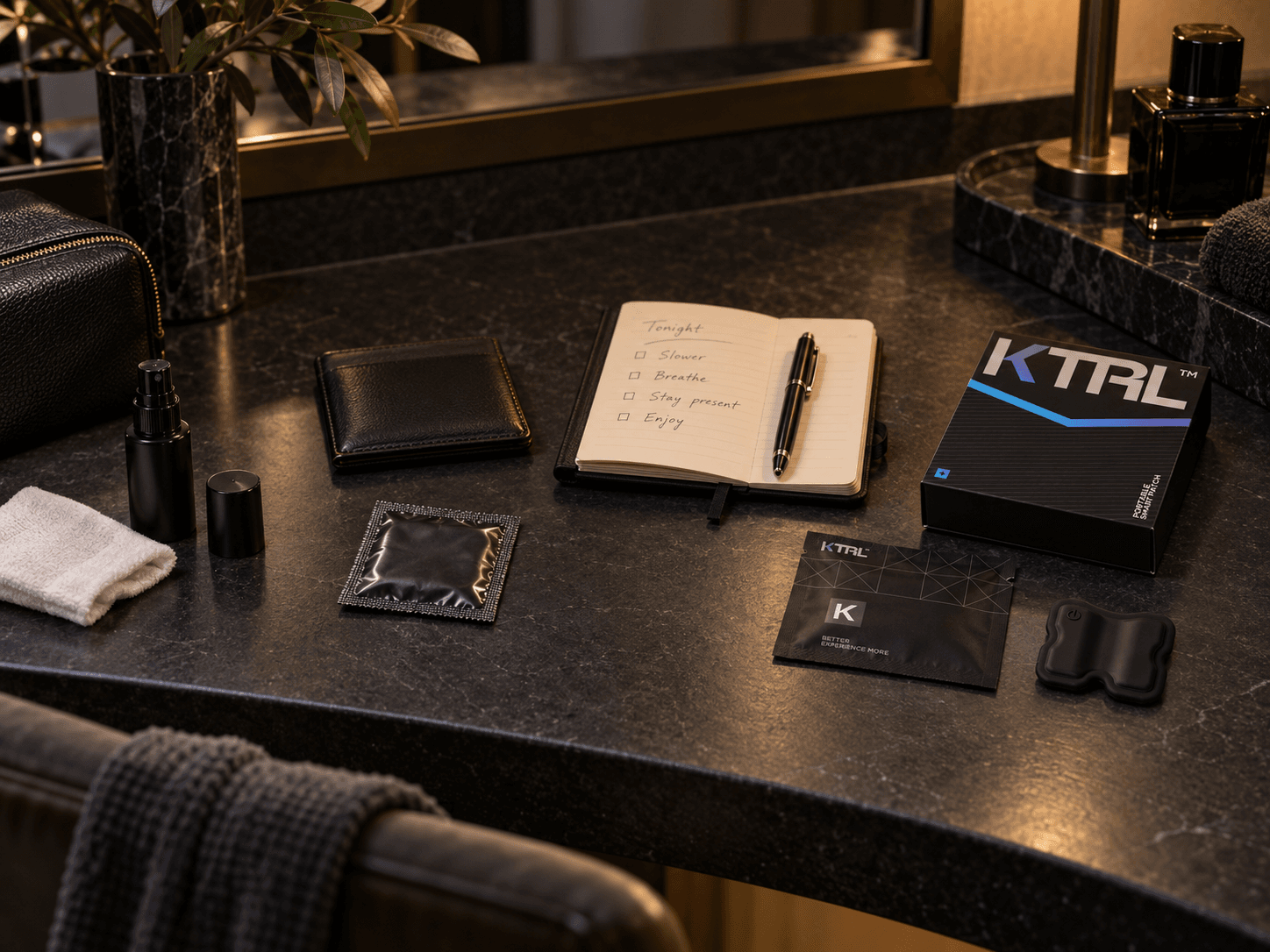
A practical comparison of sensory patches, topical delay products, condoms, and medicines by role, preparation, and safety considerations.
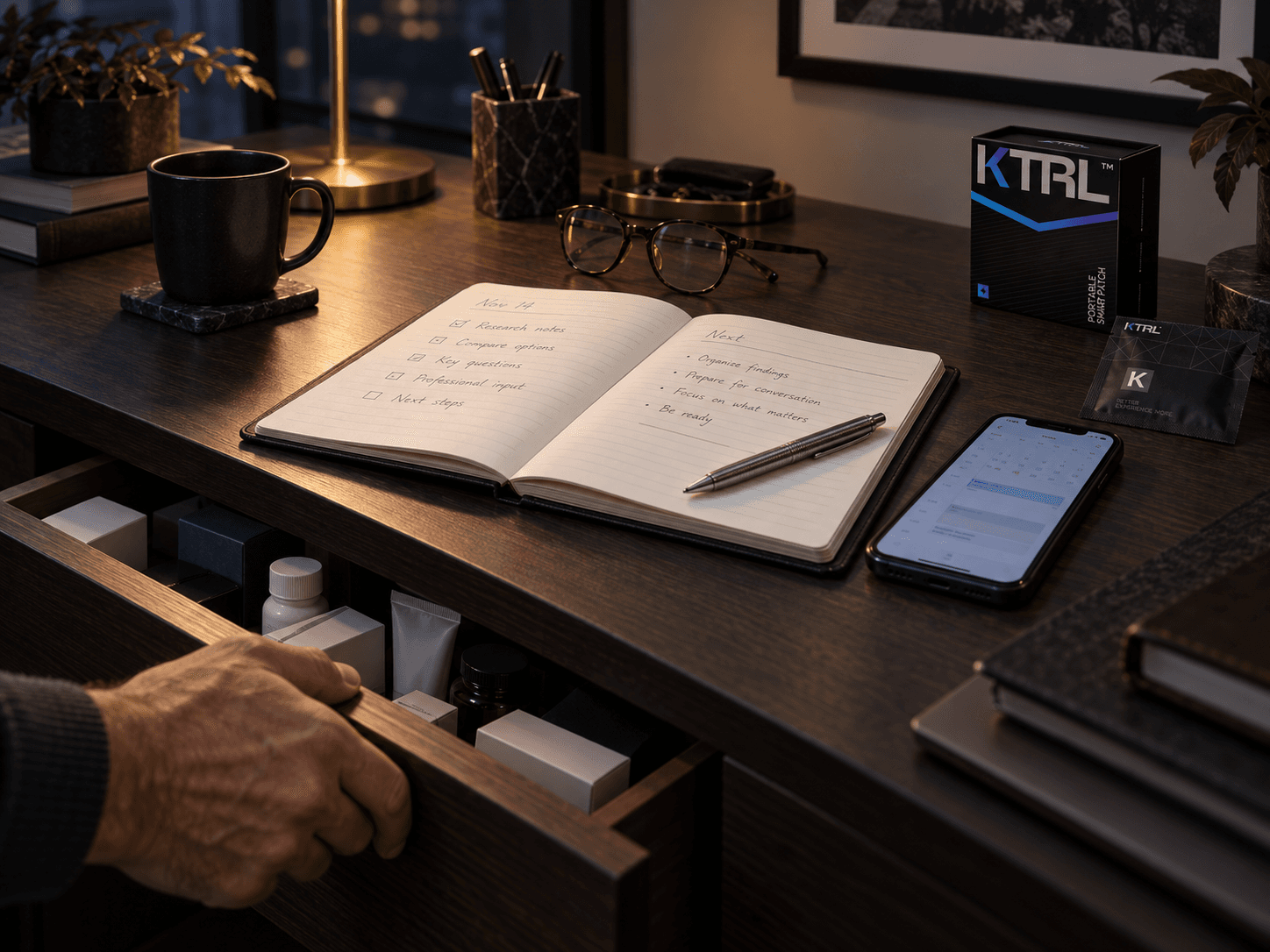
Clear warning signs for when a persistent sexual concern needs assessment instead of another product trial.
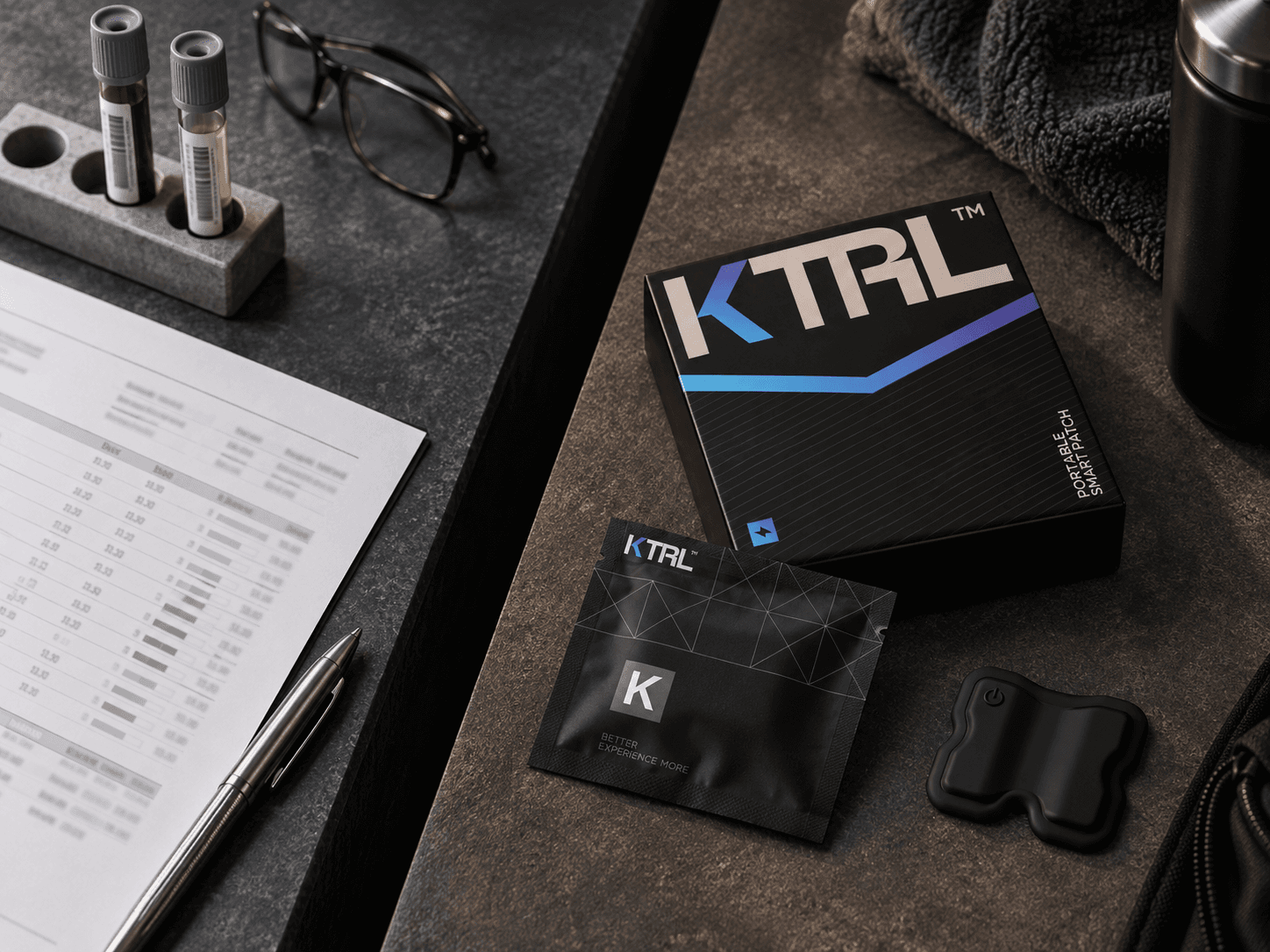
What KTRL can and cannot claim about hormones, sexual desire, and sensory experience.
How to separate stress-related low interest from a desire for novelty, and when a sensory routine may make sense.
A practical way to distinguish interest, engagement, and physical sensation before deciding what kind of support fits.
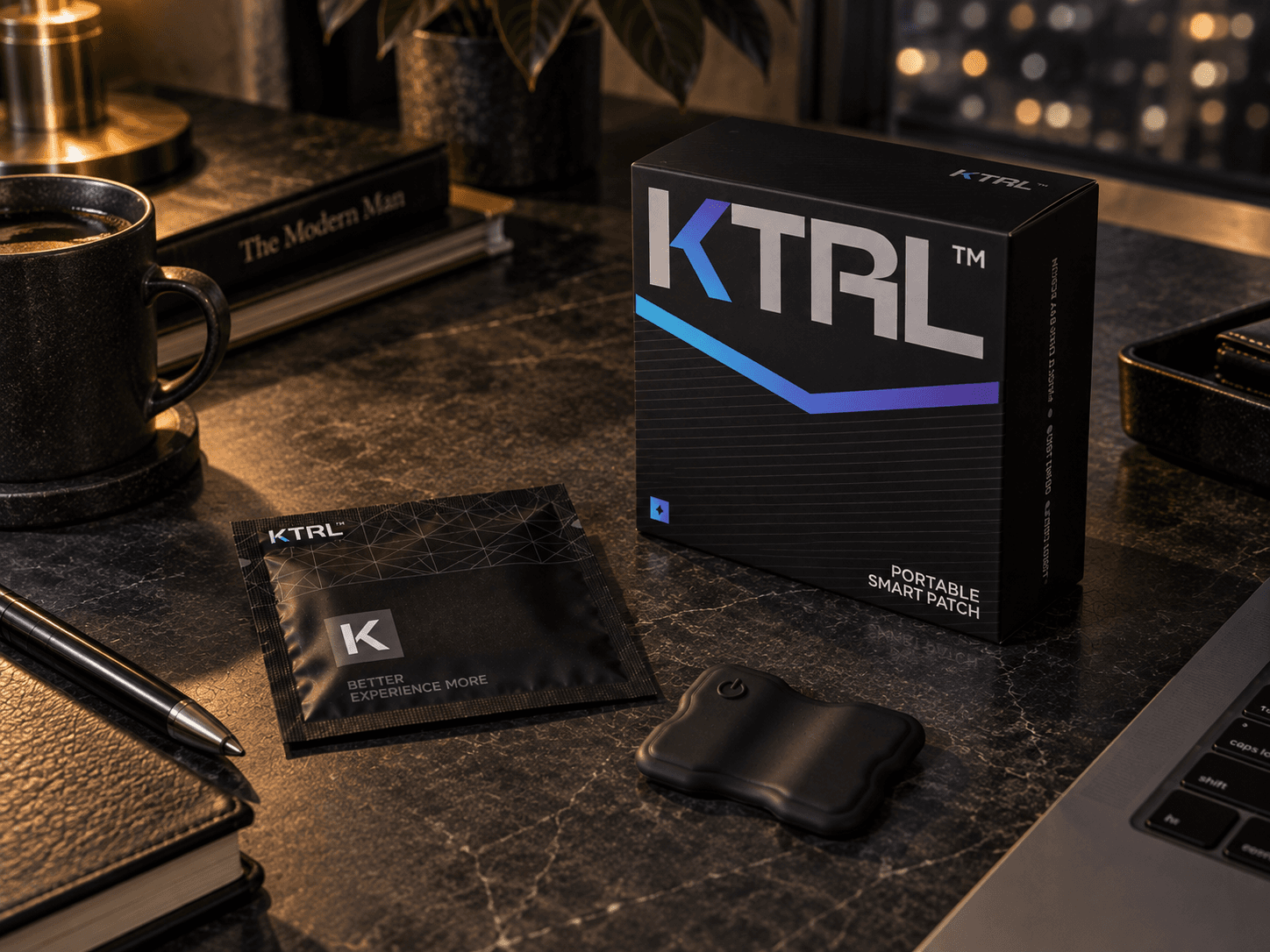
Why context changes sexual response and how couples can explore shared sensation without blame or comparison.
How to separate worry, timing, erection stability, and situational factors before choosing the right next step.
Understanding the fear-driven rushing cycle and using deliberate pacing without turning erection firmness into a race.

A practical guide to reducing performance pressure, improving communication, and understanding where rhythmic sensory support fits.
Separating situational loss of firmness, recurring erection concerns, KTRL's role, and tadalafil use
Separating sexual desire, erection difficulty, KTRL's sensory role, and sildenafil use
How to judge KTRL by sensory value when duration stays the same
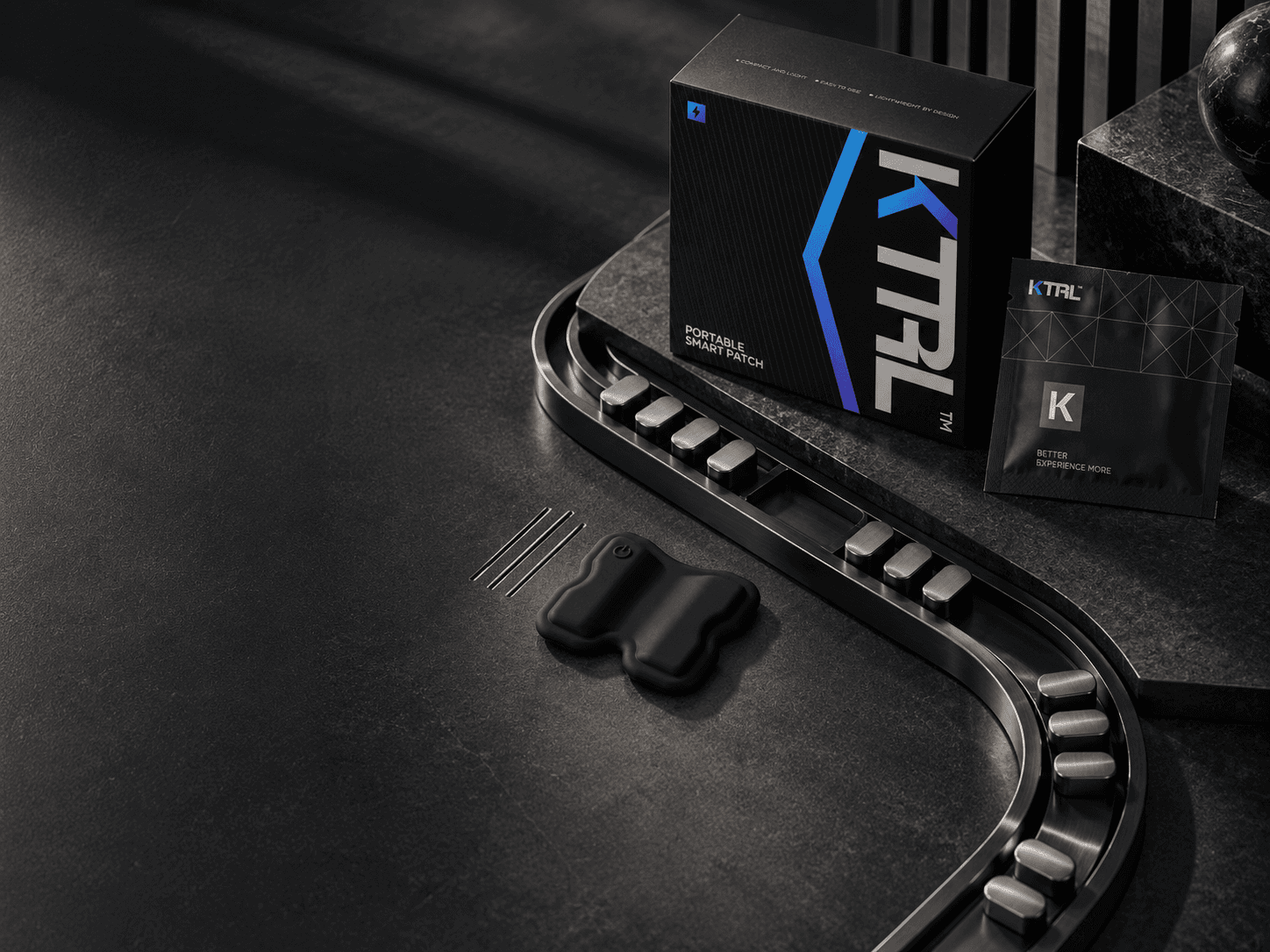
A practical way to pair KTRL's rhythmic cue with slower pacing and planned pauses
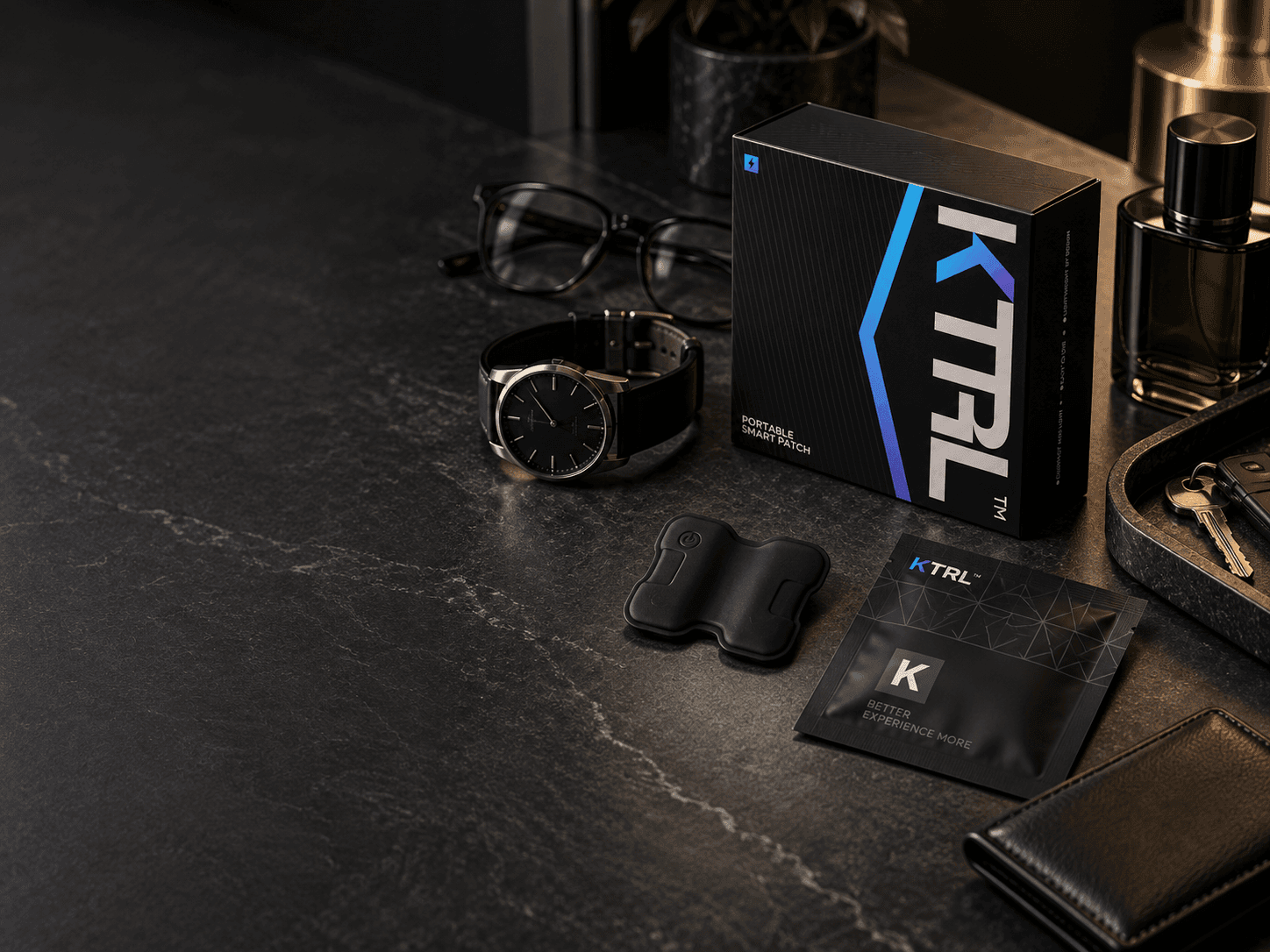
Why KTRL can fit sensory exploration and pacing even without a PE diagnosis
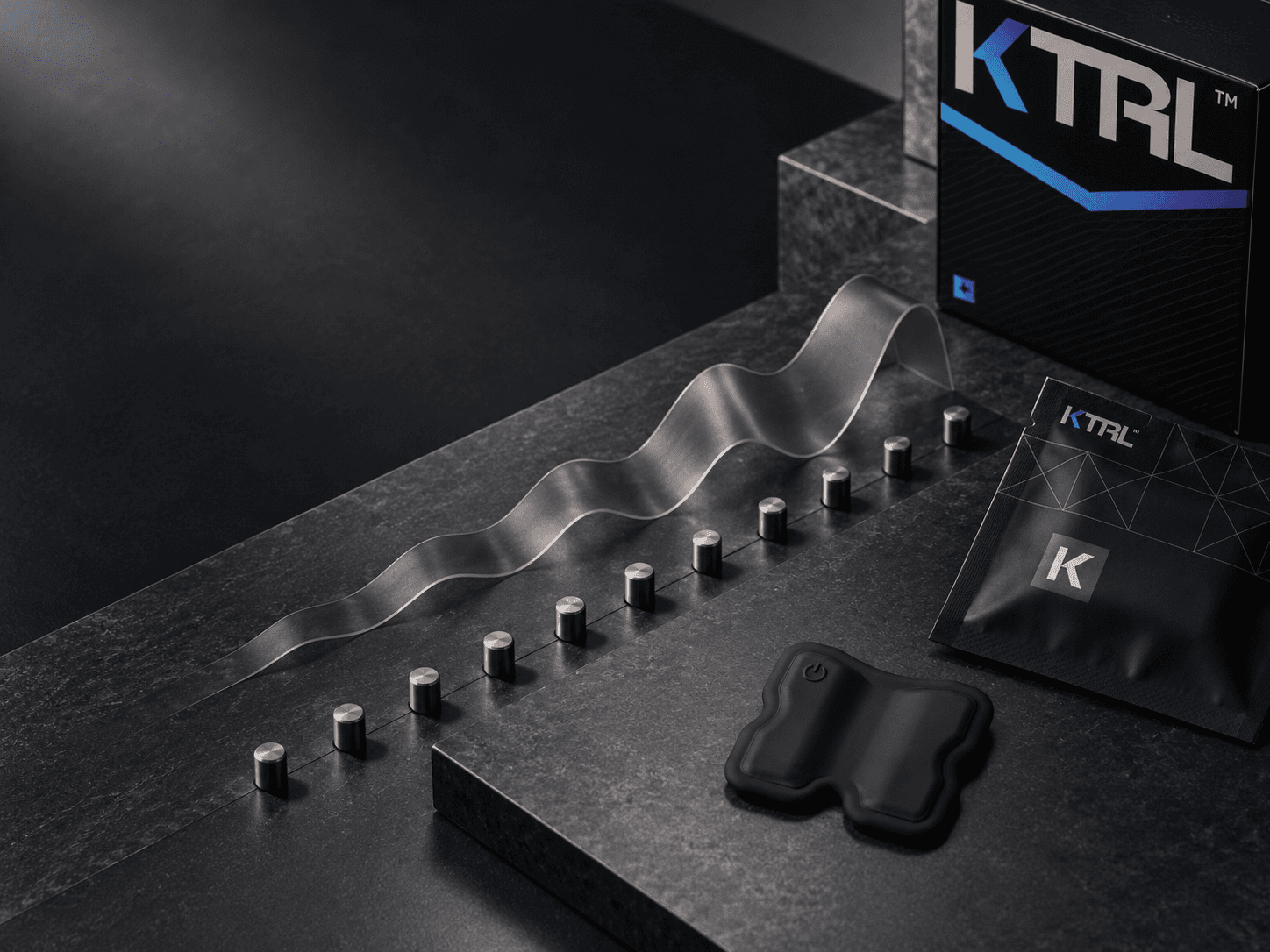
Using a steady sensory cue to track changes in arousal without turning it into a test
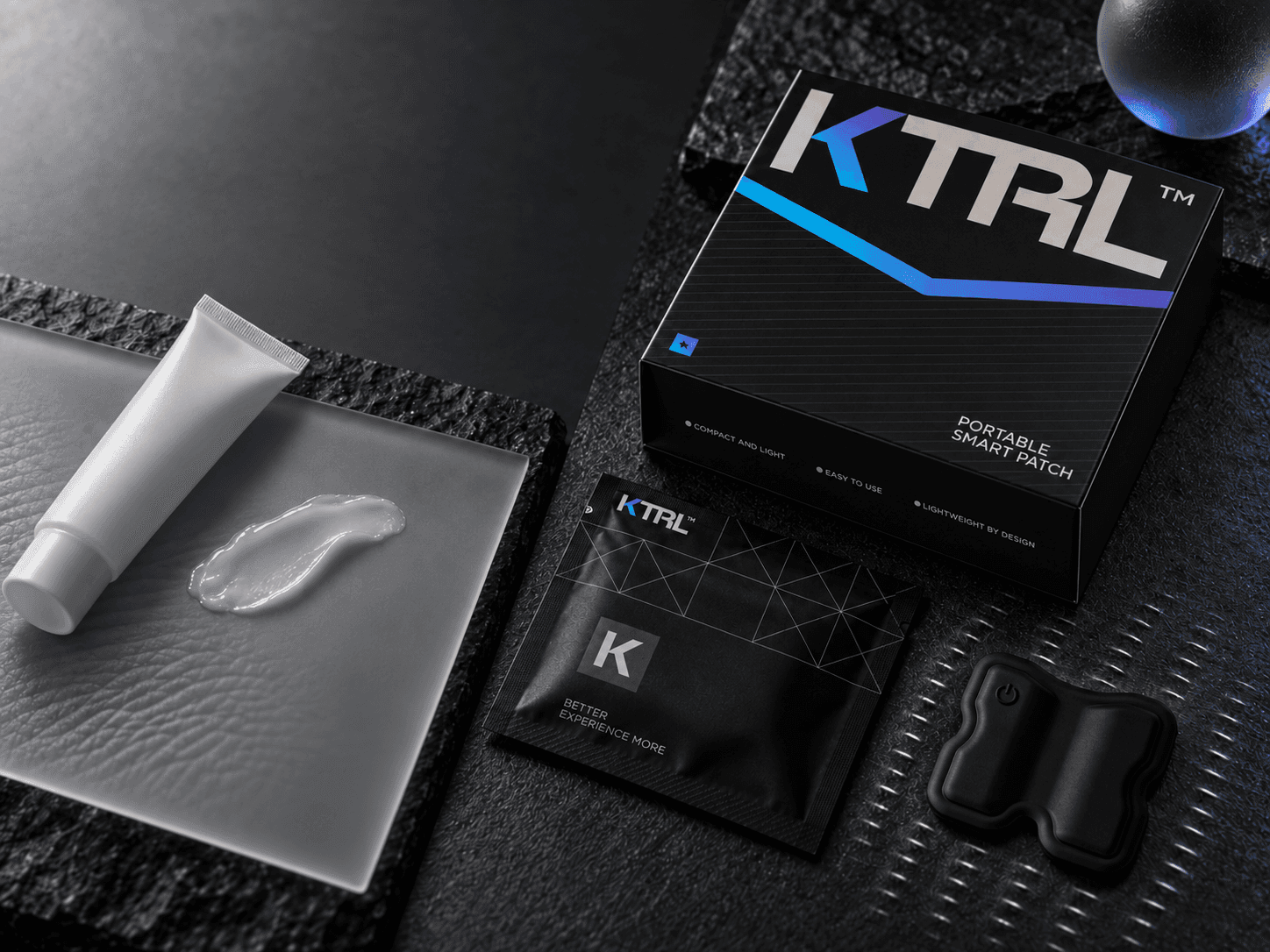
How KTRL differs from topical numbing sprays and creams
A practical vocabulary for describing KTRL's repeating physical cue
A practical guide to separating sensation from sexual-function outcomes
How to separate sensory effects from pacing and timing expectations
A practical guide to comparing KTRL, delay sprays or creams, condoms, medicines, and behavioral strategies by sensation, preparation, protection, and side-effect profile.
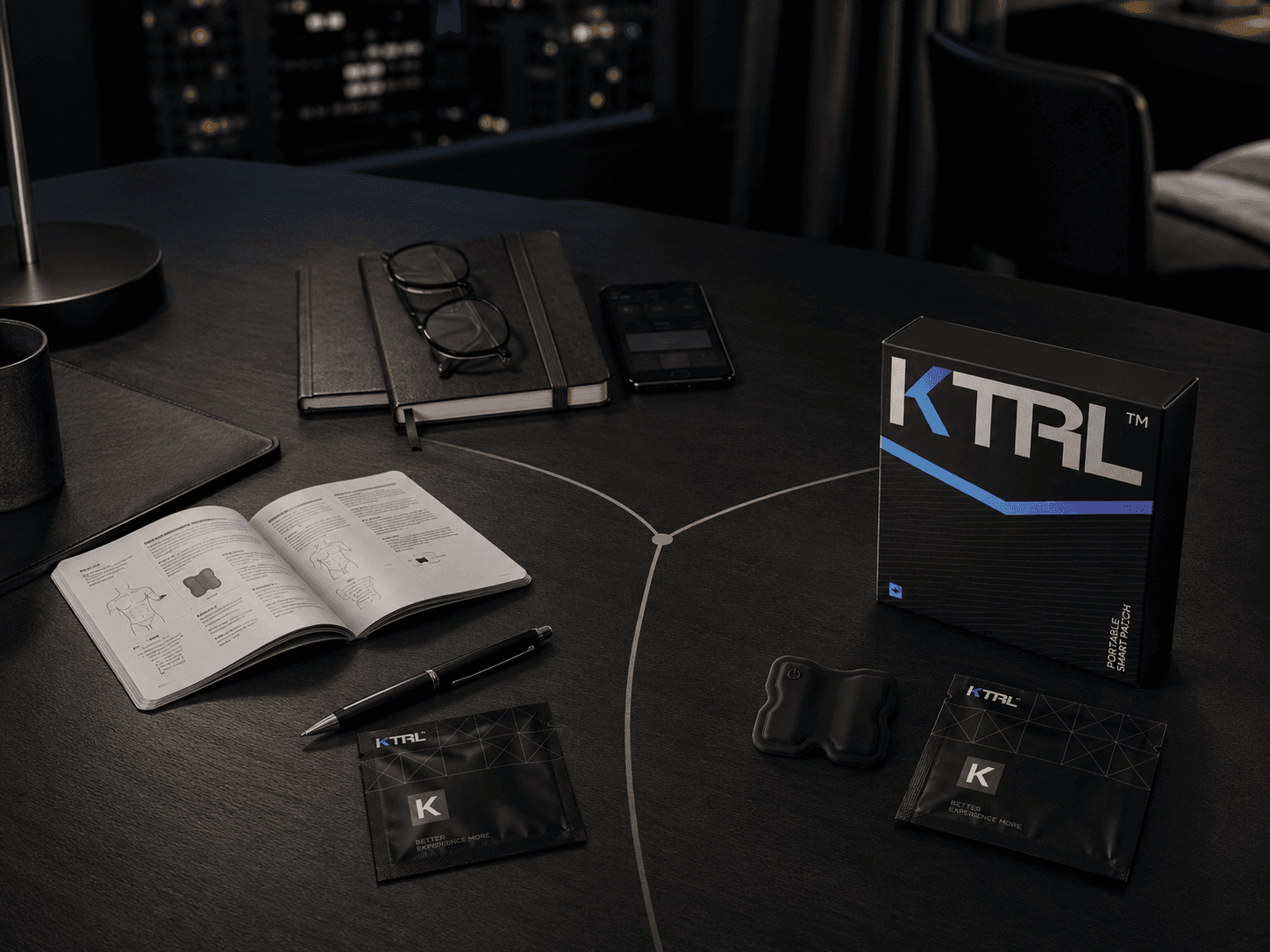
Discover who KTRL is for. Learn about the KTRL Portable Smart Patch, its discreet design, app connectivity, and suitability for travelers, couples, and tech-savvy users.
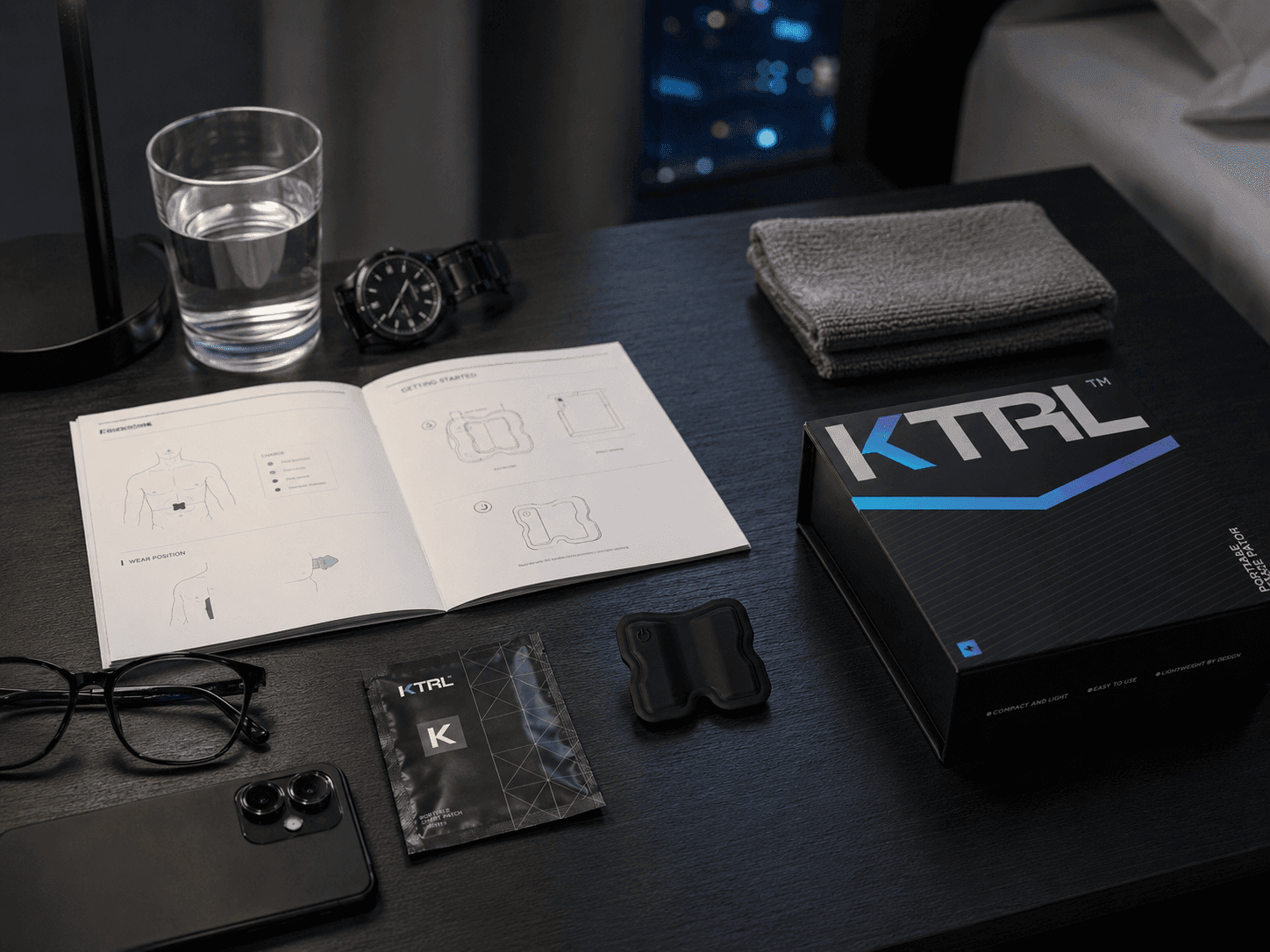
A practical first-session guide to sensation, preparation, comfort, and evaluating whether KTRL's single-use routine fits you.
A practical way to assess whether KTRL's sensation-first, single-use format matches your goals, routine, and expectations.
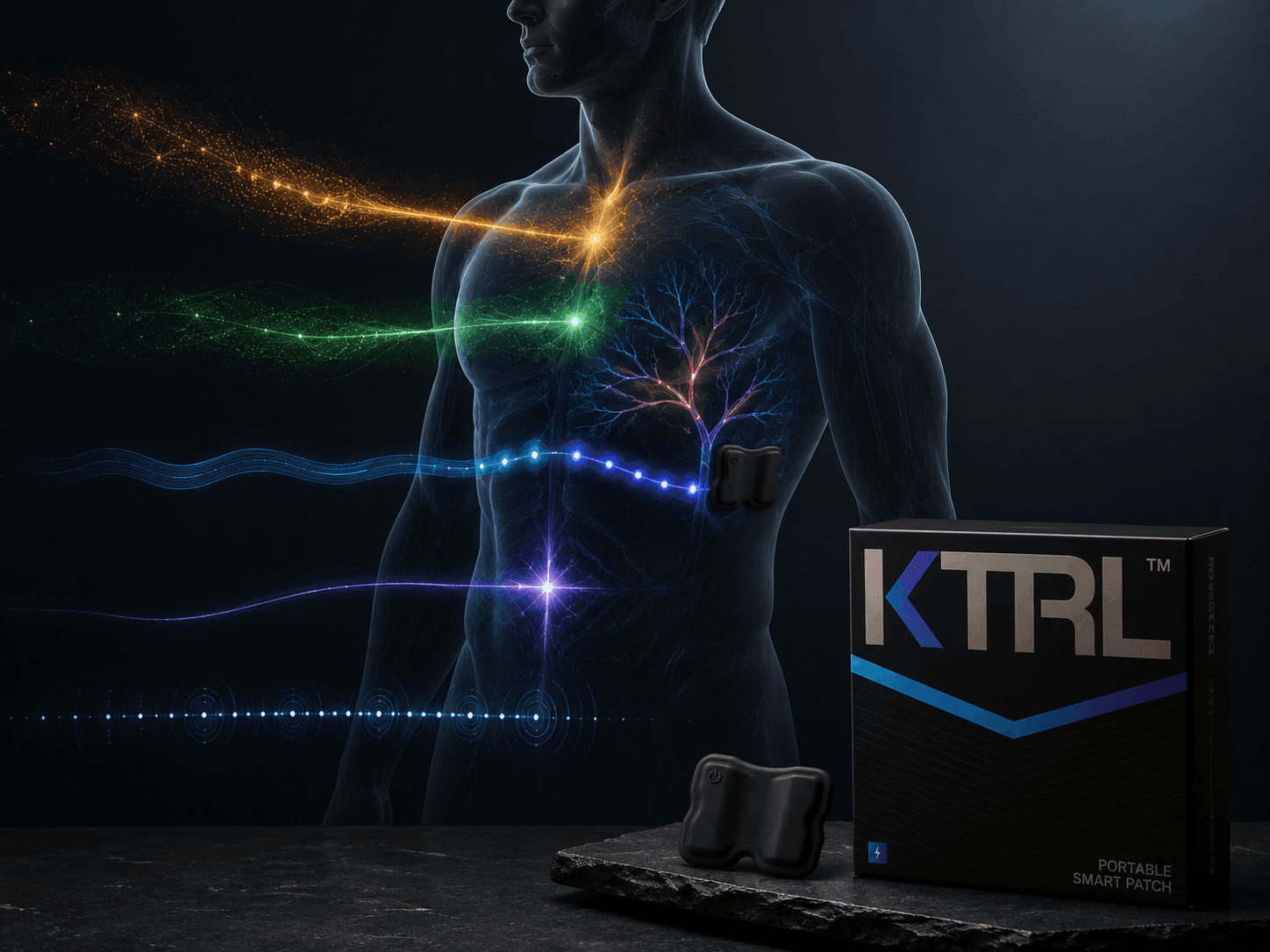
How to distinguish desire, arousal, erection, sensation, orgasm, and timing control before deciding whether KTRL fits your goal.

In today’s hyper-connected world, the notion of control seems tied to an endless pursuit of productivity.