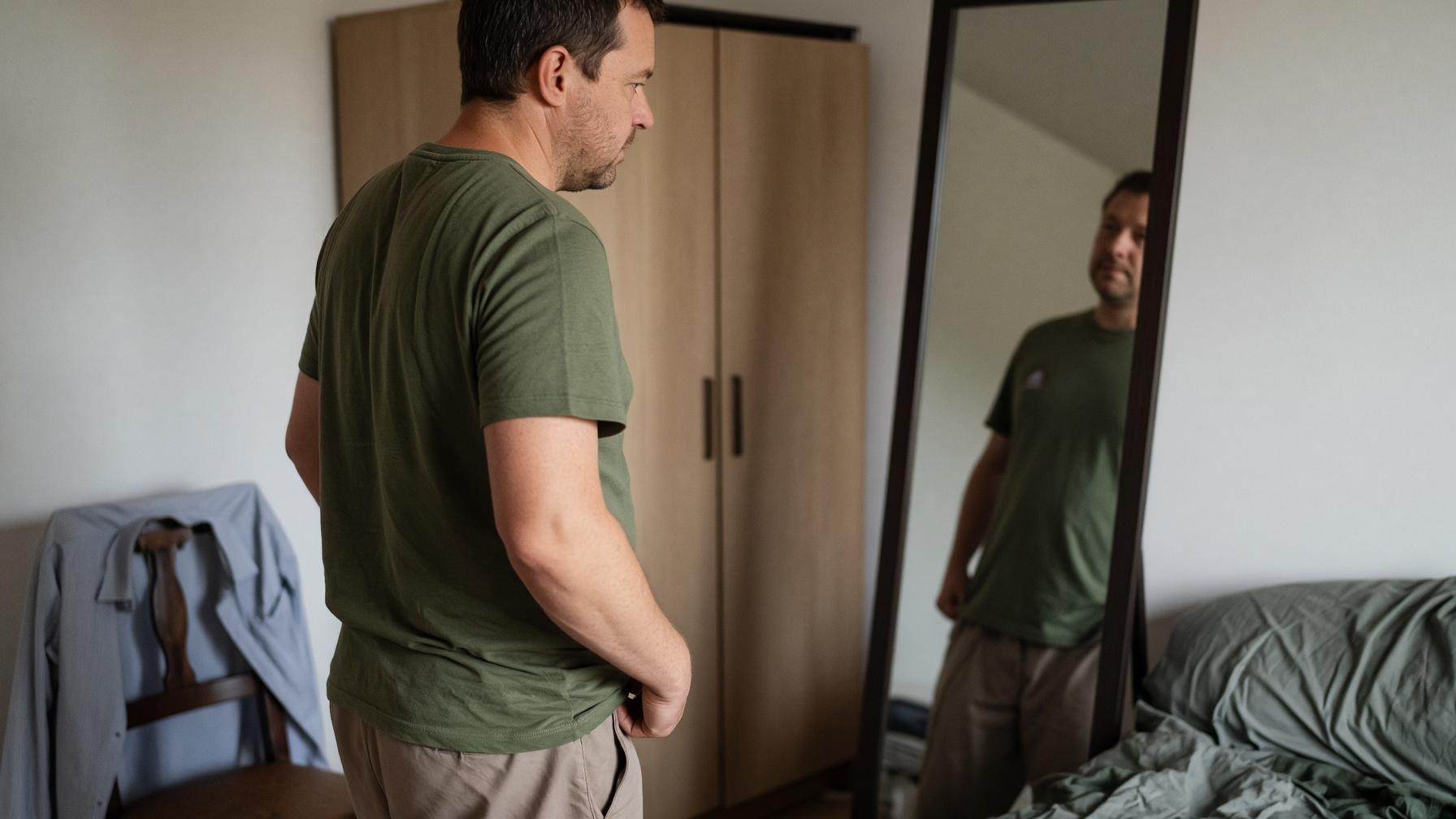

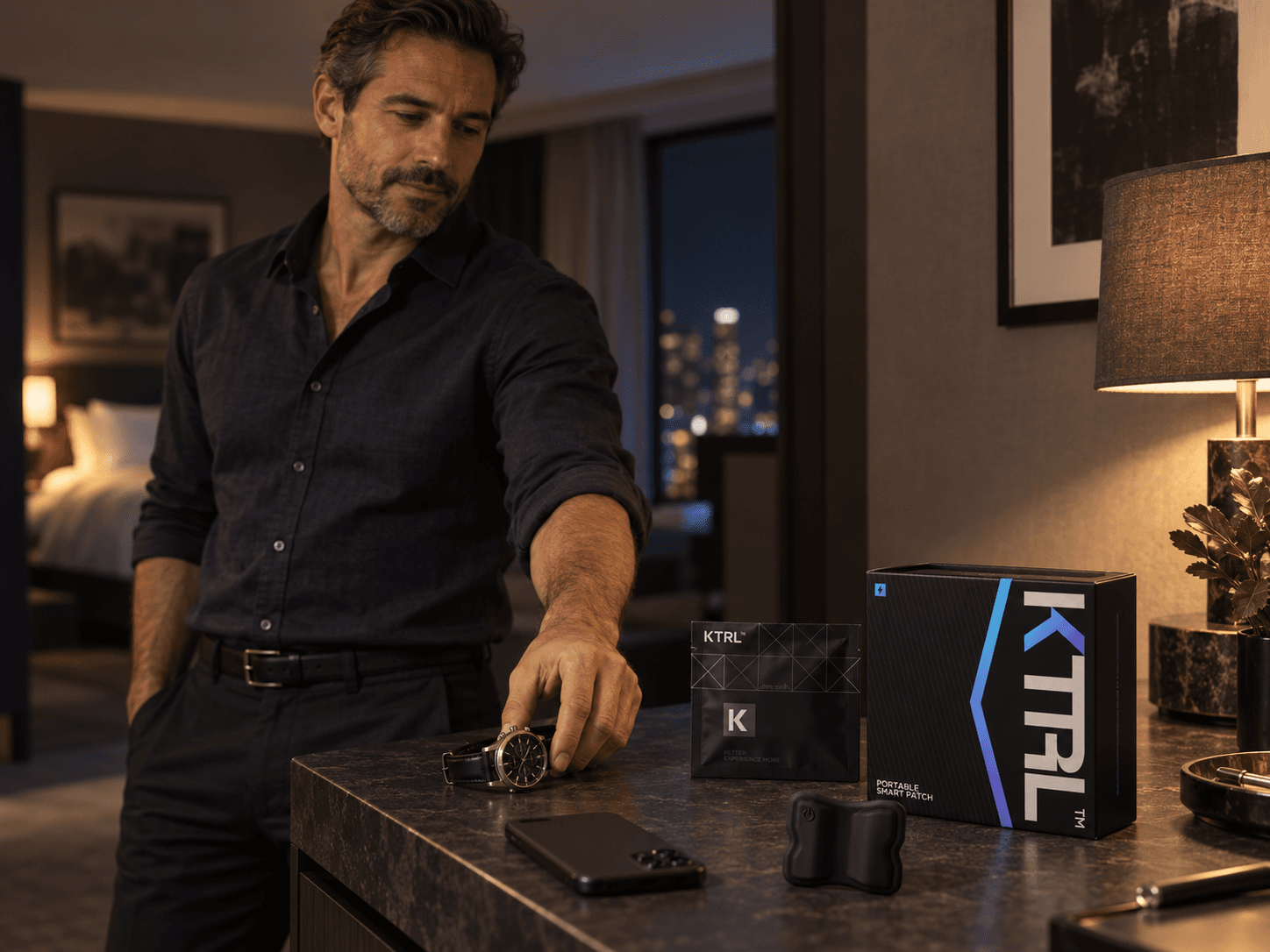
Some people speed up because they worry that an erection will fade if they pause or change activity. That can make the experience feel like a race rather than a freely chosen pace. The worry does not prove that an erection problem is psychological, and rushing does not identify its cause. You can describe the sequence, ask what both people want and seek appropriate advice without turning firmness into a test.
By KTRL | Editorial update:
Describe one episode without turning it into a diagnosis
Fear of losing firmness may lead some people to rush, but “fear–checking–rushing” is an illustrative sequence, not a validated diagnosis or a pattern everyone follows.
For a hypothetical example, someone notices a change in firmness, wonders whether it will last, and speeds up although they would prefer a slower pace. The useful information is the mismatch between the pace they chose and the pace they wanted. The example cannot show why the erection changed or whether anxiety caused it.
Separate what happened, what you feared and what you wanted
| Prompt | Hypothetical wording | Purpose |
|---|---|---|
| What happened? | “I noticed less firmness and sped up.” | Describe an event without assigning a cause. |
| What did you fear? | “I worried the erection would go away.” | Name the concern as a thought, not a prediction. |
| What did you want? | “I wanted a slower pace or a pause.” | Identify a preference without demanding a bodily result. |
| What could you say? | “Can we slow down? We can stop if either of us wants.” | Make a request that leaves both people a choice. |
You can use one prompt or none. Do not collect repeated scores or keep checking firmness to complete the worksheet. It is a way to describe a moment afterwards, not a technique proven to improve erection or ejaculation control.
Use words that do not demand a physical result
You might say: “I notice I am rushing because I am worried. Can we decide together what we want to do?”
A partner might reply: “We can pause or finish. You do not have to keep an erection to prove that you want me.”
These are suggested words, not a promise that conversation will change sexual function. A partner should not become a firmness monitor or be expected to provide treatment. Consent to an activity is not consent to being evaluated or to using a product.
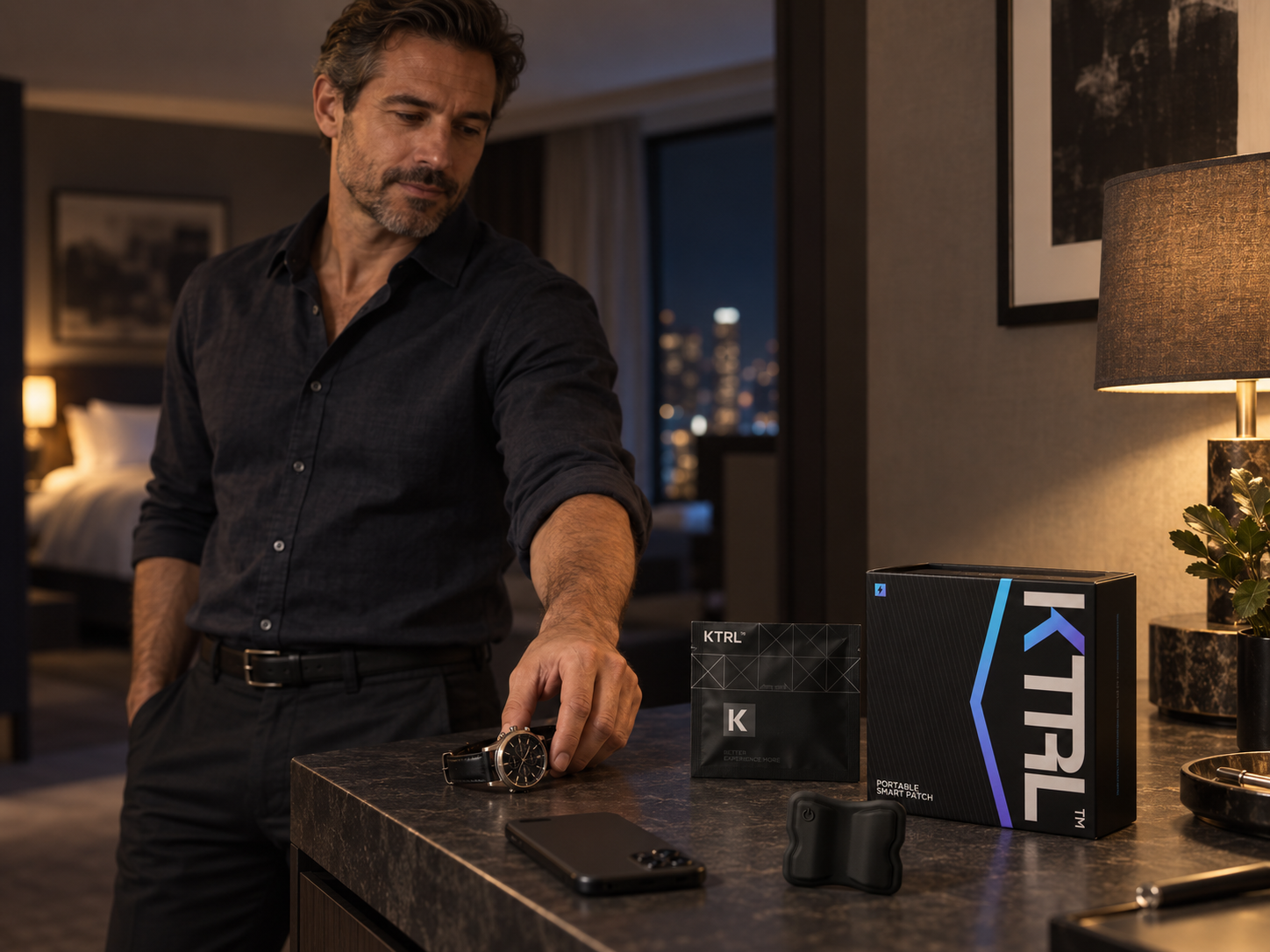
KTRL has a separate sensory role
A sensory patch is not a way to test whether a fear is justified. KTRL-specific evidence has not been supplied here to establish an effect on erection confidence, anxiety or rushing.
It is a single-use consumer electronic product for men aged 18–60, inclusive. Read the WDC201 user guide and complete use restrictions before considering it. Do not use it while a restriction applies or an instruction remains unclear.
Stop immediately for pain, stinging, burning, redness, swelling, itching or other obvious discomfort; switch off and gently remove it as directed. If symptoms persist, discontinue further use and seek qualified healthcare advice. Stop for abnormal operation and contact KTRL Support.
The limit is 30 minutes of cumulative powered-on time in the same use. Switched-off time is excluded; restarting does not reset the total. Track the total yourself. Switch off before any permitted same-session adjustment, and do not save the patch for another session. The first-use guide covers placement and operation.
When to seek professional advice
Seek qualified assessment when erection difficulty is recurring, distressing, sudden or accompanied by pain or another unexplained change. You do not need to finish a series of product attempts first.
What to take to an assessment
The NIDDK assessment guidance describes medical, sexual and mental-health history, examination and tests when appropriate. You can describe when the change began, whether it recurs, what happened first, medicines or supplements, pain and how the situation affects you. A response during masturbation or on another occasion does not replace that assessment.
For related next steps, read sorting pressure from a timing concern and when to stop testing products and seek advice. These pages are reading routes, not a diagnosis or permission to use a restricted product.
For a physical change after an erection begins, use the guide to losing firmness during sex. For a broader decision about worry, timing and seeking support, use the concern-navigation guide.
Frequently asked questions
Does rushing because I fear losing an erection prove the problem is psychological?
No. Fear may be part of the sequence, but physical, medicine-related, emotional and lifestyle contributors can coexist. Describe the sequence without assigning yourself a cause.
Do I need to pause at a particular speed to fix the pattern?
No. There is no prescribed pace in this communication aid. Decide freely whether to continue, change activity, pause or finish, and seek assessment for recurring or distressing difficulty.
Can KTRL maintain my erection or tell me when to pause?
Product evidence supplied for WDC201 does not establish that it maintains an erection, identifies an arousal threshold or makes a pause medically safe.
When should I stop trying a product and seek advice?
Seek qualified advice for recurring, distressing, sudden or painful erection difficulty, or another unexplained change. Stop the product immediately for pain, burning, swelling, itching or other obvious discomfort.
Sources
National Institute of Diabetes and Digestive and Kidney Diseases. Symptoms & Causes of Erectile Dysfunction. Last reviewed October 2024; accessed 13 October 2026.
National Institute of Diabetes and Digestive and Kidney Diseases. Diagnosis of Erectile Dysfunction. Last reviewed October 2024; accessed 13 October 2026.
KTRL. KTRL Patch User Guide. Product purpose, restrictions and operating instructions for WDC201. Accessed 13 October 2026.
NIDDK provides general health information, not KTRL evidence. No documented review by a named qualified healthcare professional has been supplied for this article. The possible sequence and communication prompts are editorial explanations.