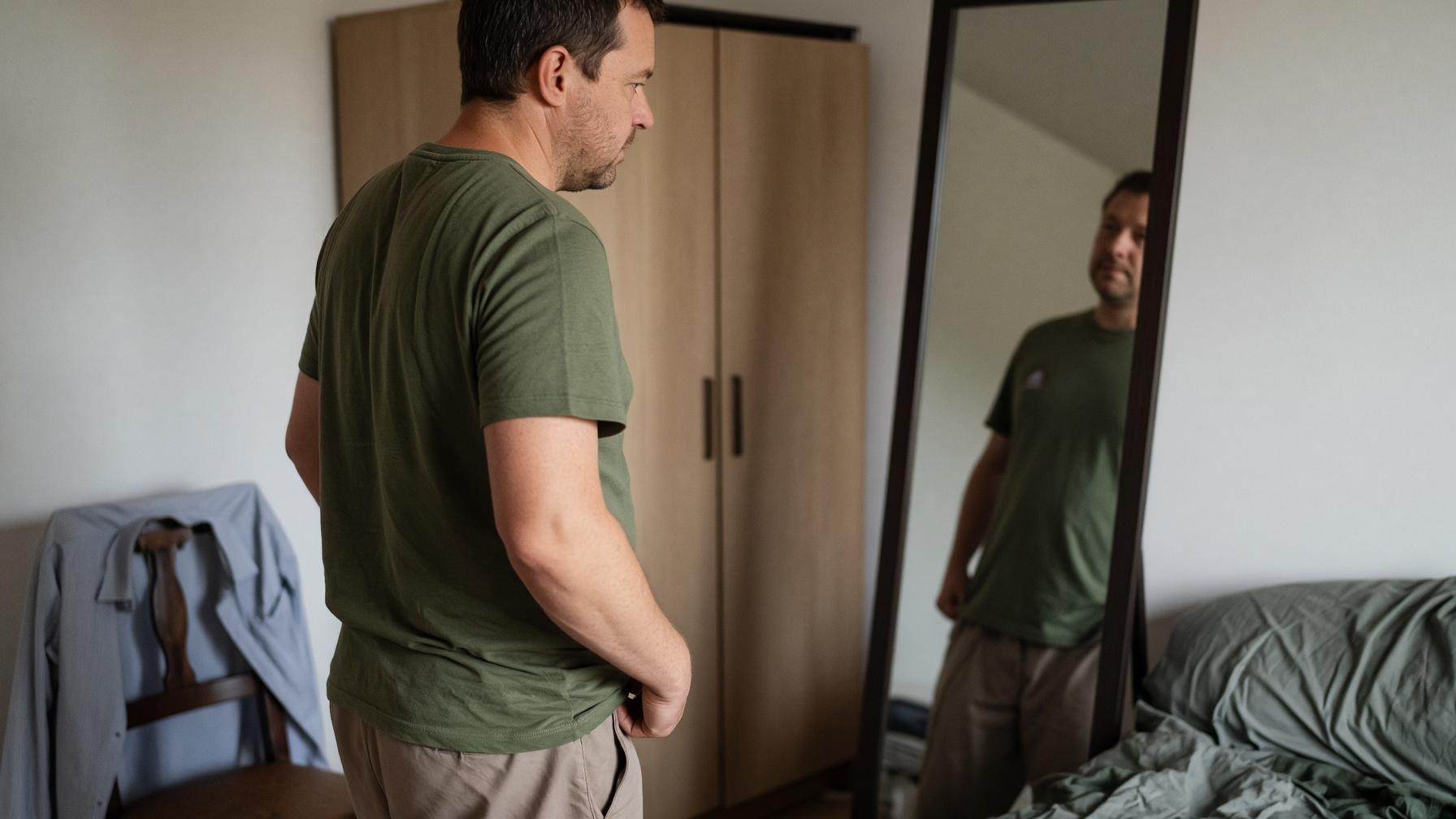


The physical signs of sexual arousal can include faster breathing, a quicker heartbeat, muscle tension, warmth or flushing, and changes in genital blood flow. These responses involve communication between the brain, spinal cord and nerves throughout the body. Their timing and intensity vary, and movement or room temperature can contribute to what you notice. You do not need to experience every sign to feel aroused.
By KTRL | Updated:

What are the physical signs of sexual arousal?
Sexual arousal can involve several body systems at once, so its signs extend beyond the genitals. Some changes are visible; others are sensations only you notice.
You notice your breathing first. A moment later, your shoulders feel tense, your skin feels warmer and your heartbeat seems unusually obvious. All this can happen while you are barely moving. Sometimes you only notice the muscle tension afterwards, when you realise how tightly you were gripping the sheet.
Cleveland Clinic's explanation of the sexual response cycle describes possible changes including:
-
Breathing and circulation: breathing can become faster and heart rate can rise.
-
Muscle activity: tension can increase, with involuntary contractions or twitching during orgasm.
-
Skin changes: a temporary flush may appear, including on the chest or back.
-
Genital responses: increased blood flow can contribute to an erection or clitoral swelling; vaginal lubrication may also occur.
The same clinical overview emphasises that the intensity, timing and order of responses vary. It is an outline of possible changes, rather than a timetable your body has to follow.
How the nervous system coordinates the response
During an intimate encounter, your nervous system receives information and organises responses at the same time. There is touch to process, movement to coordinate and a situation to interpret. Thoughts and anticipation can contribute before there is much physical activity.
The autonomic nervous system helps regulate functions such as heart rate and blood vessel activity. Somatic pathways carry sensory information and control skeletal muscles, including those used to move or hold a position.
In their 2009 review of male sexual neurophysiology, Claire C. Yang and Xiaogang Jiang describe sexual response as coordinated interactions between autonomic and somatic systems. The review focuses on male sexual function, particularly erection, rather than suggesting that one bodily switch activates every response together.
Different tissues have different tasks. Blood vessels can change their activity while muscles elsewhere tighten. You can deliberately shift position while other responses continue without a conscious instruction. Together, these events can feel like warmth, energy or gathering intensity.
Why do breathing and heart rate change during sex?
Sexual excitement can quicken breathing and heart rate, while the physical effort of movement or holding a position can add to both. A heartbeat alone cannot separate these influences.
Picture two moments. In one, you are lying still and looking forward to a kiss. In another, you are supporting your weight on your arms. Your heart may beat faster in both, but the second situation also asks your muscles to do sustained work.
During sex, these influences often arrive together. A pulse reading records how fast the heart is beating; it does not tell you how much comes from anticipation, effort, movement or heat. As you move between active positions and quieter moments, that balance can change.
Breathing can become part of what you feel
You might notice breathing because it speeds up, becomes audible or brings your partner's chest closer to yours. Something that usually stays in the background becomes part of the encounter.
Each breath also involves movement: the diaphragm and muscles around the ribs help expand the chest as air comes in. A hand resting on the chest or the closeness of an embrace can make that movement noticeable through touch as well as sound.
None of this makes loud or rapid breathing a requirement for enjoyment. Quiet breathing does not, by itself, tell you that someone feels less interested or less involved.
Why do muscles tense and skin feel warmer?
Muscle activity and changes in circulation can accompany arousal, while posture, exertion and the surrounding temperature also influence tension and warmth.
Muscle tension is not always emotional tension
Sexual excitement can involve muscles beyond the pelvic area. You may notice your thighs, hands, face or shoulders tightening. Around orgasm, involuntary contractions or movements can also occur.
In everyday conversation, “tension” often suggests worry. Physiologically, it can simply mean that muscles are contracting. A hand tightening around a pillow and a thigh supporting your position both involve muscle activity, although they need not feel the same.
Some effort comes from what you choose to do; some muscle activity may accompany excitement without a deliberate decision to tense. Sometimes you recognise it only as it eases: a hand loosens, the shoulders lower or the legs settle into a different position.
Posture matters too. A wrist supporting your weight can tire during a pleasurable encounter, even with little movement. Shifting position redistributes the work. If a position feels strained or uncomfortable, you can adjust or pause rather than treating discomfort as something you need to endure.
Warmth and flushing depend on the setting too
Some people develop a temporary flush, including across the chest or back. Others notice warmth without an obvious colour change. Skin tone and lighting affect how visible a change is.
These responses can coexist with sweating from activity or a warm room. A face that feels hot therefore reflects the wider setting; it is not a precise measure of sexual excitement.
The skin is also where several sensations meet. A palm against your back brings pressure and warmth together. Movement adds friction and changes which area is touched. When contact stops, a cool room or the texture of a sheet may suddenly become more noticeable.
Why does arousal feel different from person to person?
People differ in both their bodily responses and the sensations they notice or consider meaningful. What someone describes as “turned on” may include a different mix of warmth, anticipation, heartbeat and genital sensation.
A study of how women described arousal
In a study by Ariel B. Handy, Amelia M. Stanton and Cindy M. Meston, 800 women recruited online wrote about sexual arousal in their own words. Of these, 190 reported arousal concerns and 610 did not.
The researchers used automated text analysis to identify seven word clusters. The cluster related to autonomic arousal was less prominent in descriptions from women with arousal concerns. The paper was published online in 2018 and appeared in a 2019 journal issue.
This was a study of descriptions, not a measurement of everyone's heartbeat and breathing during sex. It does not show that noticing fewer bodily signs means you have an arousal difficulty. It illustrates why words and physical measurements provide different kinds of information about an experience.
You may recognise that difference in your own memories. In one, an obvious heartbeat stands out; in another, you mainly remember how a touch felt. Attention cannot linger equally on every sensation at once.
KTRL product information — advertisement
Preferences can include the warmth of close contact, a texture against the skin or a repeated rhythm. For men interested in a local rhythmic sensation, KTRL™ Portable Smart Patch is a single-use consumer electronic patch that creates sensation through controlled electrical pulses at the skin surface.
The patch measures 46 × 40 × 6 mm, weighs 9 g and has a built-in power source. You can explore KTRL Portable Smart Patch and its available packs to see its design and format.
KTRL is intended for men aged 18–60, for external skin contact only, subject to the full suitability restrictions. It is not a medical device and is not intended to diagnose, treat, cure or prevent medical conditions. Follow the printed instructions and complete user guide, including a maximum of 30 minutes of cumulative powered-on time in one session. Time switched off does not count; switching on again does not reset the limit.
Understanding the range of bodily responses gives each sensation some context without making it a compulsory checkpoint. You can enjoy an encounter while breathing quietly, notice muscles working while feeling excited, or finish feeling warm and settled without having tracked every change. Sometimes the first thing you notice afterwards is that you have finally let go of the sheet.
Frequently asked questions
Can sexual arousal affect the body beyond the genitals?
Yes. Breathing, heart rate, muscles and skin can all participate in sexual response. Which changes you notice, and how strongly, can vary between people and encounters.
Does a faster heartbeat prove someone is sexually aroused?
No. Movement, physical effort, heat and other influences can also raise heart rate. A pulse or visible reaction cannot tell you what someone wants or establish consent; communication is still necessary.
Do I need to flush or breathe faster to be aroused?
No. You do not need to notice every possible physical sign. The sexual response cycle describes a range of changes, not a checklist that defines how an enjoyable encounter must look.
Why do I notice muscle tension only afterwards?
The contrast as a muscle relaxes can make its earlier effort easier to recognise. A hand loosening or a shoulder dropping may draw your attention to tension you did not notice while holding a position.
Sources
-
Cleveland Clinic. Sexual Response Cycle. Updated 27 December 2023. Clinical overview of physical changes and variation in sexual response.
-
Yang CC, Jiang X. Clinical autonomic neurophysiology and the male sexual response: an overview.The Journal of Sexual Medicine. 2009;6(Suppl 3):221–228. Read the full text.
-
Handy AB, Stanton AM, Meston CM. What Does Sexual Arousal Mean to You? Women With and Without Sexual Arousal Concerns Describe Their Experiences.The Journal of Sex Research. 2019;56(3):345–355; published online 10 May 2018. Analysis of written descriptions from 800 women.
-
KTRL. Portable Smart Patch product information and user guide. Brand sources for dimensions, product format and use restrictions.
Sources accessed: .