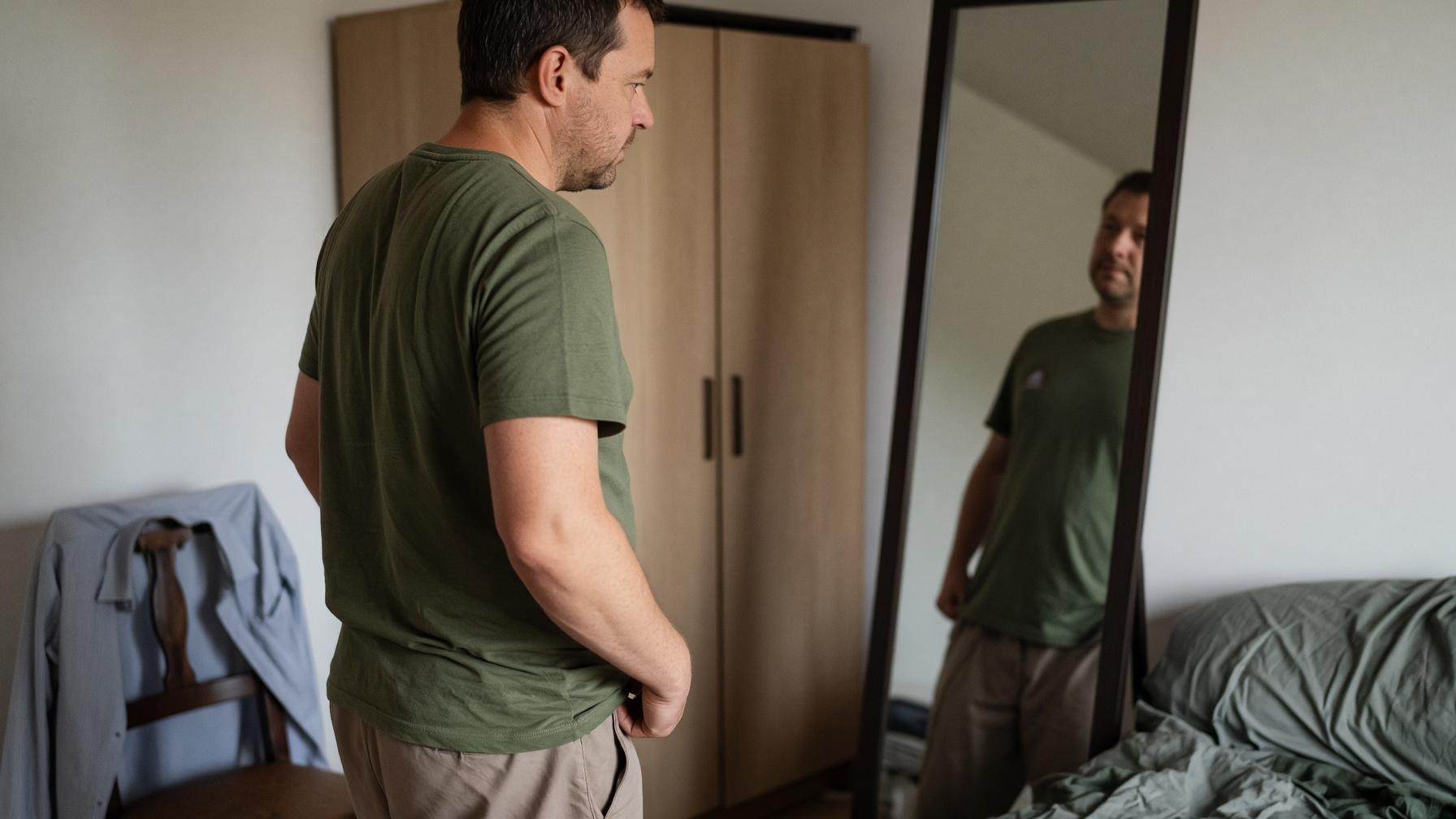

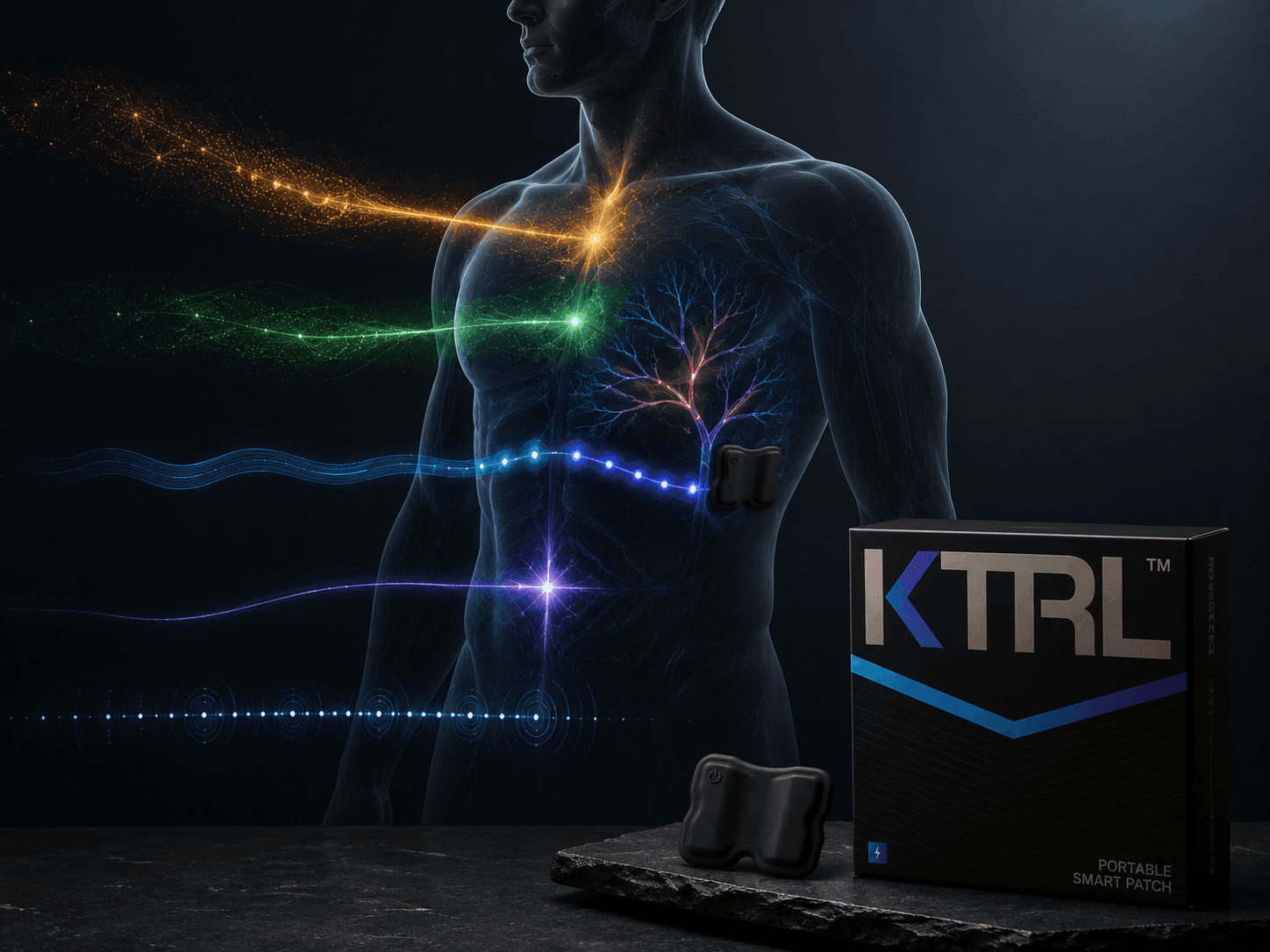
What is KTRL designed to support? Its direct function is to create rhythmic physical sensation through external skin contact. Wanting that added sensation is different from wanting more sexual desire, a firmer erection, a different orgasm or later ejaculation. Feeling the patch does not predict a change in those responses. Identify the question you want to answer, then consider the product's sensory format and use restrictions.
By KTRL | Editorial update:
What is KTRL designed to support?
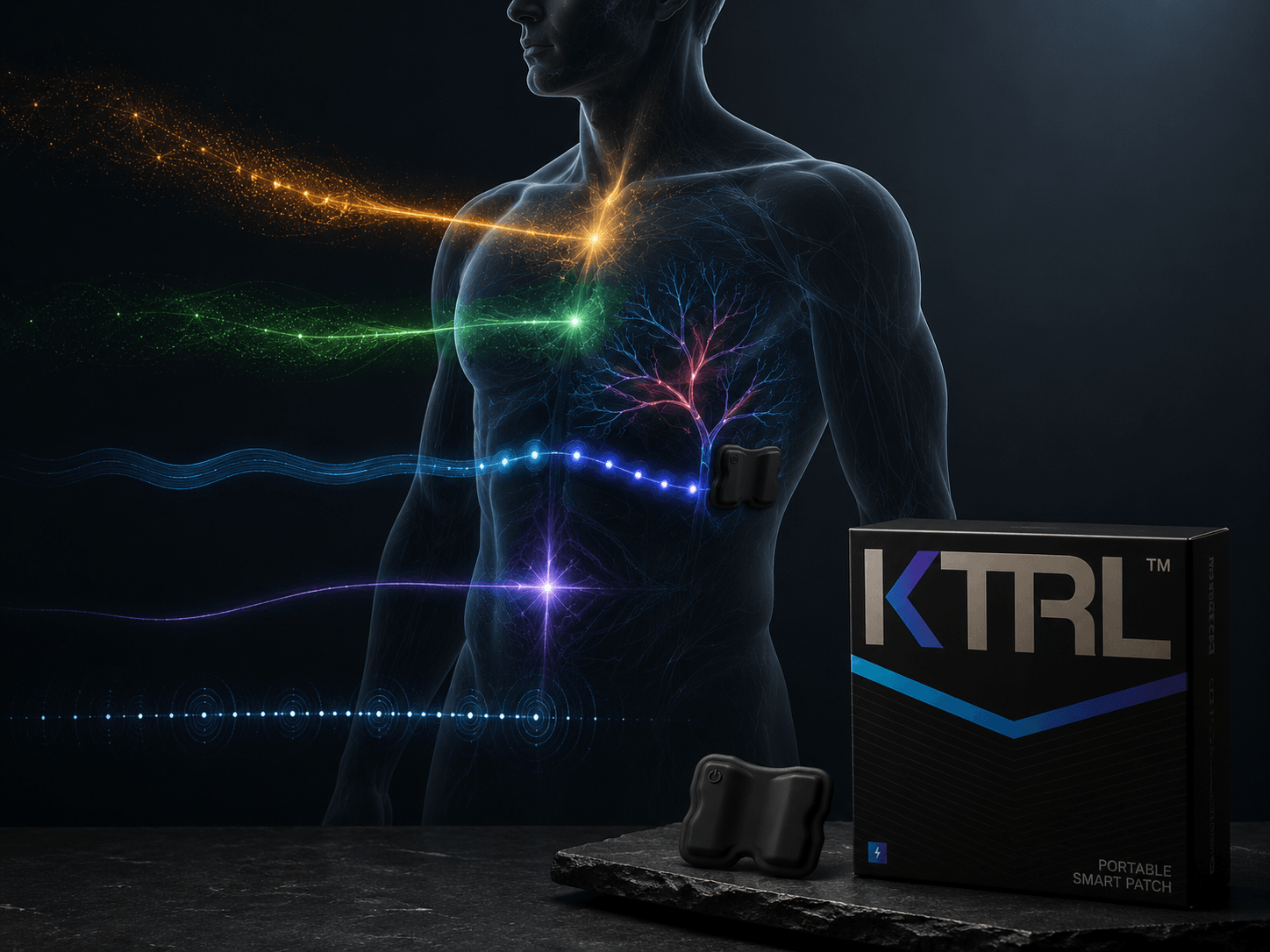
KTRL is an external sensory product: it adds a repeating physical cue, rather than assessing or treating a sexual-health concern. The KTRL Portable Smart Patch, model WDC201, is a consumer electronic product intended for adult men aged 18-60, inclusive. It produces rhythmic sensation using controlled electrical pulses through skin-surface contact.
The broad delivery term is transcutaneous electrical stimulation, meaning electrical stimulation through the skin. That term alone does not identify a medical treatment, a specific clinical protocol or a proven outcome for KTRL. Research involving another electrical device cannot establish this patch's effect on erections or ejaculation timing.
KTRL is self-contained and single use, with built-in, non-rechargeable power. It requires no app, charging cable, separate controller or separately applied delay formula. These features describe its format; they do not establish a health benefit or an overall safety advantage.
Separate six parts of sexual experience
Desire, arousal, erection, sensation, orgasm and ejaculation timing describe different aspects of an experience. More than one may matter to you, but a change in physical sensation should not be treated as evidence that all the others will change.
Desire: interest in sexual activity
Sexual desire, or libido, concerns wanting sexual activity. It is different from the feeling of contact or stimulation. The NHS information on low sex drive lists possible contributors including relationship problems, stress, mental health, medicines and health conditions.
If reduced interest worries you, start with that question. A sensory product does not identify the cause or establish that desire will return. Read the comparison of low desire, low arousal and low sensation for help describing what feels different.
Arousal: becoming sexually engaged
Arousal describes becoming mentally and physically engaged in response to sexual stimulation. Interest, subjective excitement and a physical response need not feel identical. Noticing a patch sensation is not a measurement of arousal or proof of improved awareness; the wearer still chooses whether to continue, pause or change activity.
Erection: penile firmness
Getting or maintaining an erection is a different question from wanting an extra sensation or wanting ejaculation to happen later. The NHS guidance on erectile dysfunction recommends assessment if erection problems keep happening.
KTRL is not intended to treat erection difficulty. If you are also wondering about hormones, KTRL, testosterone and libido explains why a sensory experience is not evidence of a hormone change.
Physical sensation: the bodily feeling you notice
This is where KTRL's direct role sits: adding a rhythmic physical cue through external skin contact. Whether you notice, enjoy or want that cue is a personal observation.
A sensation can be noticeable without being enjoyable. Enjoyment matters as a preference, but it does not establish an improvement in sexual function or a predictable increase in pleasure.
Orgasm: the experience of climax
Orgasm and ejaculation are not interchangeable. They often occur together, but a change in one does not prove a change in the other. The NHS guide to ejaculation problems describes situations in which a person experiences orgasm while semen release is altered.
Ejaculation timing: when ejaculation occurs
A timing concern includes when ejaculation happens, perceived control and whether the pattern causes distress. The European Association of Urology guideline on ejaculation disorders also considers the pattern and context; time alone is not enough for a diagnosis.
KTRL's sensory function is not a promise of later ejaculation or a particular duration. For a closer look at those expectations, read does KTRL help you last longer, or mainly change physical sensation?
Match KTRL's sensory format to your question
Use your main question to separate a product preference from a health concern. This table is a guide to those distinctions, not a test of sexual function or individual suitability.
| Your main question | What to consider | What the sensory format tells you |
|---|---|---|
| Would I like an added rhythmic sensation? | Sensory preference, restrictions and skin contact. | KTRL is designed to provide that sensation; whether you enjoy it varies. |
| Do I prefer a patch to a separate formula or controller? | Preparation, placement and format. | It offers a self-contained, single-use format with built-in contact material. |
| Can it help me notice arousal or choose pauses? | Your own attention, observations and choices. | The wearer chooses pace and pauses. A sensory cue is not an arousal test or proof of improved awareness or pacing. |
| Will it make me want sex more? | Desire and possible reasons for reduced interest. | A physical cue is distinct from desire; KTRL does not assess or treat low libido. |
| Will it improve or preserve my erection or orgasm? | The particular sexual-function concern. | Added sensation does not predict a change in either response. |
| Will it make ejaculation happen later? | Timing, control, context and distress. | Rhythmic sensation and the product's time limit do not promise later ejaculation. |
You do not need to combine every observation into a single judgement that the product has "worked" or "failed". You might like its sensation without noticing a timing change. You might also find preparation straightforward but dislike the sensation.
A useful sensory question is: Do I want this added cue, and is it comfortable? An erection, orgasm or duration does not have to become a target that a first experience must meet. You remain free to stop.
If a desire, erection or ejaculation concern is persistent, worrying, painful or distressing, speak with a qualified healthcare professional. A preference for a sensory product can coexist with a need for assessment, but product exploration should not delay appropriate care.
Use boundaries and the right next page
The six distinctions above describe the limits of a product claim. They cannot establish whether KTRL is suitable for an individual. Check the WDC201 user guide and complete use restrictions before considering use.
KTRL is single-use for men aged 18–60, inclusive, with a 30-minute cumulative powered-on maximum in one use. Switched-off intervals are excluded; restarting does not reset the total. Stop immediately for discomfort or abnormal operation and follow the supplied removal instructions; persistent symptoms require qualified advice.
Choose the next page for your question: describe a change in desire, arousal or sensation; check the evidence for longer duration; or understand unknown outcomes and unwanted changes during use.
Frequently asked questions
These answers distinguish the product's intended sensory role from questions about sexual health and function.
Is KTRL designed to increase sexual desire?
KTRL is designed to add rhythmic physical sensation, which is different from wanting sexual activity. If reduced desire worries you, seek qualified advice about that concern rather than treating sensation as evidence that libido will return.
Does feeling the patch mean I am more aroused?
No. It tells you that you notice a physical sensation, not how aroused you are or whether your awareness has improved. Your own attention and choice to pause remain separate from the product's sensory function.
Does transcutaneous electrical stimulation prove a timing or erection benefit?
No. The term describes electrical stimulation through the skin; it does not identify a validated treatment protocol or establish a KTRL outcome. Findings about a different electrical device cannot demonstrate this patch's effects.
Are orgasm and ejaculation the same thing?
No. Orgasm is the experience of climax, while ejaculation concerns semen emission and release. They often occur together, but changes in one do not automatically mean changes in the other.
Does the 30-minute limit mean KTRL will make intercourse last 30 minutes?
No. It is the maximum cumulative powered-on time for one use, not a duration claim. Switched-off intervals are excluded, but restarting continues the accumulated total; you may stop sooner and must stop for discomfort.
Sources
The NHS and EAU sources explain sexual-health distinctions and assessment. KTRL's sources describe its product and instructions; the health references do not establish KTRL-specific benefits.
NHS. Low sex drive (loss of libido). Last reviewed 26 May 2026; accessed 14 October 2026.
NHS. Erectile dysfunction (impotence). Last reviewed 28 July 2023; accessed 14 October 2026.
NHS. Ejaculation problems. Last reviewed 9 February 2023; accessed 14 October 2026.
European Association of Urology. Disorders of Ejaculation. EAU Guidelines on Sexual and Reproductive Health. Accessed 14 October 2026.
KTRL. KTRL Portable Smart Patch product details. Sensory purpose, external format and built-in power. Accessed 14 October 2026.
KTRL. KTRL Patch User Guide. Intended users, contact materials, restrictions, operation, single use and cumulative powered-on time. Accessed 14 October 2026.