
KTRL is a sensory lifestyle product, not a testosterone treatment or a treatment for low libido. It uses controlled electrical pulses through external skin contact to create a rhythmic physical sensation. If you already want intimacy, that offers a different experience to consider. Enjoying the sensation does not demonstrate a rise in testosterone or a lasting increase in desire. Persistent or distressing low desire deserves a separate assessment.
Updated:
Testosterone, libido and sensation: what is the difference?
Testosterone is a hormone, libido is interest in sexual activity, and sensation is the physical stimulation you perceive. They can be related without being interchangeable.
Questions about hormones often begin with a real observation: less interest in sex, lower energy, fewer spontaneous erections or a change in how your body responds. These observations deserve attention, but they do not identify a hormonal cause on their own.
| Term | What it describes | How to understand it |
|---|---|---|
| Testosterone | A hormone involved in sexual function, male physical characteristics and reproductive health. | Assessment combines appropriate blood tests with symptoms and clinical context. |
| Libido | Interest in or motivation for sexual activity. | A persistent, unwanted or distressing change can have several possible causes. |
| Physical sensation | The contact, pressure, rhythm, temperature or other bodily stimuli you perceive. | You can describe what feels comfortable or enjoyable without assuming a hormonal change. |
The European Association of Urology (EAU) guideline on low sexual desire addresses biological, psychological and relationship factors. Mood, health, medication and relationship difficulties can all be relevant; low desire does not point to a single explanation.
Someone may want a different sensation while having plenty of sexual interest. Someone else may be concerned about losing interest altogether. These are different needs, even if both people use the word “libido”.
Does enjoying a session mean your libido increased?
Enjoying an experience tells you something about that experience. It does not, by itself, show a change in your usual desire or hormone levels.
A new rhythm may catch your attention or make a familiar moment feel different. Feeling more engaged once intimacy begins is also different from wanting sexual activity more often afterwards.
When describing an experience, choose the statement that fits:
“I wanted to have sex more often.”
“I felt more engaged once we started.”
“The physical sensation was more interesting.”
“My erection was more reliable.”
“I felt more comfortable talking about what I wanted.”
These are examples of distinct observations, not promised KTRL outcomes. “I liked the added rhythm” is useful feedback. “My testosterone increased” requires hormone measurements and clinical interpretation.
The same distinction applies to disappointment. A patch that does not suit your sensory preferences tells you nothing about whether your testosterone is low. An enjoyable evening can have value without becoming a laboratory result.
What would support a claim about hormones or libido?
A claim that a product raises testosterone would require product-specific human research that actually measures hormonal changes. Testing conditions, an appropriate comparison, the size of any change and its clinical relevance would all matter.
A libido claim would need research measuring sexual desire. General electrical-stimulation research, a patent or a testimonial about feeling more engaged cannot substitute for those measurements. Neither a stronger sensation nor an erection alone establishes increased desire.
How are low desire and possible testosterone deficiency assessed?
A clinician reviews the pattern of symptoms and relevant circumstances, then arranges appropriate investigations. Your response to a sensory product is not a diagnostic test.
The Endocrine Society's 2018 clinical practice guideline recommends diagnosing hypogonadism only when compatible symptoms and signs accompany unequivocally and consistently low testosterone concentrations. It recommends a morning, fasting total-testosterone measurement and confirmation with a repeat morning, fasting measurement.
The EAU guideline on male hypogonadism also combines symptoms with biochemical evidence and recommends confirming a low result before treatment. A medical professional should arrange and interpret testing, including any adjustment needed for your sleep or work schedule.
When to book an appointment
Seek advice if reduced interest persists and concerns you, especially alongside other changes such as fewer spontaneous erections, low energy or fertility concerns. These changes are not unique to testosterone deficiency. A review may consider sleep, mood, medical history, medication, examination findings and relevant blood tests.
What to bring to the conversation
The timing: when the change began and whether it is constant or comes and goes.
The context: whether desire differs when you are alone and with a partner, and whether circumstances have changed.
Other information: symptoms, health changes, sleep patterns, medicines and supplements.
Fertility plans: whether having children in the future matters to you.
A low result is the start of an assessment, not a treatment plan
If deficiency is confirmed, the Endocrine Society recommends further evaluation to identify its cause. Its guideline advises against starting testosterone therapy in men planning fertility in the near term.
If treatment is considered, discuss its goals, risks and monitoring with your clinician. Do not start a “testosterone booster”, change a prescribed medicine or choose hormone treatment based on how a patch felt.
Where does KTRL fit into an experience you already want?
KTRL offers a different physical sensation to consider during wanted intimacy; its product description is about a sensory experience rather than correcting a hormone level.
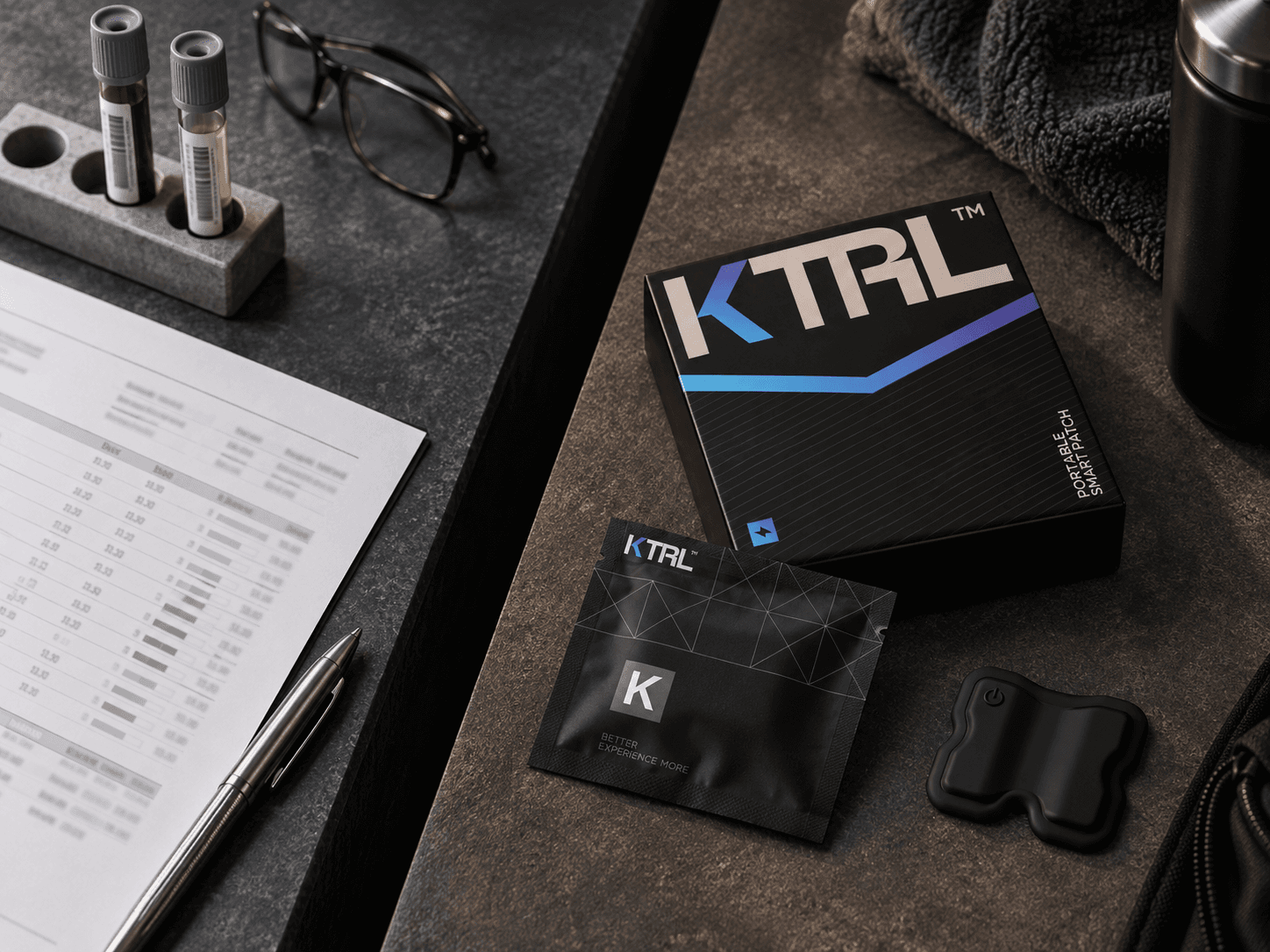
The manufacturer describes KTRL™ Portable Smart Patch as a compact, single-use lifestyle product that delivers controlled electrical pulses through external skin contact. It is intended for men aged 18–60, subject to the complete contraindications.
Its built-in, non-rechargeable batteries mean there is no charging routine or separate controller. Judge the format by whether its preparation, comfort and sensation appeal to you. It is not intended to diagnose or treat a medical condition.
Use the device-specific instructions
Read the complete KTRL user guide and follow the printed placement instructions. Apply only to clean, dry, intact external skin in the designated area.
Limit powered-on time: use for no more than 30 minutes of cumulative powered-on time in one session. Switched-off intervals do not count; restarting continues the same accumulated limit.
Use one patch for one session: switch off before removing or repositioning it. Do not reuse it across sessions; remove and dispose of it according to the instructions.
Check all exclusions: these include implanted or other electronic stimulation devices, major cardiovascular disease or relevant serious health risks, and abnormal skin or sensation at the application site. The full guide contains additional restrictions.
Stop if uncomfortable: remove the patch if you experience pain, stinging, burning, redness, itching or other noticeable discomfort. Do not use a product that becomes abnormally hot or malfunctions. If symptoms persist, do not resume use and consult a professional.
Choosing a sensory experience and seeking help for low desire can be separate decisions. Neither person has to want a new product or continue an experience to prove that their desire is adequate.
Choose a next step that matches your concern
Start by naming whether you want to understand a health change, discuss a loss of interest or explore a different sensation.
“I have lost interest, and it bothers me.” Arrange an appointment and bring a description of the pattern you have noticed.
“I suspect my testosterone is low.” Ask about an appropriate clinical assessment rather than using a product response as a test.
“I already want intimacy and would like a different sensation.” Review the product details and instructions, then decide whether the patch format suits you.
Keep testosterone, libido and sensation distinct when describing what you need. Sensory enjoyment can be worthwhile in its own right, while persistent or distressing changes deserve qualified care.
Frequently asked questions
Does KTRL increase testosterone?
KTRL should not be used as a testosterone-raising treatment. Its documented purpose is rhythmic physical sensation, and your experience with it does not measure a hormone change.
Can I use KTRL to treat low libido?
KTRL is a consumer lifestyle product, not a treatment for low desire. If reduced interest persists or causes distress, a professional assessment can explore hormonal and other possible contributors.
Does low libido always mean low testosterone?
No. Psychological, relationship, medical and medication-related factors can contribute. Testosterone deficiency requires an appropriate clinical assessment, not a conclusion from desire alone.
Is one low testosterone result enough to diagnose deficiency?
The Endocrine Society recommends compatible symptoms and signs plus consistently low measurements, confirmed with repeat morning, fasting testing. A clinician interprets the results and any need for further investigation.
Why should I mention plans to have children?
Fertility plans affect treatment choices. The Endocrine Society advises against starting testosterone therapy in men planning fertility in the near term, so raise this before discussing treatment.
Sources
Bhasin S, Brito JP, Cunningham GR, et al. (2018). Testosterone Therapy in Men With Hypogonadism: An Endocrine Society Clinical Practice Guideline. Journal of Clinical Endocrinology and Metabolism. doi: 10.1210/jc.2018-00229. Guideline abstract and bibliographic record from Europe PMC.
European Association of Urology. Low Sexual Desire and Male Hypoactive Sexual Desire Disorder. Guidelines on Sexual and Reproductive Health. Accessed 23 October 2026.
European Association of Urology. Male Hypogonadism. Guidelines on Sexual and Reproductive Health. Accessed 23 October 2026.