
You can describe a rhythmic sensation by its pattern, the attention it draws, contact comfort and your preference. The words below are prompts for your own description, not results from a KTRL user study or a prediction of what you will feel. “Rhythmic” means repeating; it does not mean strong, pleasant or effective for a sexual-health concern.
By KTRL | Editorial update:
What does rhythmic sensation mean for KTRL?
For KTRL, rhythmic sensation describes an intended repeating physical cue. It does not specify a personal level of intensity or pleasure. Recognising a pattern and liking the feeling are separate observations.
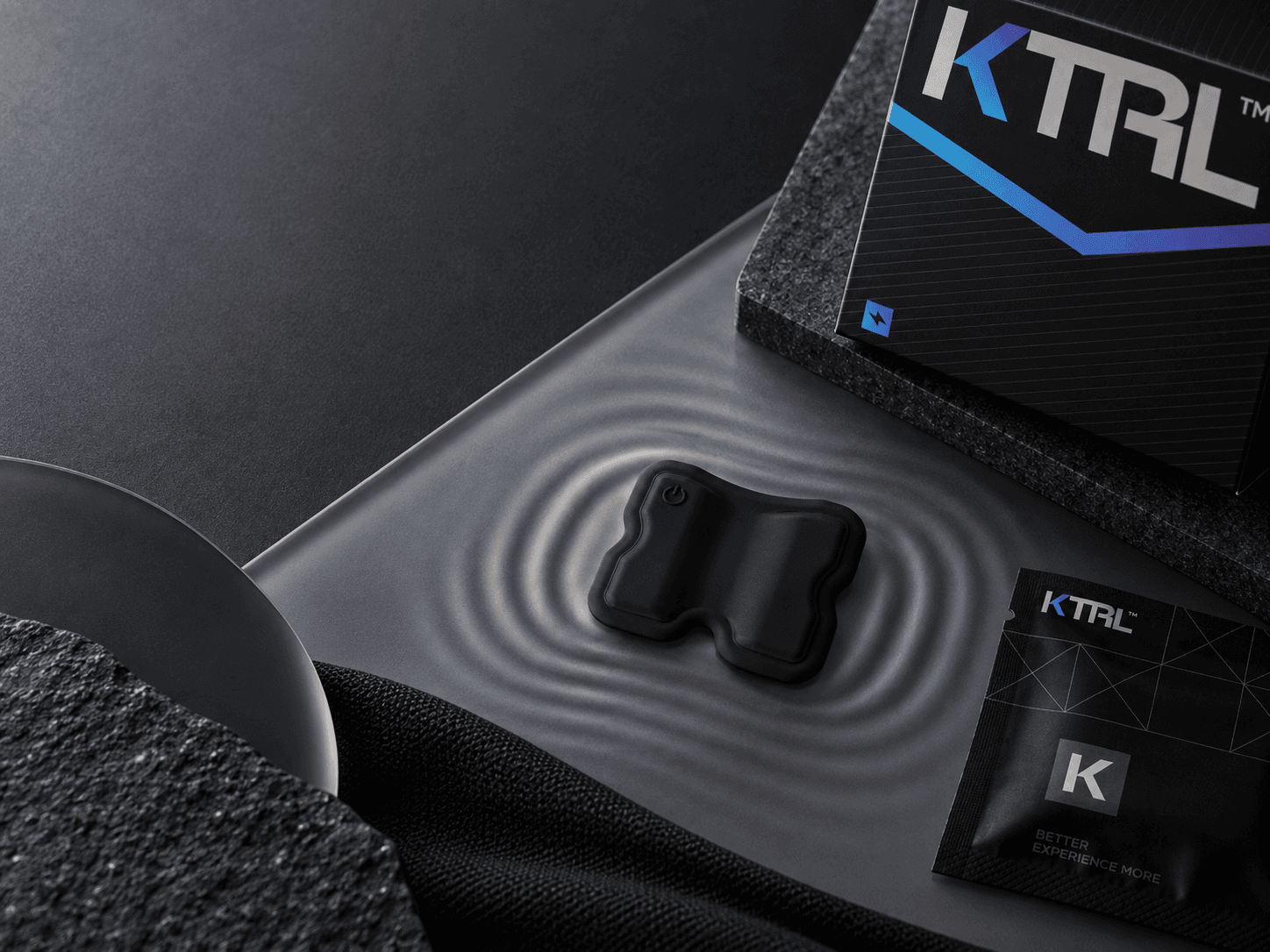
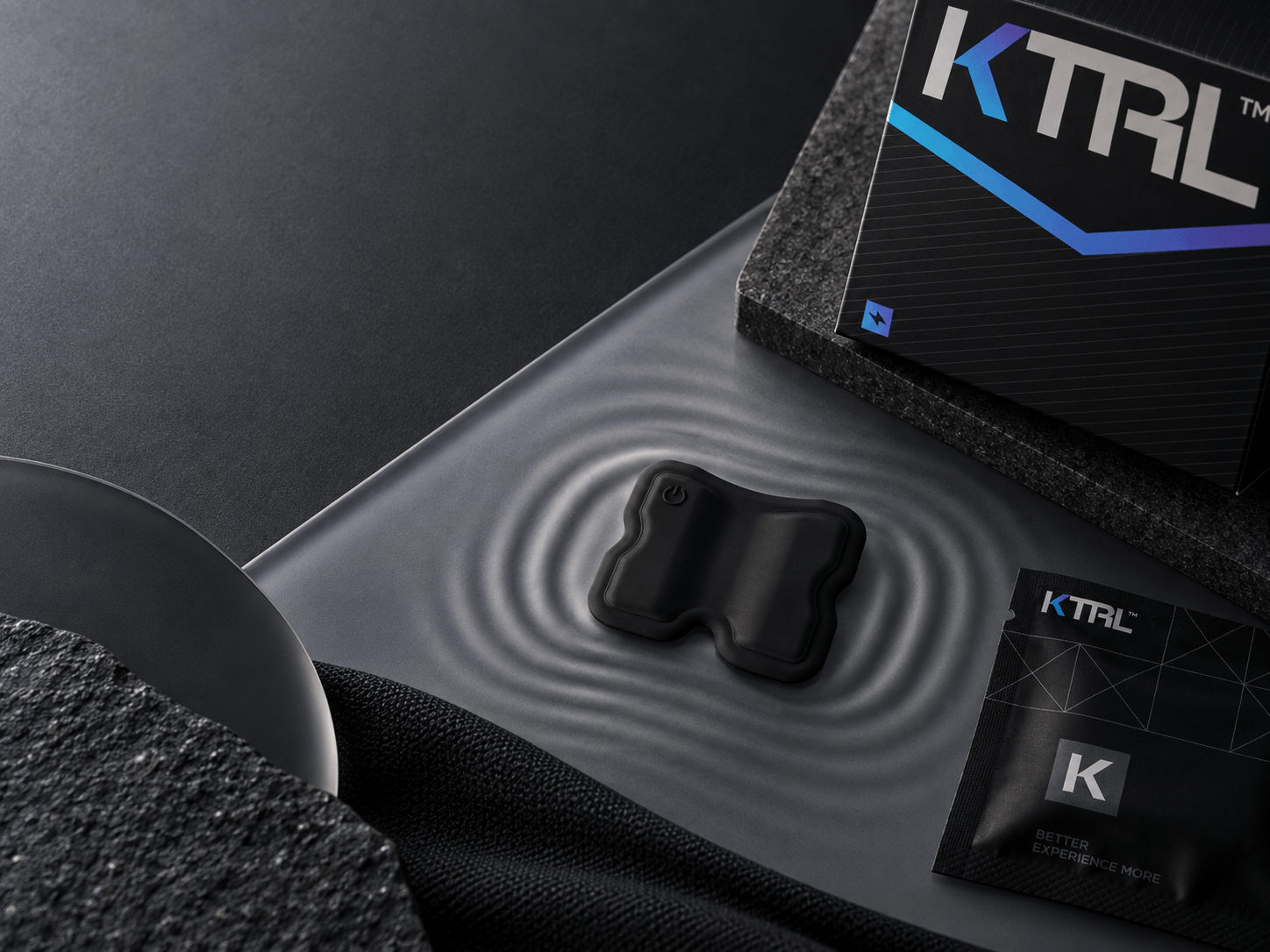
The KTRL Portable Smart Patch, model WDC201, is an external electronic sensory product. Do not assume its electrical contact format will feel identical to a mechanical vibrator or another electrical device.
What touches the skin
The confirmed skin-contact materials are conductive gel and TPE insulating foam. There is no separately applied delay formula to measure or spread, but materials still touch the skin. If you need to check a specific substance because of an allergy or sensitivity, ask KTRL Support about the contact materials.
Keep sensation and sexual outcomes separate
Noticing a repeating cue does not establish improved arousal awareness, a firmer erection, a different orgasm or later ejaculation. Describing a sensation is not a measurement of sexual performance. Read more about KTRL's sensory role and timing expectations.
Four ways to describe your own experience
You can describe the pattern, how much attention it takes, contact comfort and your personal preference separately. The prompts below offer words for your own observations; there is no correct adjective or required intensity.
| Question | What you can describe | What to keep separate |
|---|---|---|
| Could you distinguish a repeating pattern? | Clear, difficult to distinguish or uncertain. | Whether it was pleasant. |
| How much attention did it take? | In the background, noticeable or distracting. | Whether more attention meant more value. |
| Was the contact comfortable? | Your actual comfort, including any symptom that meant you needed to stop. | How noticeable the cue was. |
| Did you want the added feeling? | Preferred, neutral, unwanted or unsure. | A claim about what another person would like. |
Discomfort requires stopping immediately. Do not continue using the patch to finish these observations or to see whether a symptom becomes easier to tolerate.
Keep a brief description afterwards
If a note would help, use three headings afterwards: pattern, comfort and preference. Leave anything uncertain marked as uncertain. You can use ordinary words that fit what you noticed; you do not need to choose from the table.
If you choose to make a note, describe only what you noticed. An uncertain impression can stay uncertain; a description does not need a score or a positive conclusion.
What if the sensation is hard to distinguish?
A pattern you cannot clearly distinguish can be recorded as uncertain. You do not need to chase a stronger feeling or turn uncertainty into a positive description.
Do not modify the patch, add conductive material, fold it or place it anywhere outside the instructions. If the product seems not to work normally, stop using it and contact KTRL Support.
For first-use expectations and reflection, see what to expect the first time. For operating steps, use the first-use guide alongside the supplied instructions.
When to stop and how the use limit works
Pain, stinging, burning, redness, swelling, itching or other obvious discomfort means stop immediately, switch off and gently remove the patch as directed. Do not wait for redness to persist before stopping. If symptoms persist, discontinue further use and seek advice from a qualified healthcare professional.
You can stop because you do not want the feeling
You do not need a symptom to decide to stop. A sensation may simply be unwanted, and you do not have to become accustomed to it or finish a set period.
Thirty minutes is a maximum, not a target
The limit is 30 minutes of cumulative powered-on time during the same use. Switched-off time is excluded, and switching on again continues the previous total. Track that total yourself and do not exceed it.
KTRL is single use and cannot be saved for another session, even if you stopped before reaching the limit. The time limit is a use rule; it does not establish how the product will feel or what result you will obtain.
Check suitability before use
Read every supplied warning before use. KTRL is intended for adult men aged 18-60, inclusive, and all contraindications apply. A sensation description cannot determine individual suitability. Consult the complete KTRL user guide.
KTRL is a consumer electronic sensory product, not a medical device. It is not intended to diagnose, treat, alleviate, monitor or prevent a disease or medical condition. You can describe what you noticed and whether you wanted the feeling without making a sexual-performance claim.
Frequently asked questions
These answers clarify the meaning of rhythmic sensation and the difference between observation, preference and use limits.
What if I cannot clearly describe the rhythm?
You can describe it as difficult to distinguish or uncertain. Do not modify the patch or add conductive material to seek a stronger feeling. If it seems not to work normally, stop and contact KTRL Support.
Does noticing the rhythm mean I will last longer?
No. Noticing a sensation does not establish later ejaculation or another sexual outcome. The sensory description and the 30-minute use limit are not evidence of a timing benefit.
Sources
Sources accessed on.
KTRL. Portable Smart Patch product information. Model WDC201, intended sensory function and skin-contact materials.
KTRL. WDC201 user guide. Suitability, warnings, stop-use instructions, cumulative powered-on time and single-use limits.
KTRL. Support. Questions about product instructions, contact materials or abnormal operation.