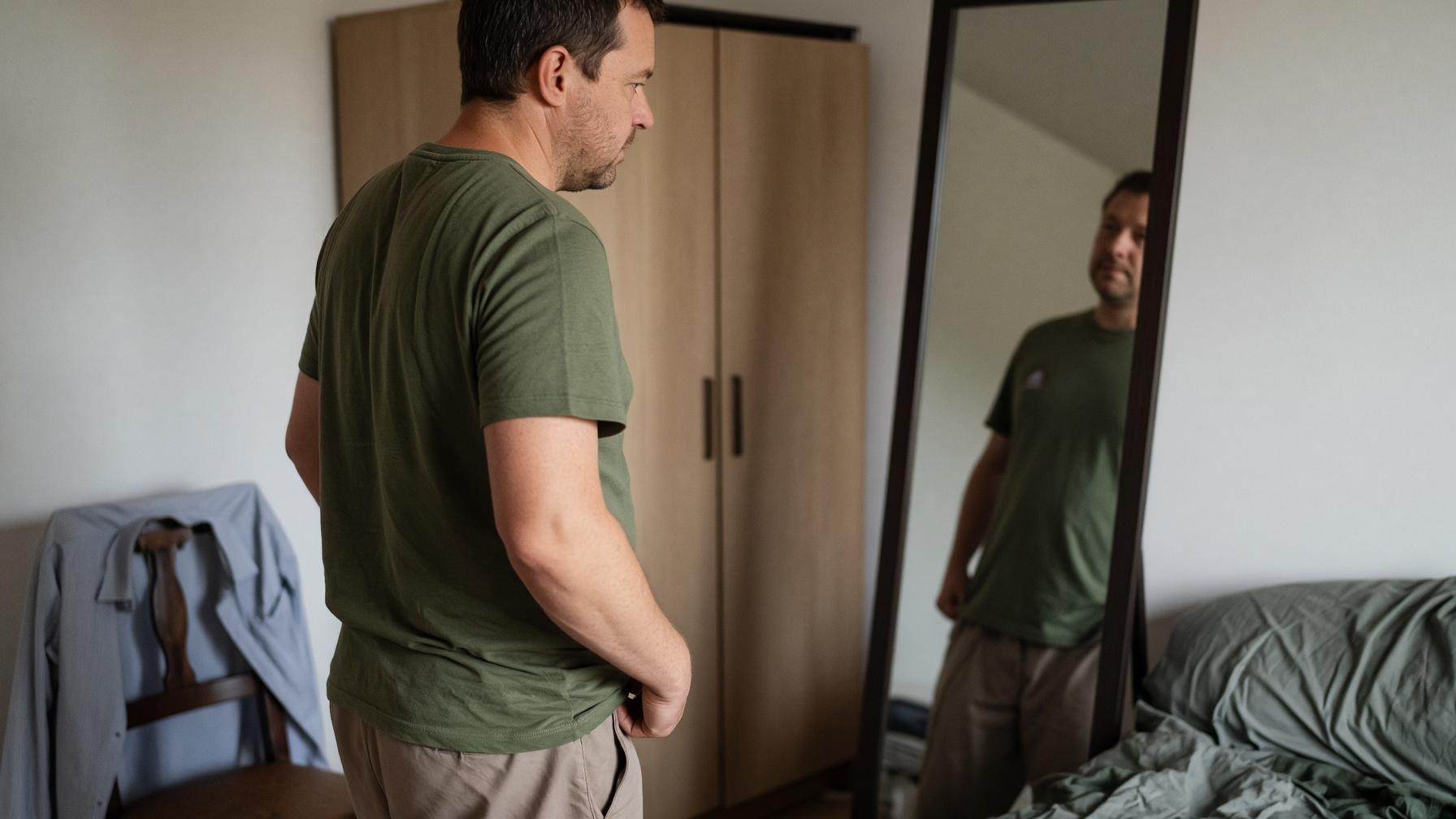


Work stress can affect intimacy by taking up time, energy and attention, or by shifting more household work onto one partner. It does not affect everyone's desire in the same way. Start by naming the obstacle, agreeing on a realistic transition out of work and discussing what each person has capacity for. Closeness should remain a choice, rather than another demand to meet.
Updated:
How does work stress affect intimacy?
Work stress can follow you home through interruptions, unfinished thoughts, tiredness and the tasks that still need doing.
The laptop is shut, but the meeting continues in your head. You are replaying a difficult conversation or waiting for a message you hope will not arrive. Your partner starts talking and you realise you have missed the first half. Physically, you have come home; your attention is still trying to finish the working day.
A notification is one kind of interruption. Mentally rehearsing tomorrow's conversation is another. Putting the phone away can stop the next alert, but it does not instantly stop the internal replay. A long commute, a skipped meal or a late finish can also leave little energy for conversation or touch.
Work can change the balance of the evening, too. If one person's deadline repeatedly transfers dinner, cleaning or childcare to the other, a request for intimacy may arrive while that partner is still completing the work that made the evening possible.
Name the obstacle before choosing a solution
“Work is affecting us” is a useful starting point. A more specific description makes a practical request possible:
| What is happening? | What needs attention? | What could you say? |
|---|---|---|
| “I keep expecting my manager to call.” | Availability and work boundaries | “I am on call tonight. Let us work out when I can put my phone aside.” |
| “I cannot stop replaying that meeting.” | Mental distraction and time to settle | “I need a short pause. Can we talk after I have eaten?” |
| “I am doing bedtime alone every night.” | The division of care and household tasks | “We need to share the evening tasks differently so we both get a break.” |
These are conversation examples, not diagnoses. A breathing exercise may offer a pause, but it will not redistribute childcare. Identifying the obstacle avoids asking a partner to solve an undefined problem through patience, reassurance or sexual availability.
Does stress always reduce sexual desire?
No. Stress, sexual desire, bodily arousal and affectionate contact do not have a single, uniform relationship.
Distraction, bodily response and felt arousal can differ
A 2013 laboratory study by Lisa Dawn Hamilton and Cindy M. Meston compared 15 women reporting high chronic stress with 15 reporting average stress. The high-stress group showed lower genital arousal and more distraction while viewing an erotic film, but did not report significantly lower psychological arousal.
The study did not isolate occupational stress, establish that stress caused the differences or test men. Its relevance is specific: measured bodily response, attention and felt arousal should not be treated as interchangeable. A response during a laboratory task is also not a direct measure of attraction to a partner.
Affection and sexual activity are different outcomes
A 2024 study by Selina A. Landolt and colleagues examined 316 mixed-gender couples in Switzerland. It initially found some positive associations between stress outside the relationship and a broad measure of sexual activity. Further analyses separated exchanges of affection from erotic activities; after accounting for age, the association between stress and eroticism was no longer significant.
This was correlational research, and participants generally reported relatively low stress and high relationship satisfaction. It does not show that work stress improves intimacy, or predict how a particular couple will respond to severe pressure. It does illustrate why cuddling, wanting sexual contact and feeling satisfied need separate questions.
One partner may think, “I have had an awful day and want to feel close.” The other may think, “I have had an awful day and need nobody to need anything from me.” Both reactions are understandable. Neither creates an obligation for the other person.
How can you switch off after work?
Choose a manageable transition and explain it to your partner, including when you expect to be available again.
A walk, a change of clothes, food, a shower or a quiet pause can mark the change from work to home. Pick something that fits an ordinary day. Psychologist Alexandra Solomon's guidance on work stress and relationships also emphasises making this transition intentional and letting a partner know what to expect.
“I need twenty minutes to come down from work, then I want to hear about your day” gives the pause a meaning and an endpoint. Twenty minutes is an example, not a scientifically prescribed recovery time. Agree on something realistic; if plans change, say so instead of leaving the other person waiting indefinitely.
Make room for both people's transition
Someone who works from home, manages the household or looks after children may have no commute separating work from private life. Their day does not necessarily end when yours does. Discuss how both people can have a break and who will handle any tasks during it.
Set boundaries that fit the job you actually have
On-call duties, shift work and insecure employment can limit control over availability. Distinguish genuine emergencies from routine messages where possible. Options to discuss include a silent phone during dinner, an agreed check-in time or a clear explanation that work may interrupt tonight.
A small boundary can still be useful, but constant availability may need a workplace conversation or practical support beyond the relationship. Switching off is harder when the job keeps switching back on.
How can you talk about stress without adding pressure?
Say whether you want listening, advice, practical help or space, and ask what your partner has capacity for.
For listening: “Do you have room to hear about a difficult meeting? I would like you to listen without trying to solve it.”
For practical help: “Can we work out dinner differently while this deadline is happening?”
For a pause: “I care about what happened, but I am too depleted to listen properly right now. Could we talk after dinner?”
The listener's capacity matters too. Caring does not mean being available for an unlimited replay of the working day. Returning to the conversation at an agreed time makes a pause different from permanent avoidance.
Describe your interest without turning it into a relationship verdict
“I am distracted and do not want sexual contact tonight” describes a current state. It gives your partner more information than leaving them to guess what your distance means. If you want another kind of closeness, you can suggest it. You do not have to provide a substitute to earn the right to decline.
A partner can also express desire without being labelled insensitive. What matters is how the response is received: “not now” needs to be accepted without punishment, sulking or repeated negotiation. An invitation should leave either person free to say no.
Stress may explain irritability, but it does not make hurtful treatment acceptable. If a conversation becomes sharp or blaming, you can pause and agree to return when both people can speak respectfully.
What if the same problem keeps returning?
Look at the recurring conditions around the evening, and seek support when stress or sexual changes persist.
Compare a few ordinary days without keeping score of sexual activity. When was it easier to talk? Which work demands interrupted you? Did one household task leave someone busy long after the other had finished? The purpose is to find a condition you can change, not to collect evidence about who wanted less intimacy.
A special night together may be enjoyable, but it cannot compensate indefinitely for excessive hours, constant availability or an unequal workload at home. Consider whether a task could move, a deadline could be discussed, a recurring commitment could be reduced or responsibilities could be shared differently. Some constraints take time to change; exhaustion is not an attitude problem.
When to seek professional support
If stress is persistent, affects sleep or daily functioning, or comes with ongoing low mood, talk with a GP, mental health professional or an available workplace support service. The NHS guidance on stress recommends seeking help when you are struggling to cope or self-help is not helping.
Persistent or distressing changes in desire or sexual function also deserve assessment rather than being automatically attributed to work. A healthcare professional can help explore possible contributors.
For tonight, the conversation might begin simply: “I am here, but I am still carrying work. This is the part I need help making room around.” Managing work stress and intimacy starts with understanding the pressure both people are under.
Frequently asked questions
Can work stress affect sex drive even when I still love my partner?
Yes, stress and distraction can coexist with love and attraction. A change in desire does not, by itself, tell you how much a partner matters; persistent or distressing changes are worth discussing with a healthcare professional.
How long should I take to unwind after work?
There is no single duration established by the studies discussed here. Choose a realistic pause together, explain when you will reconnect and make sure both people have access to rest.
What if one of us wants closeness and the other wants space?
Name both needs without ranking them. Agree on contact only if both people want it; someone who declines sex does not owe another form of affection instead.
Will a phone-free evening solve the problem?
It can reduce notifications, but may not address mental replay, tiredness or unequal household work. Match the change to the obstacle instead of assuming that one rule will solve every kind of work stress.
Sources
Hamilton, L. D., and Meston, C. M. (2013). Chronic stress and sexual function in women. The Journal of Sexual Medicine. Laboratory comparison of chronic stress, distraction and sexual arousal.
Landolt, S. A., et al. (2024). Extradyadic stress as a barrier to sexual activity in couples? A dyadic response surface analysis. Journal of Social and Personal Relationships. Correlational study distinguishing affection and erotic activity.
Solomon, A. (2023). Protecting your Intimate Relationship from the Impact of Work Stress. Practical guidance on transitions, communication and both partners' capacity.
NHS. Stress. Reviewed 6 March 2026. Symptoms, self-help and when to seek support.