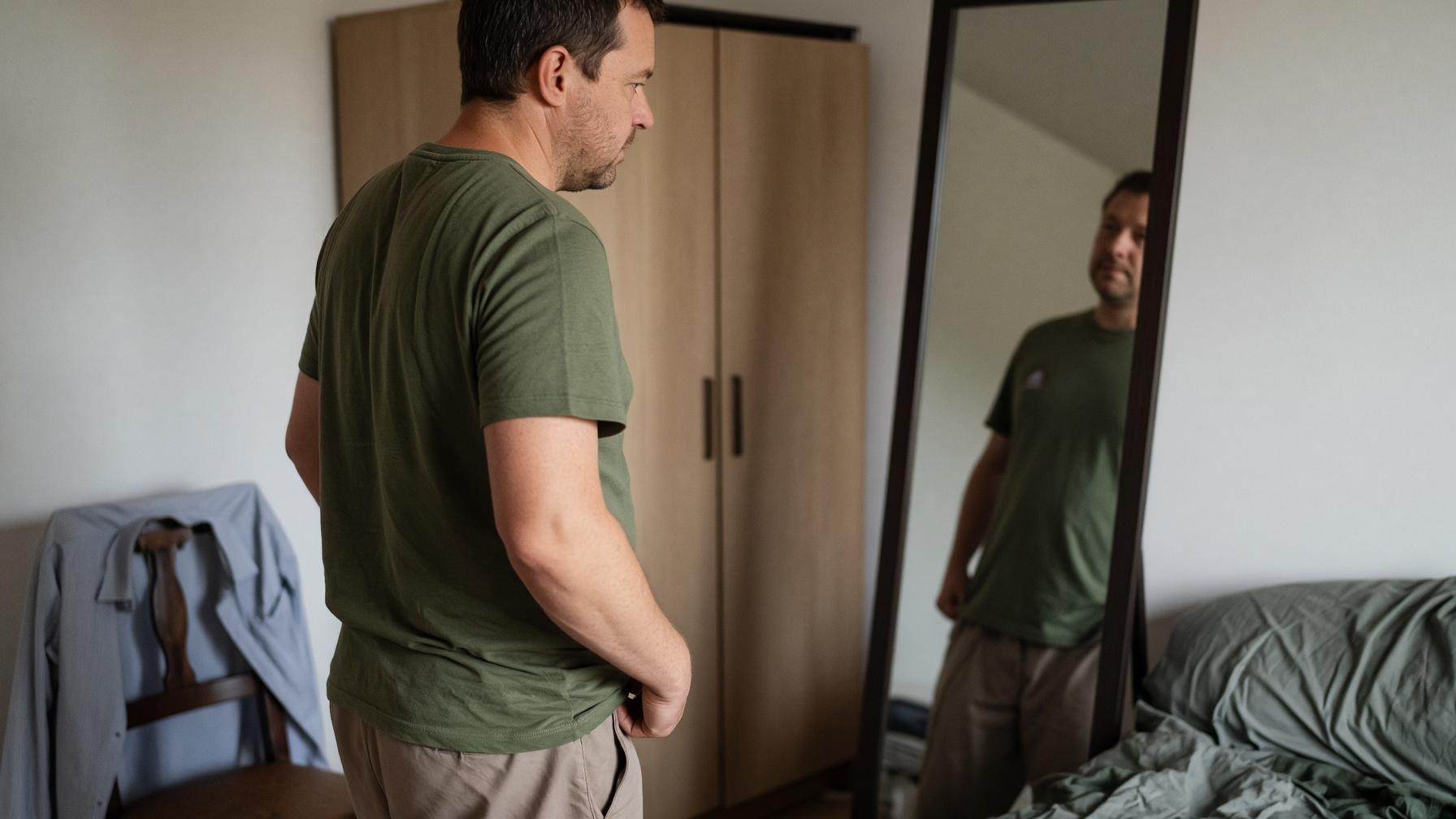


To talk to your partner about wanting to last longer, explain what you want more of, describe your concern as your own experience and ask how it feels for them. Choose a private moment when you both have time to listen. You do not need a target number of minutes or an immediate solution; the first aim is to understand whether you mean the same thing.
Updated:
What do you mean when you say you want to last longer?
“Lasting longer” can mean more time together, less urgency, a different pace or concern about finishing sooner than you want. Naming the specific wish gives the conversation a clearer starting point.
“I wish I could last longer” may feel difficult to say because it seems to contain other messages: that you are disappointed, that your partner is dissatisfied or that something needs fixing. Those meanings may not match what you actually want.
A personal preference, a fear of disappointing someone and a concern both partners have expressed are different things. They can overlap, but they do not call for exactly the same response.
| What matters to you | A way to say it | What to clarify together |
|---|---|---|
| More unhurried time | “I would like our time together to feel less rushed.” | Whether you mean the whole encounter or a particular part. |
| Worry about your partner | “I keep assuming you want more time, but I have not actually asked.” | What your partner enjoys and whether they want anything different. |
| A personal preference | “I am interested in a different pace.” | What appeals to you, without presenting it as an emergency. |
Before talking, try completing this sentence: “If this felt different, what I would value most is…” Your answer might be less preoccupation, more room for closeness or knowing what your partner actually feels.
If you mean more time before ejaculation, say so. If you mean a slower beginning or more time together afterwards, say that instead. This can prevent your partner offering reassurance when you want to discuss a preference, or practical suggestions when you mainly want to feel understood.
How can you start the conversation without blame?
Choose a workable moment and describe what you have noticed without assuming what your partner thinks. An invitation to talk leaves room for an answer.
Immediately after disappointment, a conversation can feel like an instant assessment. If either of you is tired, upset or trying to leave, ask for another time. Enough privacy and attention can make space for more than a quick reassurance.
You might begin with, “Do you have time to talk about something that has been on my mind?” If now is not a good moment, agree on a time rather than repeatedly mentioning the concern in passing.
A simple opening you can adapt
“I enjoy being close to you, and I have noticed I worry about finishing sooner than I want. I would rather tell you than keep guessing. Can we talk about how it feels for both of us?”
This names your experience and explains why you are bringing it up. It does not require your partner to agree that your sex life needs fixing.
“I worry that I am disappointing you” leaves room for their perspective. “I know I am disappointing you” makes them argue against an assumption. You know you feel concerned; you do not yet know whether they share that concern.
The wording does not need to be memorised. Use language that sounds like you, and make clear whether you want to be heard, understand their experience or discuss a possible change.
How do you make room for your partner's answer?
Treat their response as new information, even when it differs from what you expected. Listening means leaving room for satisfaction, a different preference or uncertainty.
If they say they are satisfied
Try not to dismiss reassurance automatically as politeness. You can ask what they enjoyed without demanding proof that their answer is sincere.
Their satisfaction does not cancel your personal wish. It changes the conversation: you are no longer trying to solve a dissatisfaction they have confirmed. You could say, “That helps me understand your experience. I still want to explore why I feel rushed.”
If they would like something different
A preference they express does not confirm every fear you have had about yourself. Ask what they mean by more time: a slower beginning, a less abrupt ending, more attention or a particular activity.
A concrete answer gives you something to discuss. It is more useful than turning “I would enjoy this differently” into “I am not good enough”.
If they need time or the answer stings
A pause is not necessarily evidence of hidden criticism. You may have spent weeks thinking about a conversation your partner is encountering for the first time.
If an answer is difficult to hear, you can say, “I want to understand this, but I need a moment.” Slowing down need not punish honesty or close the conversation. The aim is to prevent awkwardness from sending both of you back to guessing.
What does research say about sexual communication?
Sexual communication is associated with sexual and relationship satisfaction, and with several aspects of sexual function. These associations do not establish that a conversation will change ejaculation timing.
In a meta-analysis by Allen B. Mallory, 93 studies representing 38,499 people in relationships showed positive associations between sexual communication and both relationship and sexual satisfaction.
The quality of communication had a stronger association with satisfaction than how often couples talked about sex. Most included studies were cross-sectional and relied on one-time self-reports, often from just one partner. The results do not establish which factor caused the other or guarantee what a particular couple will experience.
The practical takeaway is modest: you do not need to talk about the concern constantly or disclose every worry at once. Making room for an honest answer is a more useful aim than repeatedly asking whether you are “good enough”.
A separate 2019 meta-analysis by Mallory, Stanton and Handy covering 48 studies found associations between communication and several dimensions of sexual function. It did not test a single conversation as a treatment for finishing sooner than desired.
Talking can clarify your concern and the support you want. A persistent physical or psychological difficulty may still need its own assessment.
What is a useful next step after talking?
Agree on one manageable next step rather than promising a particular duration. The first conversation can be worthwhile simply because you understand each other more accurately.
Check what each of you heard. “When you say more time, do you mean the whole encounter?” can reveal a misunderstanding.
Choose a shared adjustment if you both want one. That might mean making more unhurried time available or leaving room for closeness afterwards.
Leave space to revisit the subject. A later check-in can help without making every encounter a performance review.
Your partner does not need to become responsible for managing every worry or certifying that each encounter went well. Support can be affectionate without becoming a repeated test of reassurance.
When to seek advice beyond the conversation
If finishing sooner than you want is persistent, distressing or a noticeable change, consider speaking with a qualified healthcare professional. The NHS guidance on ejaculation problems recommends seeking medical advice for a persistent problem.
You can involve your partner if you wish, but you do not need them to agree that the issue is serious before asking for advice. Assessment and support can coexist with an affectionate, satisfying relationship.
Before ending the conversation, check what you are both taking away. “I wanted you to know about my worry, and I am glad I asked what you actually feel” may be enough for a first discussion.
Wanting to last longer is something you can express without declaring yourself inadequate. Start with the experience you want more of, make room for your partner's answer and let the shared understanding become more specific than the original fear.
Frequently asked questions
How do I tell my partner I want to last longer?
Describe your own experience and ask about theirs. For example: “I enjoy being close to you, but I sometimes feel rushed and worry about finishing sooner than I want. How does our time together feel for you?”
What if my partner says duration is not a problem?
Take that as information about their experience. Your preference can still matter, but you can discuss it without assuming they are dissatisfied.
Will talking about it help me last longer?
A conversation may clarify preferences and support needs, but the cited studies do not establish it as a treatment for ejaculation timing. Persistent or distressing concerns may warrant professional advice.
Do we need to agree on a number of minutes?
No. For a first conversation, identifying what feels rushed and what each person would value is enough. A duration target is not a substitute for understanding either person's experience.
Sources
Mallory AB. Dimensions of Couples' Sexual Communication, Relationship Satisfaction, and Sexual Satisfaction: A Meta-Analysis.Journal of Family Psychology. Published online 30 December 2021. Analysis of 93 studies.
Mallory AB, Stanton AM, Handy AB. Couples' Sexual Communication and Dimensions of Sexual Function: A Meta-Analysis.Journal of Sex Research. 2019;56(7):882–898. Analysis of 48 studies.
NHS. Ejaculation problems. Guidance on seeking advice for persistent concerns. Page last reviewed: 9 February 2023.